Laetiporus sulphureus (Bull.) Murrill
Sulphur shelf, chicken of the woods, chicken mushroom, chicken fungus
Laetiporus sulphureus is native to North America and Europe. Laetiporus means “bright spores,” and sulphureus means sulphur-like, a reference to the bright yellow or yellow-orange color. (Don’t confuse the common names “chicken of the woods” for this species with “hen of the woods” for the completely unrelated and different-appearing Grifola frondosa).
Identification: Sulphur shelf is so brightly colored that it is hard to miss, and hard to confuse with other species. It is a bracket fungus, meaning that it grows from the sides of trees. It inhabits oaks and other hardwoods, on the sides of trees, causing a brown heart rot in the wood. It is composed of many horizontal layers called shelves. Each shelf is 1¾–20″ (5–50 cm) across and up to 1½″ (4 cm) thick, uneven, yellow to orange; clusters sometimes weigh up to 50 pounds.
Laetiporus cincinnatus also appears in eastern North America, but it is found near the ground, inhabiting roots and butts, sometimes appearing to grow from the ground near the base of trees. See MushroomExpert.com.
Habitats: On dead or mature hardwoods east of the Rocky Mountains, including Quercus, Prunus, Pyrus, Populus, Salix, Robinia, and Fagus, occasionally also on conifers.
Edibility: Delicious. Tastes like chicken. Eat it when it is young, and cook it (for example, sauté it in butter and shallots). If you find it in the eastern United States, it is nearly impossible to mis-identify. However, the similar-appearing west coast species Laetiporus gilbertsonii, is not tolerated well by some, and Laetiporus conifericola is not edible. Until recently, these three species were thought to be one and the same. So the rule is that you should think twice if you find “sulphur shelf” on the west coast, but the east coast variety is okay.
 |
Some sulfur shelf mushrooms. |
Online References:
References:

9/5/2013 · Beaver Brook Conservation Area, Hollis, New Hampshire · ≈ 7 × 4½″ (16 × 11 cm) 

9/5/2013 · Beaver Brook Conservation Area, Hollis, New Hampshire · ≈ 11 × 8″ (27 × 21 cm) 
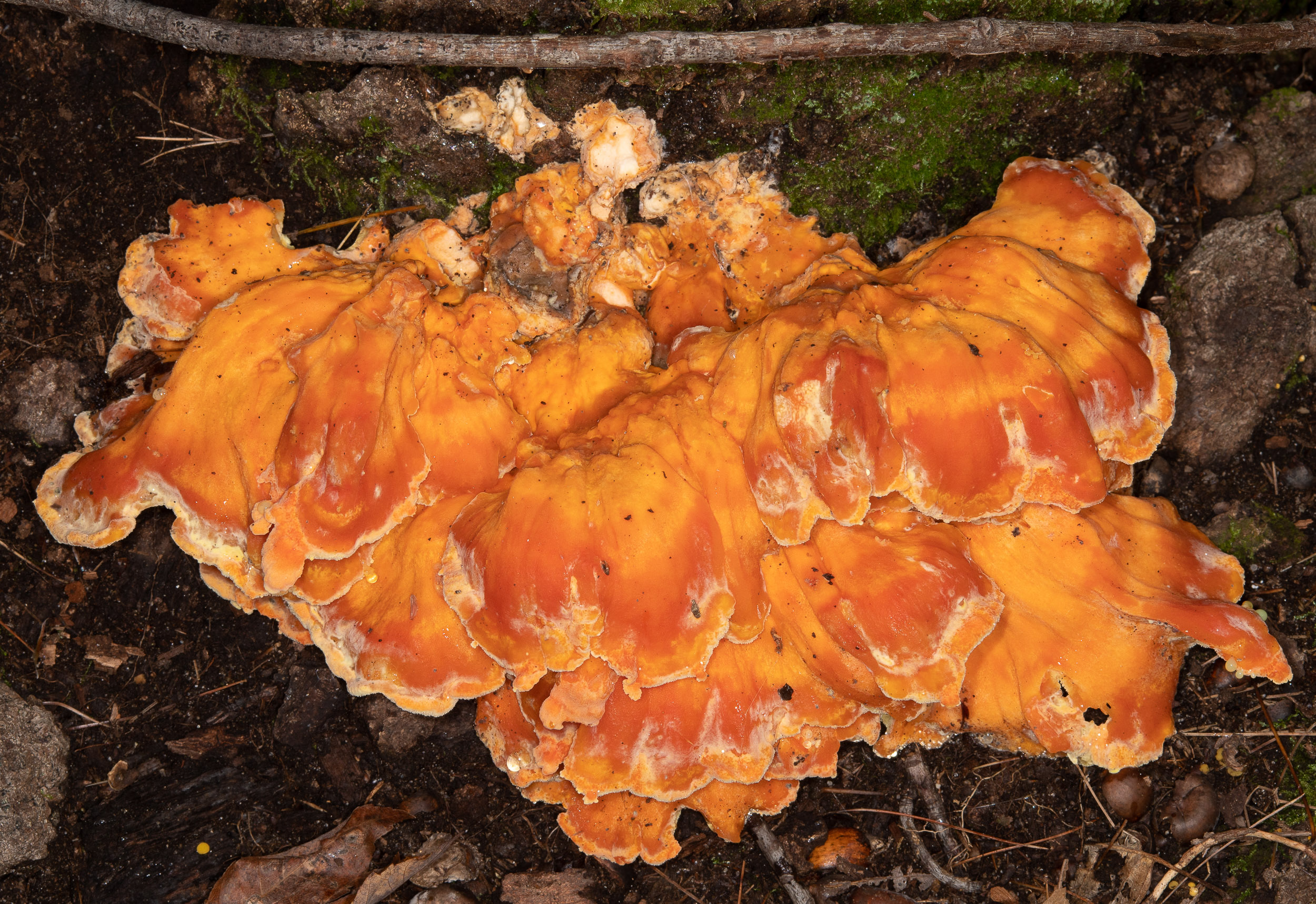
10/7/2018 · Shepley Hill, Groton, Massachusetts 

8/23/2016 · Kibby’s Climb, Beaver Brook Co, Hollis, New Hampshire 

7/3/2023 · Gettysburg National Military Park, Gettysburg, Pennsylvania 
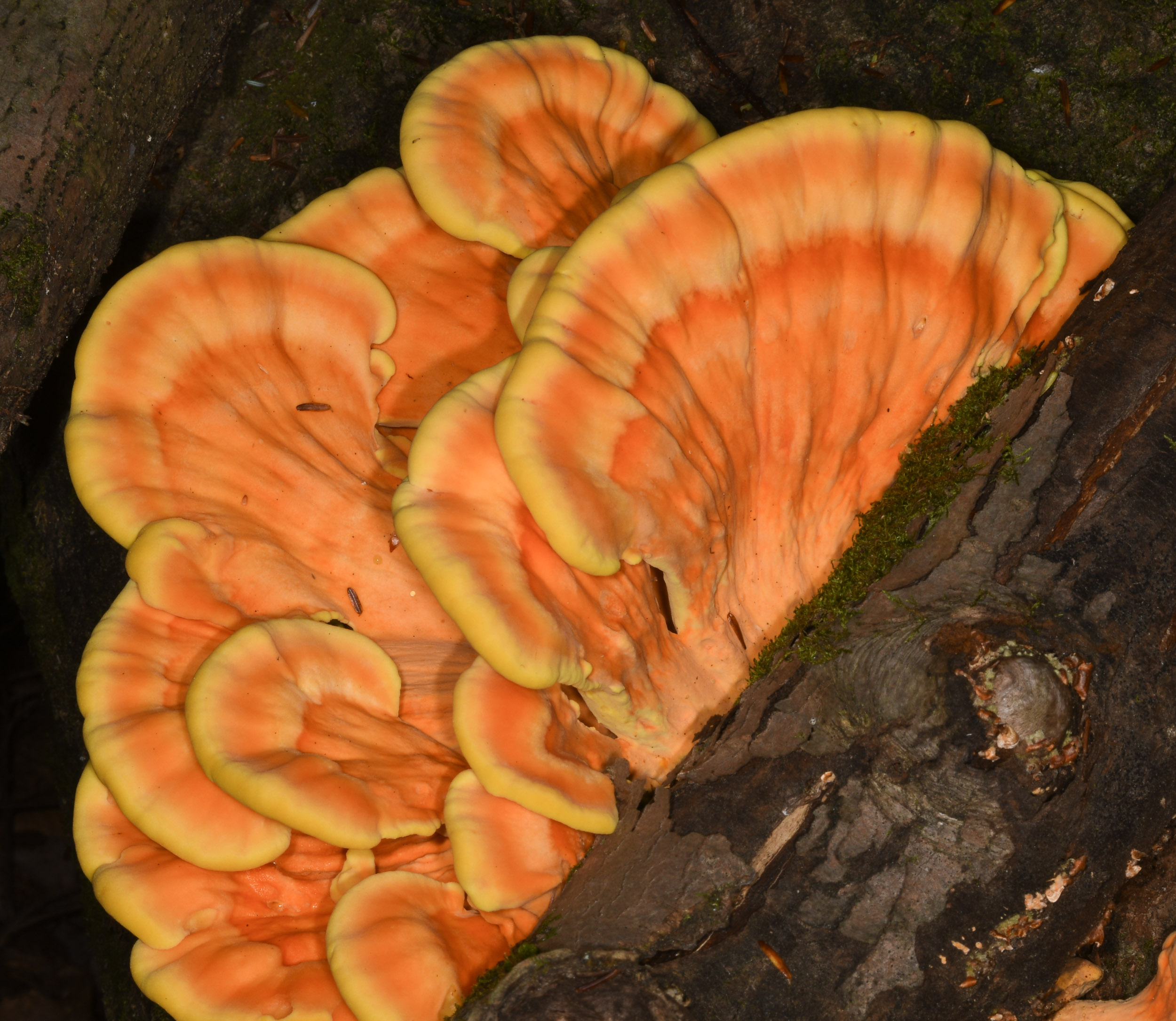
9/4/2016 · Blue Trail, Willard Brook State Park, Ashby, Massachusetts 

9/4/2016 · Blue Trail, Willard Brook State Park, Ashby, Massachusetts 
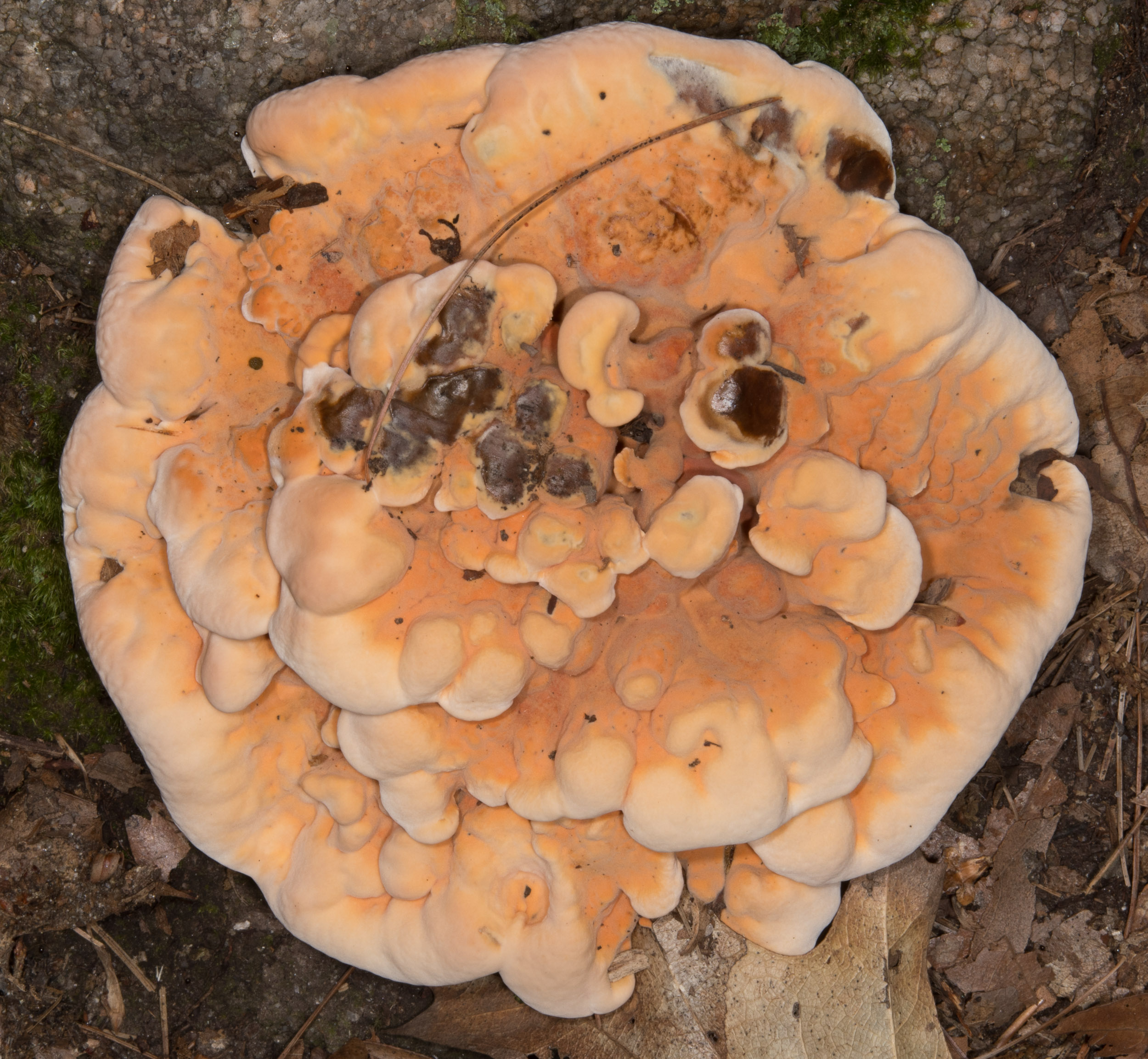
9/24/2017 · Andres Institute of Art, Big Bear Mountain, Brookline, New Hampshire · ≈ 5 × 5″ (13 × 12 cm) 

9/5/2013 · Beaver Brook Conservation Area, Hollis, New Hampshire · ≈ 12 × 10″ (30 × 25 cm) 
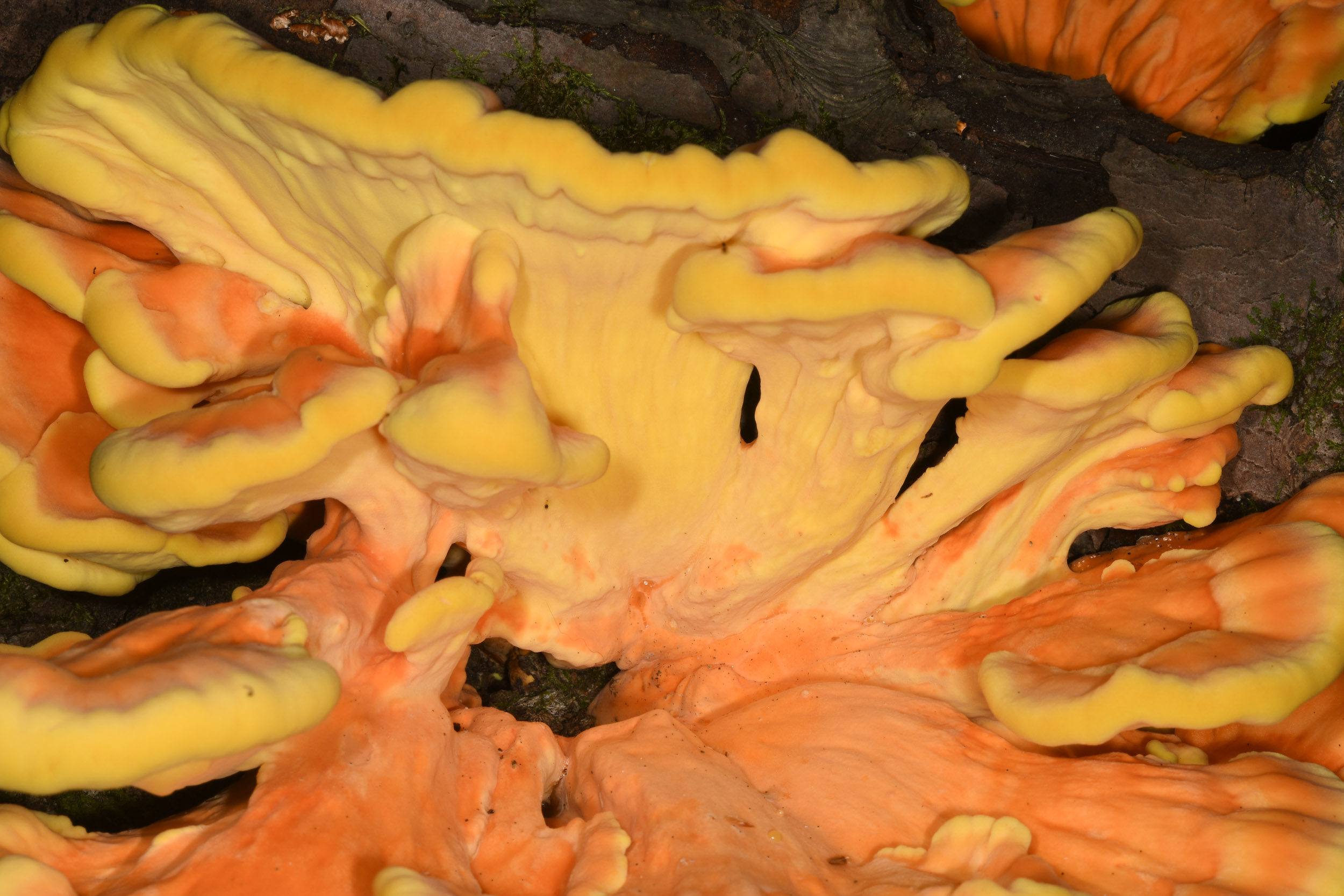
9/4/2016 · Blue Trail, Willard Brook State Park, Ashby, Massachusetts 

9/23/2007 · Milford, Pennsylvania 
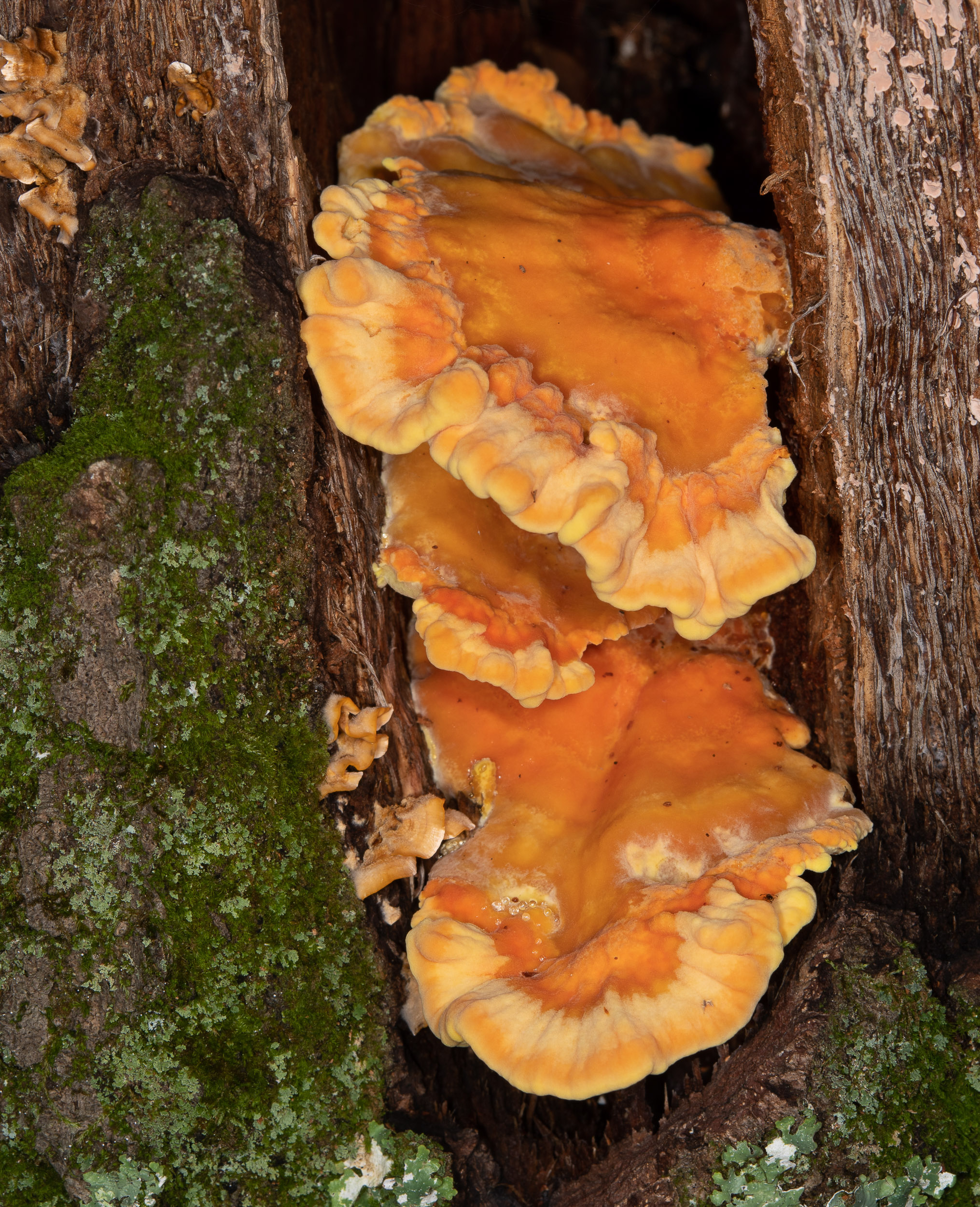
10/6/2018 · Marble Hill Conservation Area, Stow, Massachusetts 
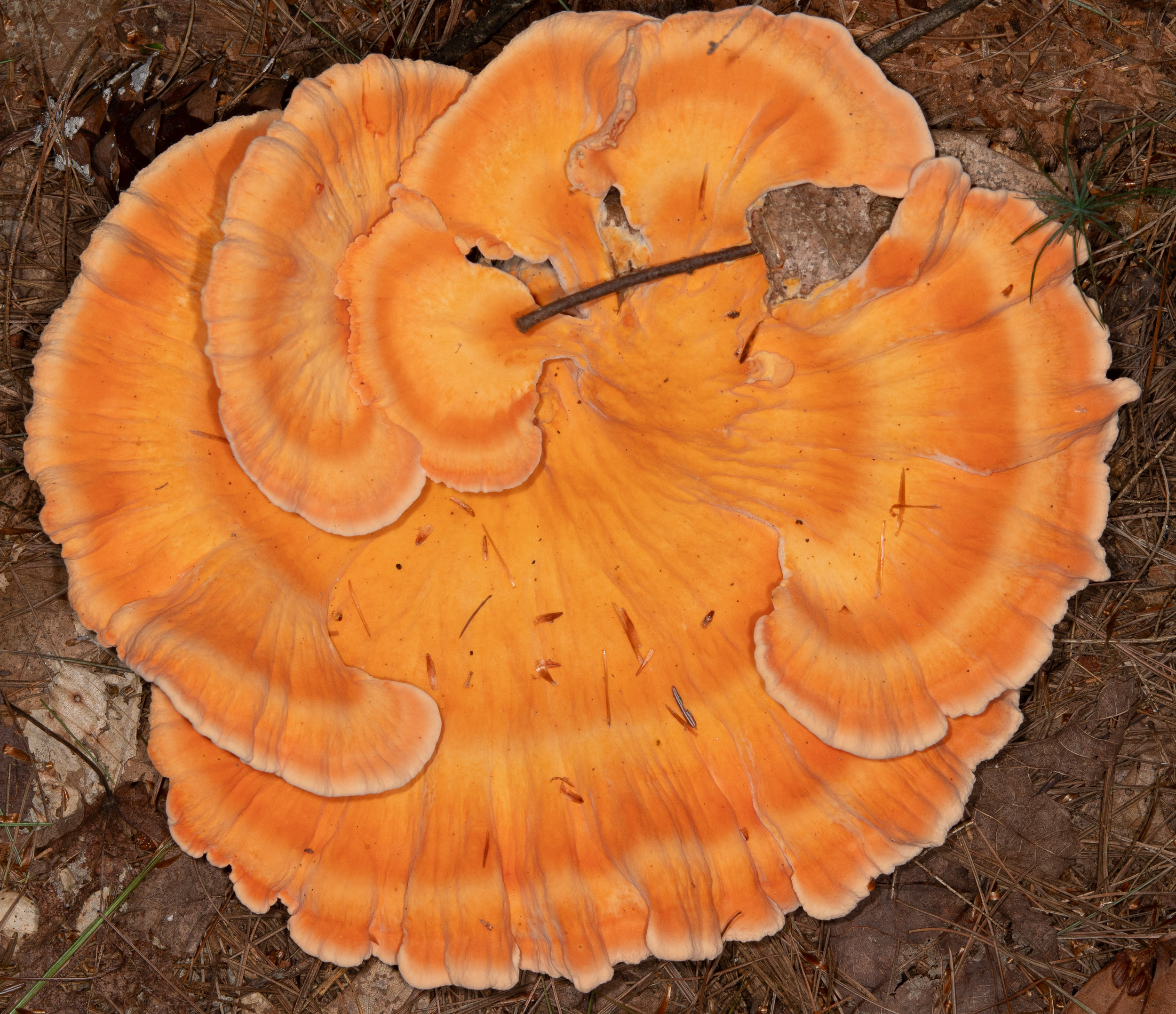
8/31/2018 · Pearl Hill State Park, Townsend, Massachusetts · ≈ 11 × 10″ (28 × 24 cm) 
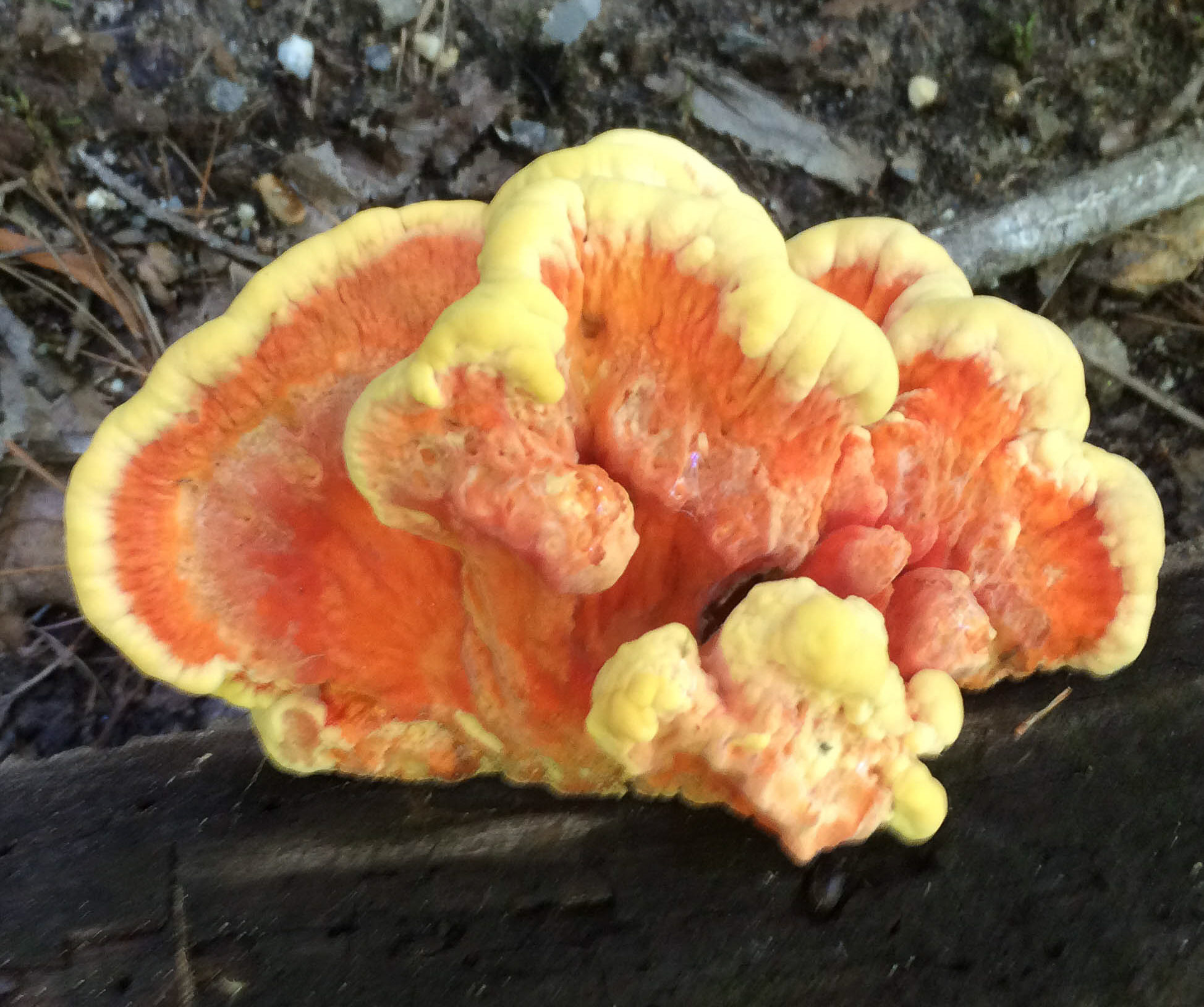
8/23/2016 · Hollis, New Hampshire, United States 
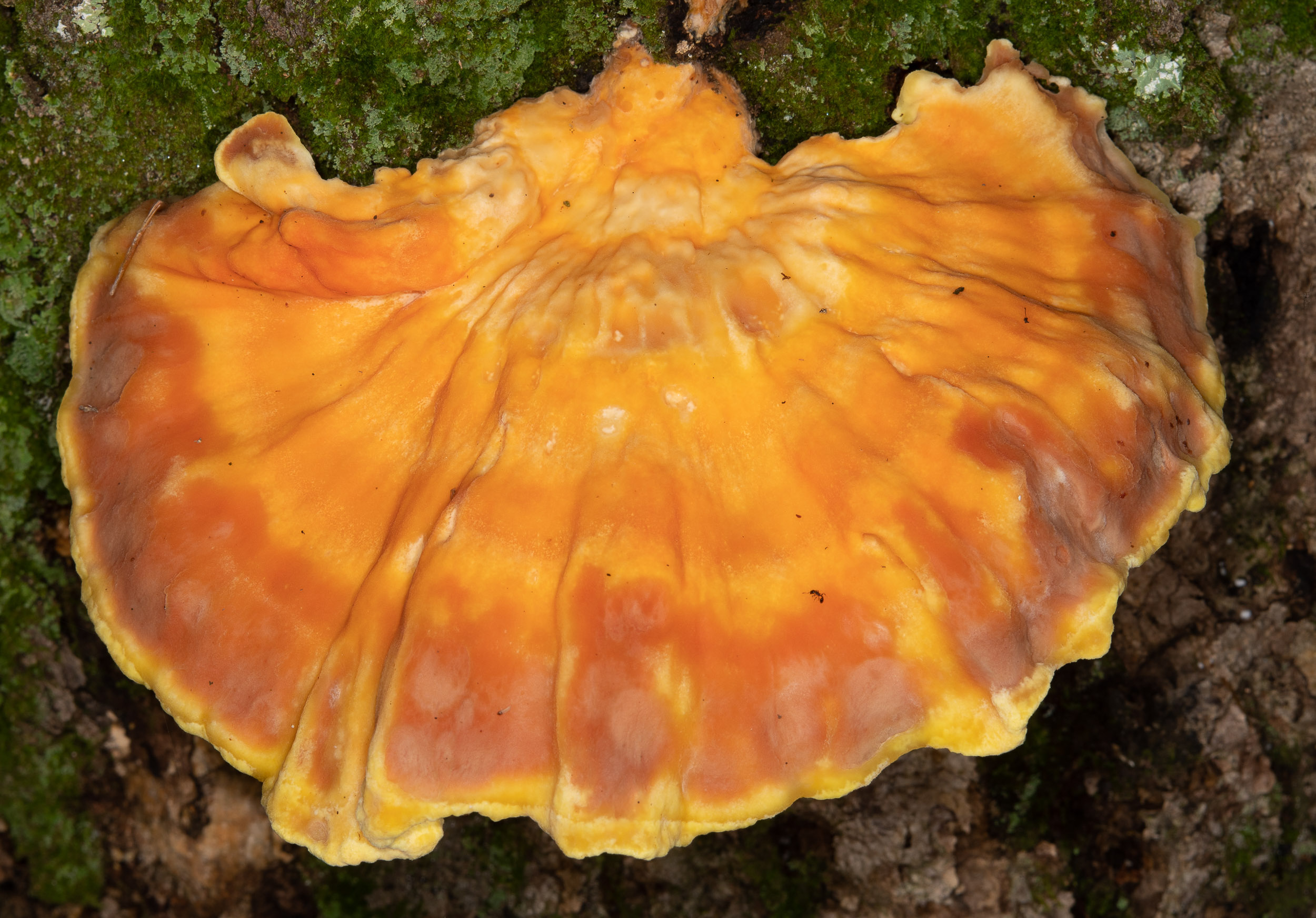
10/6/2018 · Marble Hill Conservation Area, Stow, Massachusetts 
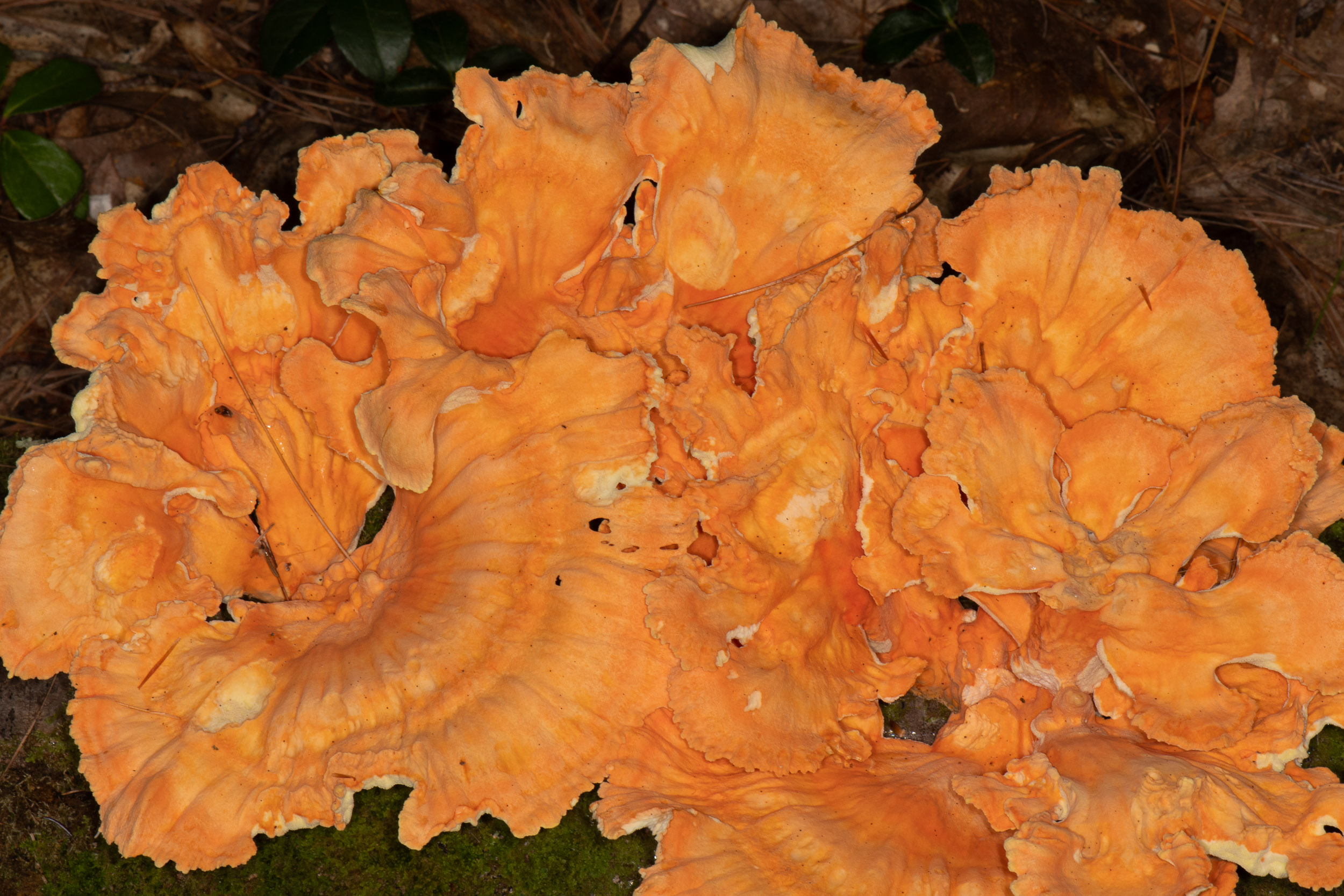
9/1/2021 · Crystal Spring Farm Main Loop, Brunswick, Maine · ≈ 13 × 9″ (33 × 22 cm) 
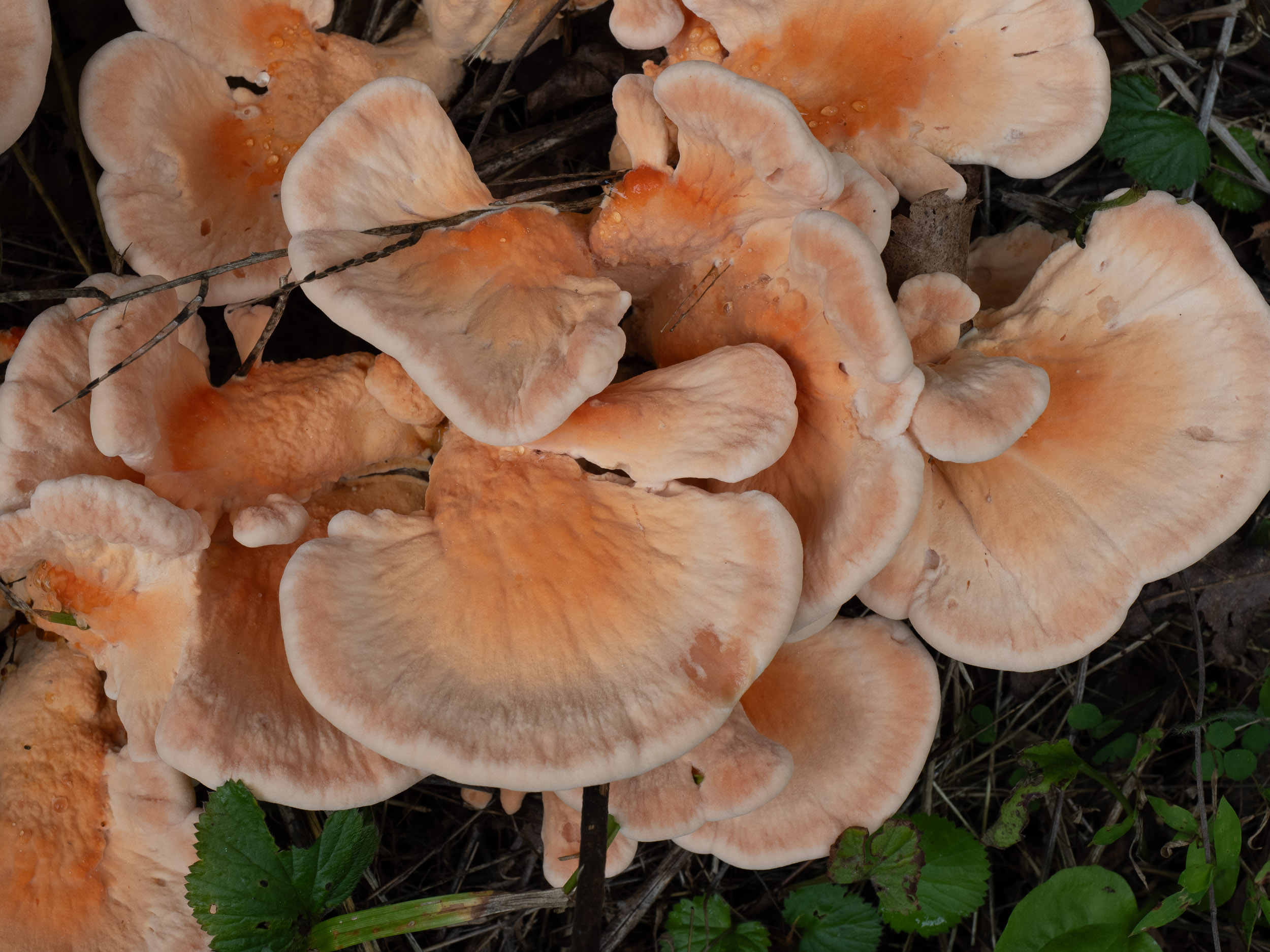
7/3/2023 · Gettysburg National Military Park, Gettysburg, Pennsylvania 
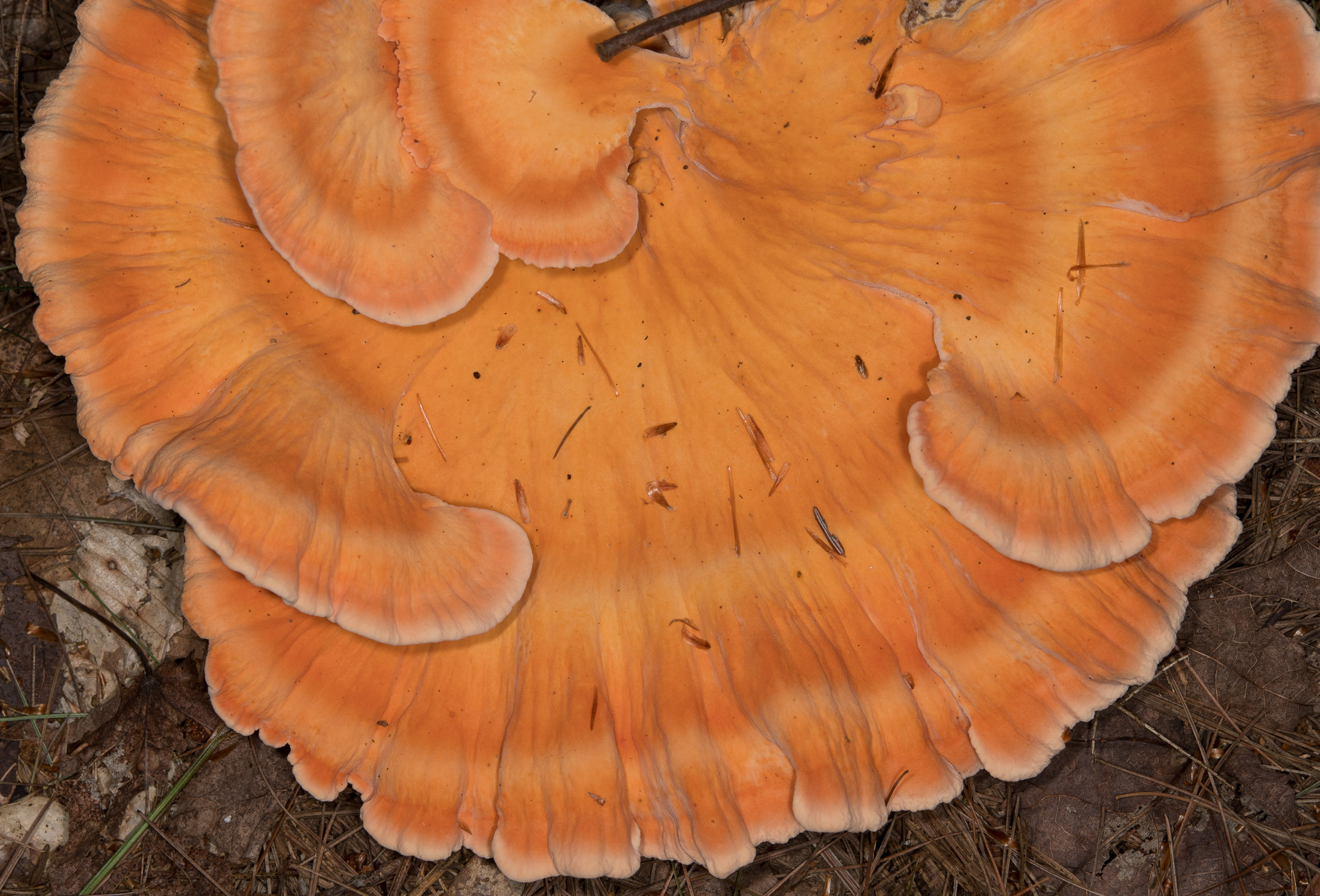
8/31/2018 · Pearl Hill State Park, Townsend, Massachusetts · ≈ 11 × 8″ (29 × 19 cm) 
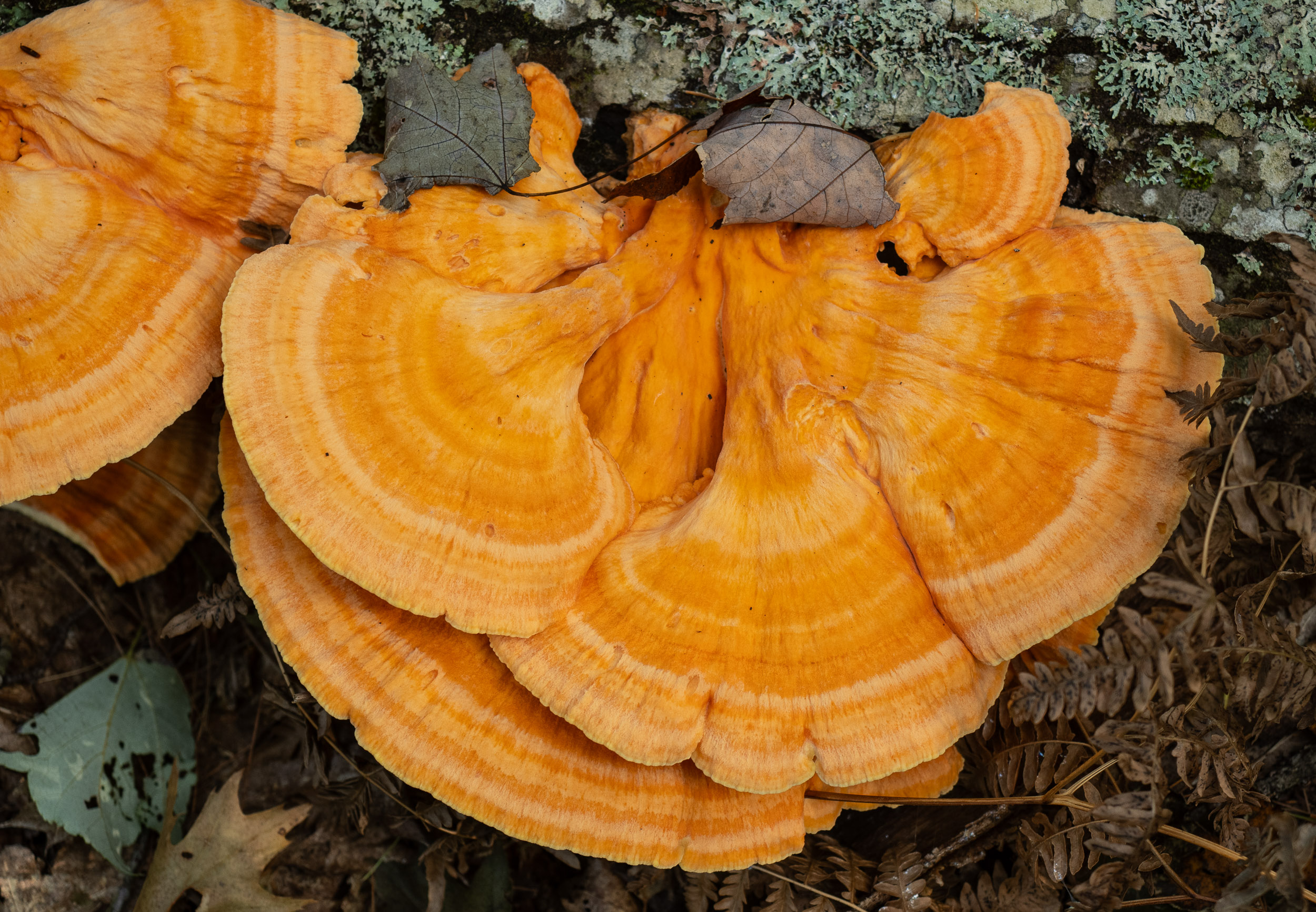
10/1/2023 · Mill Pond Preserve, Arrowsic, Maine 

8/14/2015 · Roost Trail, Grafton Notch State Park, Newry, Maine · ≈ 7 × 9″ (18 × 23 cm) 
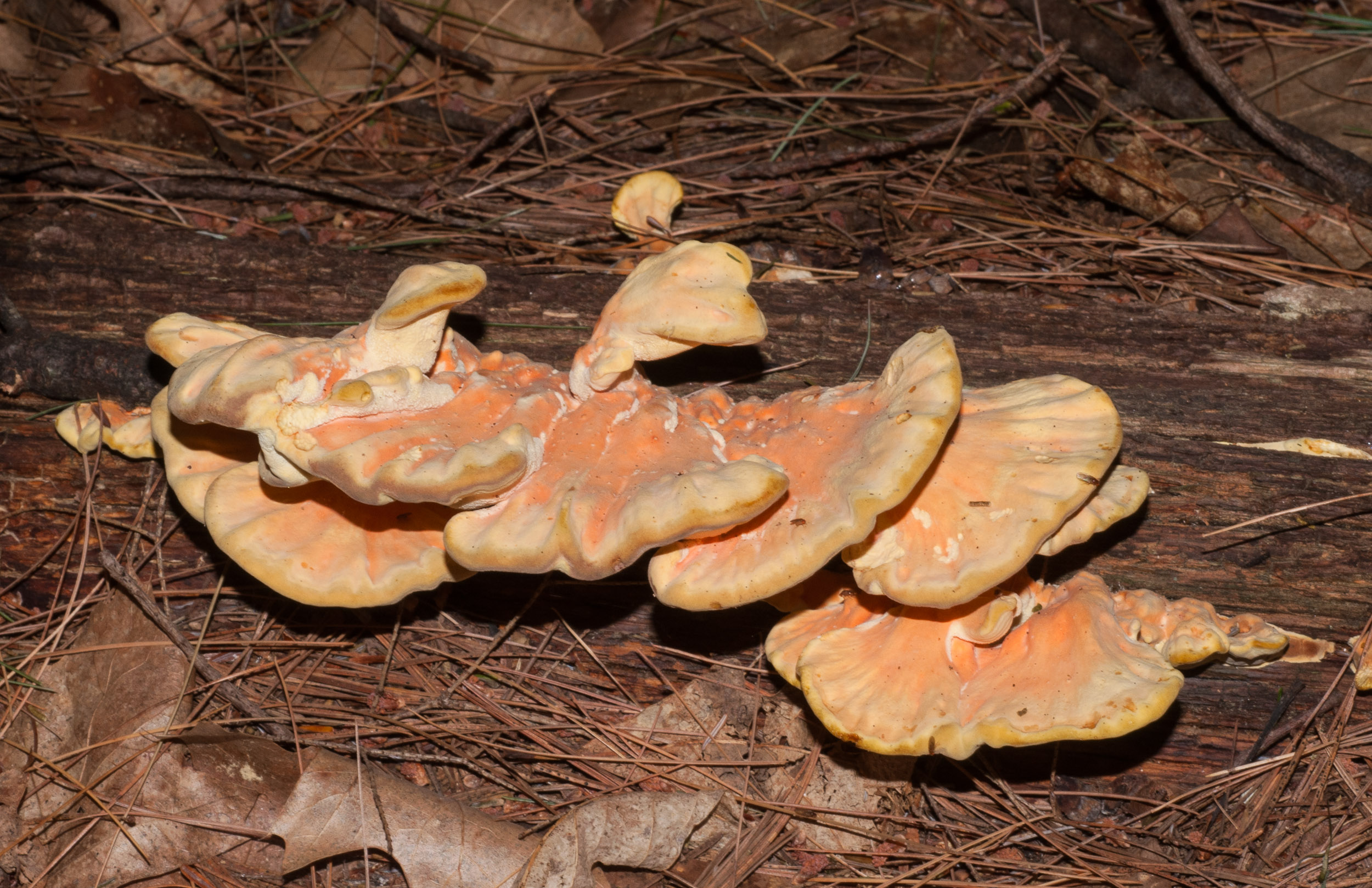
7/14/2012 · Yellow Trail, Pearl Hill State Park, Townsend, Massachusetts · ≈ 10 × 7″ (26 × 16 cm) 
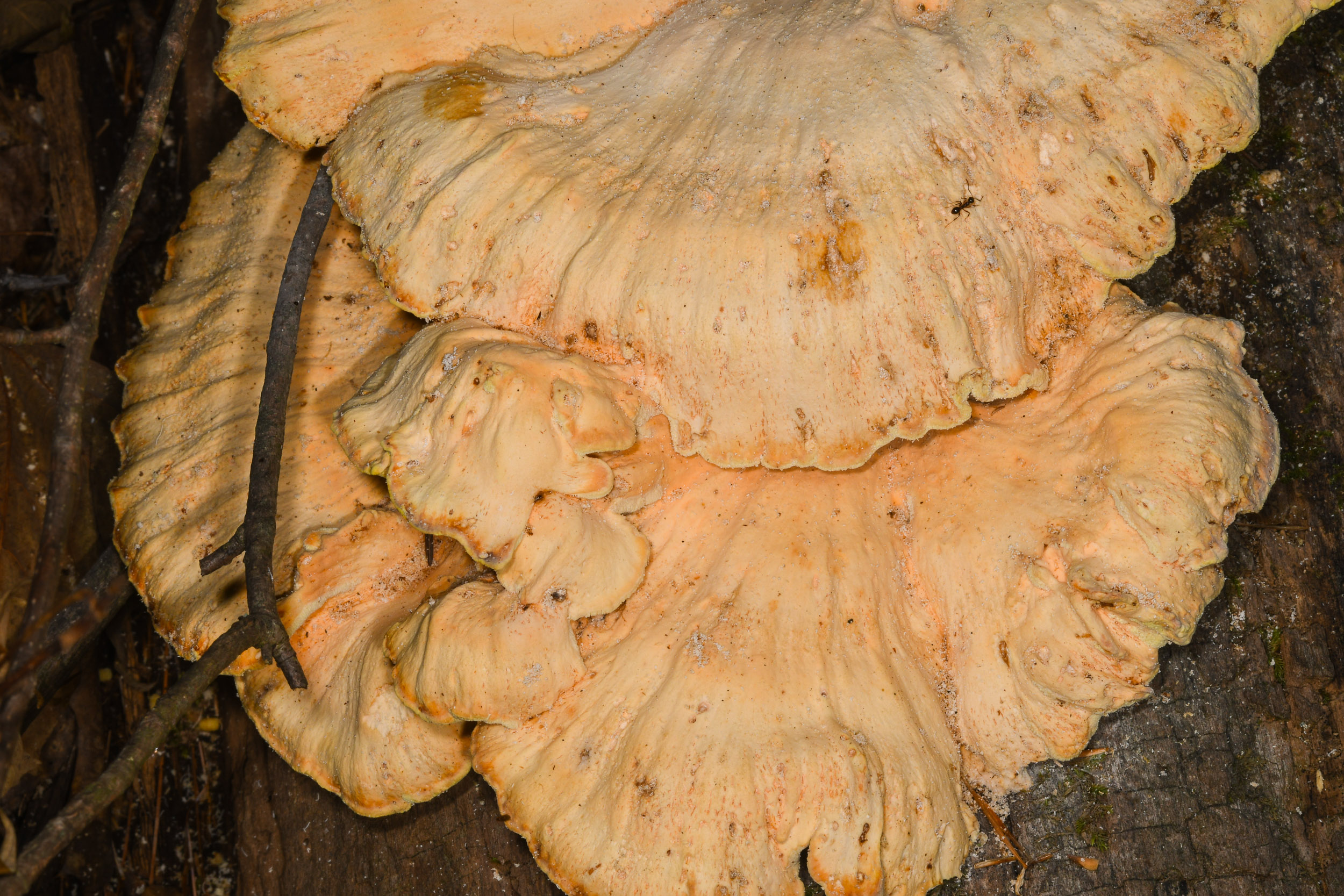
8/27/2016 · Williams Barn and Sørhaug Woods, Groton, Massachusetts 
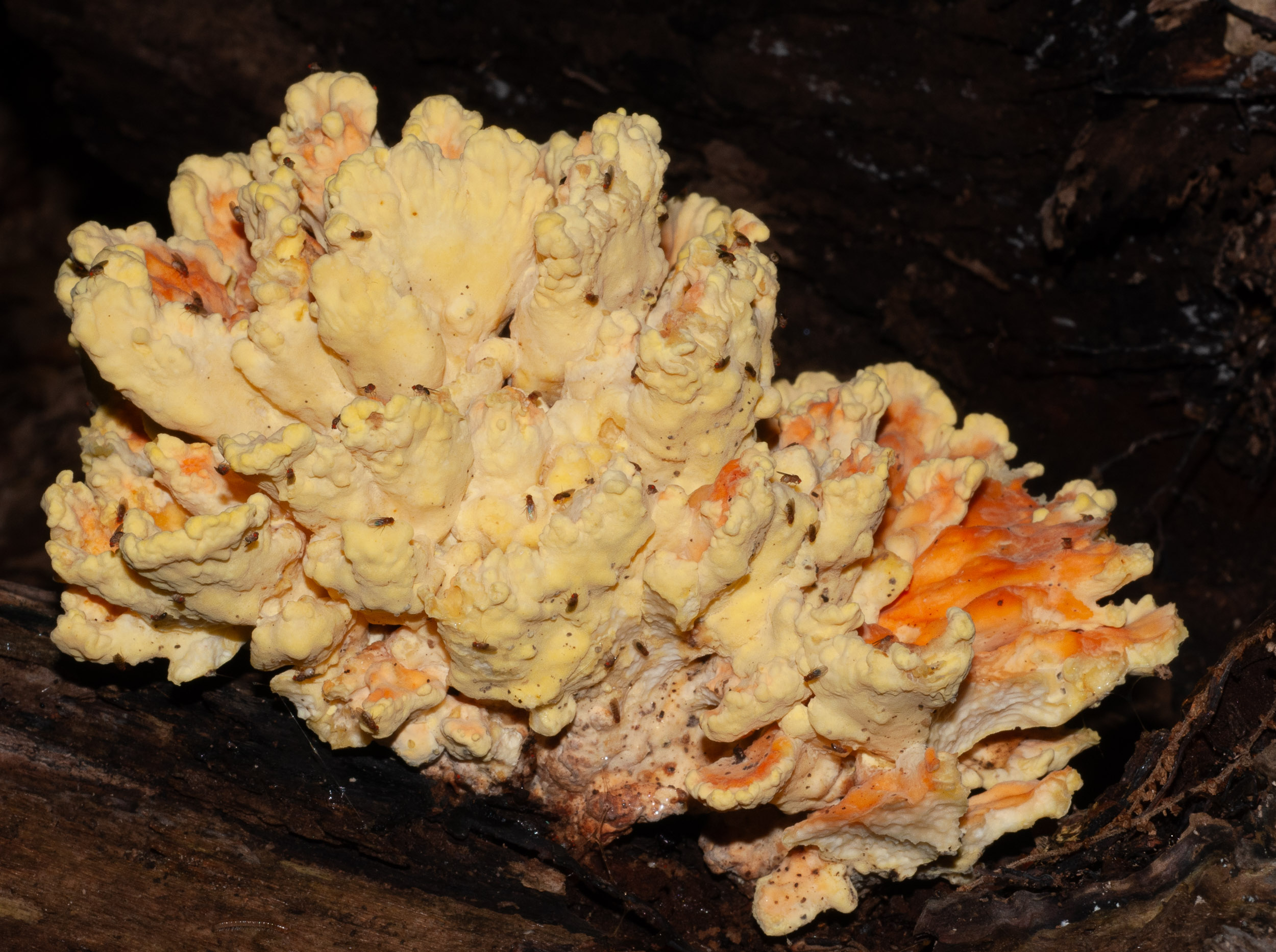
6/24/2010 · Nashua River Rail Trail, Groton Center, Groton, Massachusetts · ≈ 9 × 6″ (21 × 16 cm) 
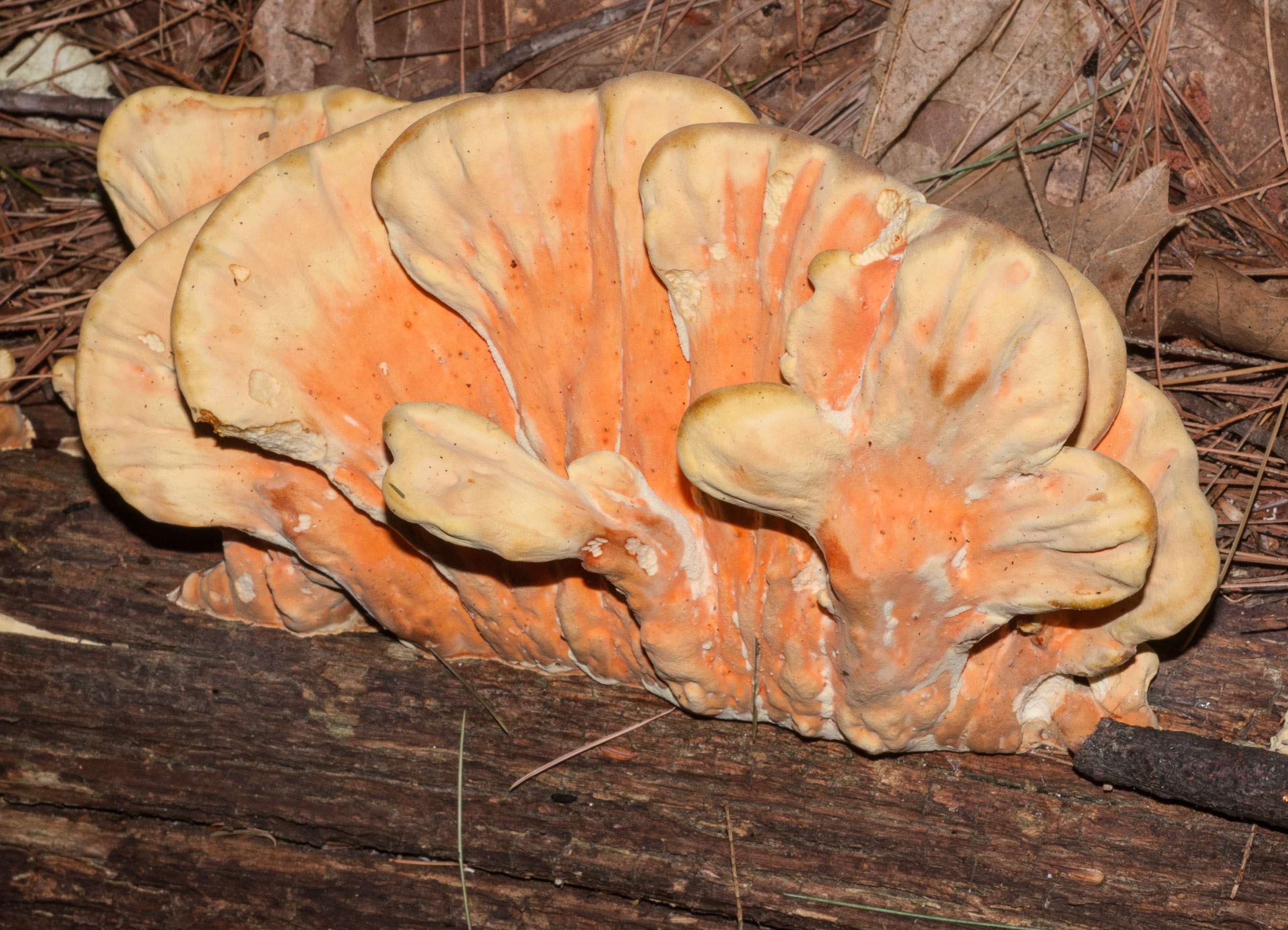
7/14/2012 · Yellow Trail, Pearl Hill State Park, Townsend, Massachusetts · ≈ 8 × 6″ (20 × 15 cm) 
| Roughly 75 people in North America are poisoned each year by mushrooms, often from eating a poisonous species that resembles an edible species. Though deaths are rare, there is no cure short of a liver transplant for severe poisoning. Don’t eat any mushroom unless you are absolutely certain of its identity! Please don’t trust the identifications on this site. We aren’t mushroom experts and we haven’t focused on safely identifying edible species. |
Laetiporus sulphureus description by Thomas H. Kent, not updated.

© FloraFinder.org. All rights reserved.