Lonicera L.
Honeysuckle
Non-native invasive honeysuckles
Lonicera maackii
Lonicera fragrantissima
Lonicera japonica


|
Lonicera L. Honeysuckle Non-native invasive honeysuckles | |||
Lonicera maackii |
Lonicera fragrantissima |
Lonicera japonica |
|
|---|---|---|---|
| Common Name | |
|
|
| Plant | Deciduous shrubs are up to 20′ (6 m) in size. Mature stems contain a hollow white or tan pith. Bark is deeply fissured and exfoliating, often peeling. | Shrubs are 3–9½′ (1–3 m) around. | A vine up to 16′ (5 m) in size. Young stems are reddish- or light-brown, while older stems are hollow, with peeling bark |
| Leaves | Opposite, medium to dark green, ⅞–3½ ⨉ ¾–1½″ (2.5–9 ⨉ 2–4 cm), lanceolate to ovate, with smooth edges and at least some rough-feeling hairs. | Opposite, elliptic to broad-ovate, with smooth edges. They are ⅞–3″ (2.5–7.5 cm) long, and dull blue-green to dark green. | Opposite, roughly oval-shaped, with smooth edges. Younger leaves may have lobes. |
| Flowers | Fragrant white flowers, aging to yellow or pale orange in color, occur in pairs. Flowers have two lips and are about 1″ (2.5 cm) in size. They appear from May to June. | Blooms are a creamy white color, in pairs, appearing in March-April, and very fragrant, with a lemony smell. Each flower is ⅜″ (1 cm) in size. | Flowers are white, showy, fragrant, about 1″ (2.5 cm) in size. They fade to a yellow color, so the vine appears to have white and yellow flowers |
| Fruit | Bright red to black, translucent berries are 1/16–⅛″ (2–6 mm) in size. Each berry contains multiple seeds. | Orange to red berries ⅛–¼″ (6–8 mm) around. | Black, about ⅛″ (3.2 mm) around. |
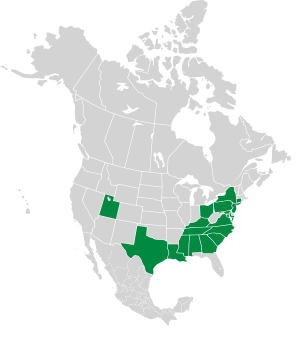
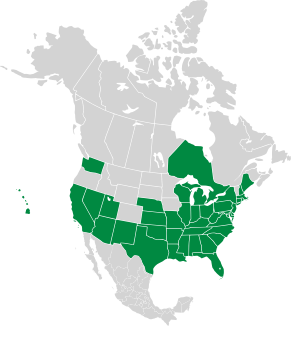
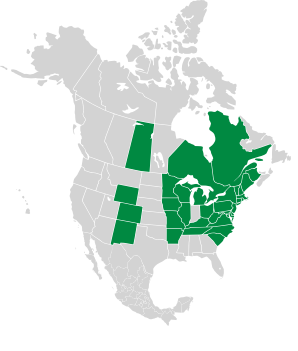
| Range/ Zones |
|
|
|
| Habitats | Anthropogenic habitats, i.e. those disturbed or modified by man, such as roadsides and railroads, woodland borders, some forests, fields, unused or disturbed lands and yard edges.. | Woodlands, fields, and most disturbed sites. | Disturbed areas, such as roadsides and floodplains. It spreads more slowly in forested areas. |



Lonicera description by Thomas H. Kent, not updated.
© FloraFinder.org. All rights reserved.