FloraFinder uses cookies only for correct operation. More info. Okay
Malus pumila Mill.
Apple, paradise apple
Although Malus sylvestris is believed to be the first cultivated apple
species, this species, M. pumila, is the best known of the “wild” apples.
Many cultivars exist.
Plants: Trees are 6½–33′ (2–10 m)
tall, with short crooked trunks 1–2½′ (30–76 cm) in diameter and a
rounded crown of gnarly branches. Bark is thin and reddish to dark gray, ridged or
plated, and peels easily.
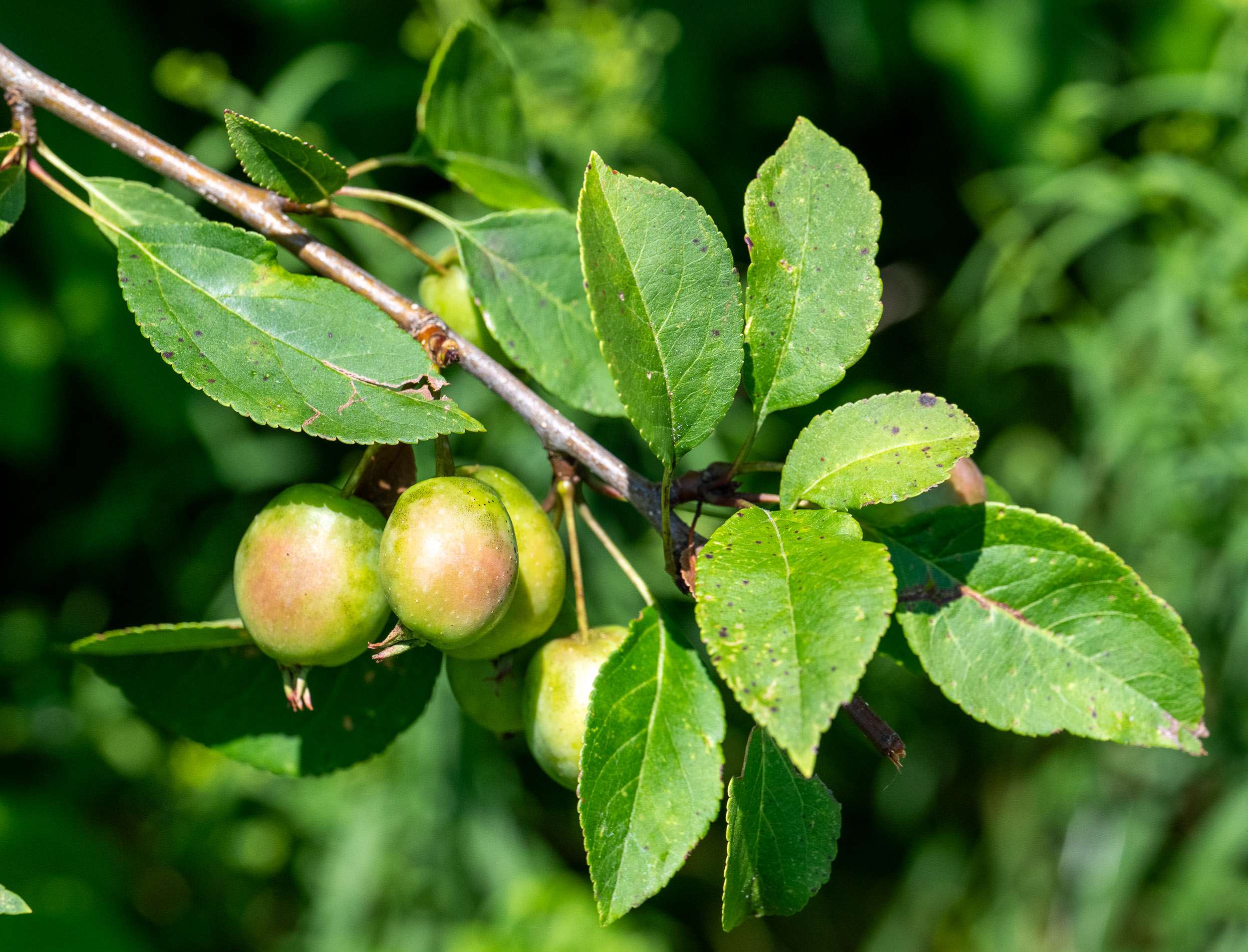
Leaves: Alternate, simple (not lobed),
1¾–3½ ⨉ 1¼–2″ (5–9 ⨉ 3.5–6 cm). Leaves are more
or less lanceolate, with fine serrations or crenations. They are hairy when
young, dark olive-green
above, and paler below. Their petioles are ⅜–1¼″ (1–3.5 cm) long. Leaf bases are rounded, while tips may be
blunt or pointed.
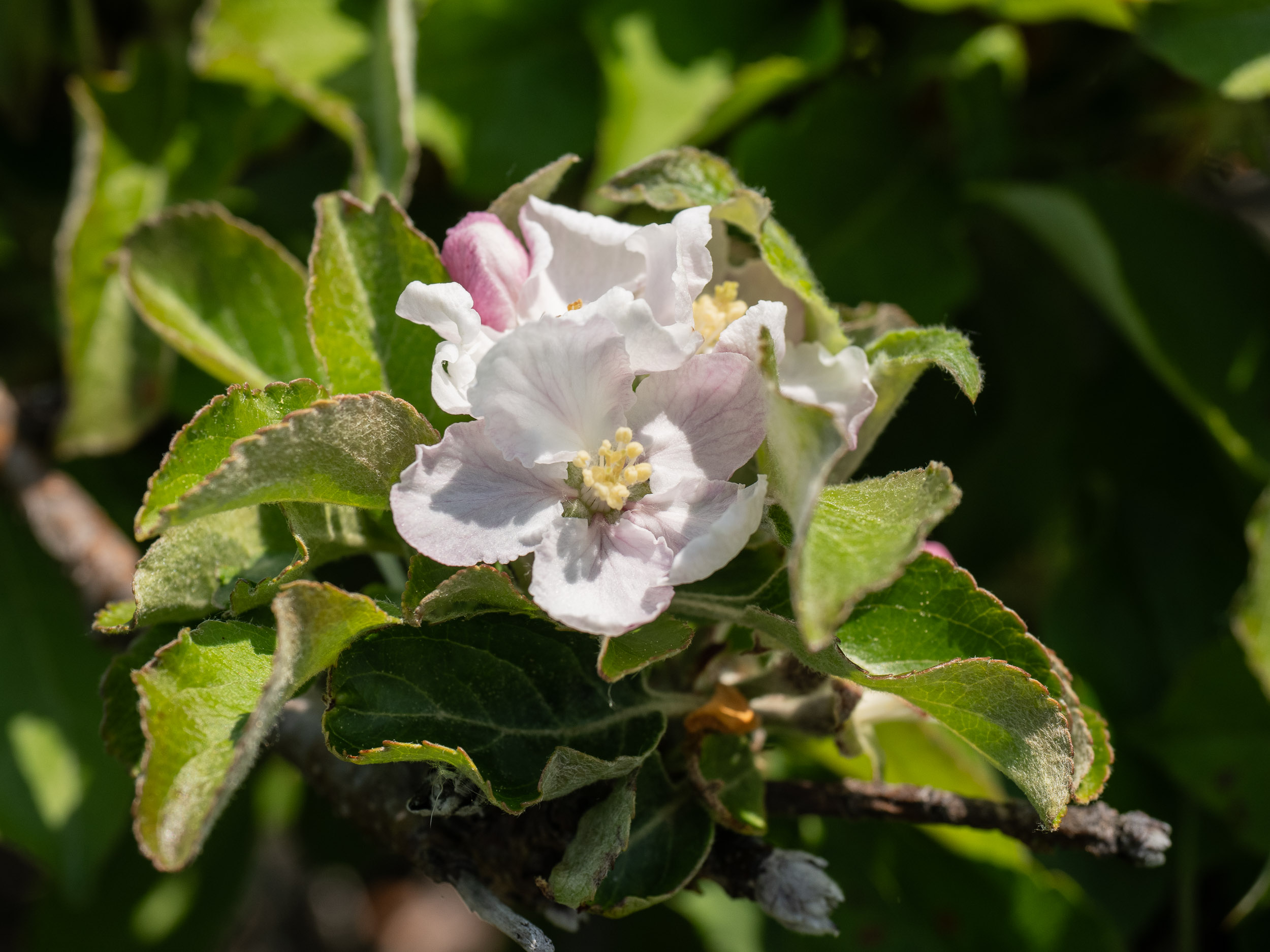
Flowers: Small umbels or corymbs
of fragrant flowers.
Flowers are 1–1½″ (3–4 cm) around, with five pinkish or white rounded petals, five small sepals,
and about 20 stamens with yellow anthers.
Each flower’s pedicel is ⅜–⅞″ (1–2.5 cm) long. Flowers appear from
April to May.
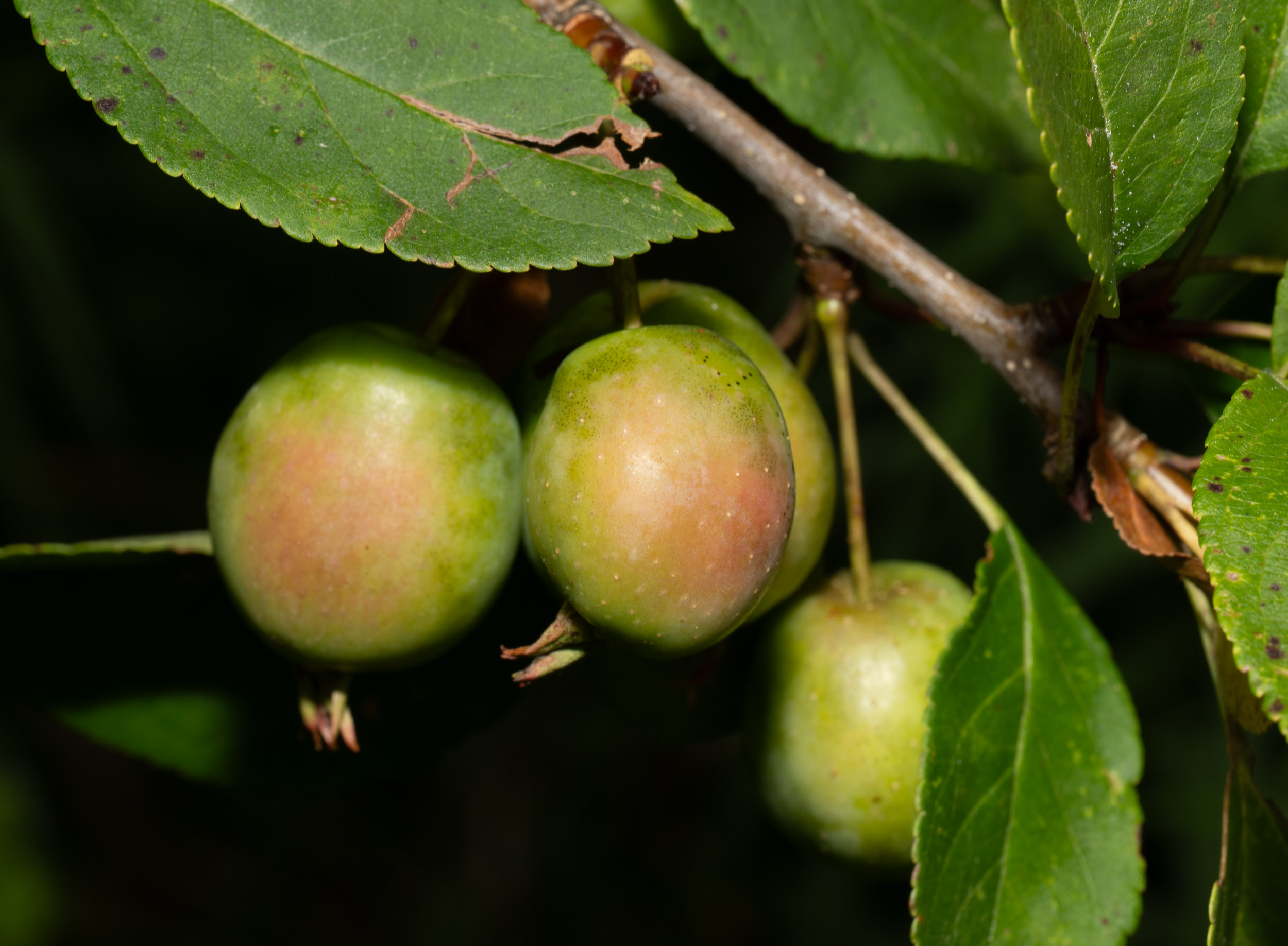
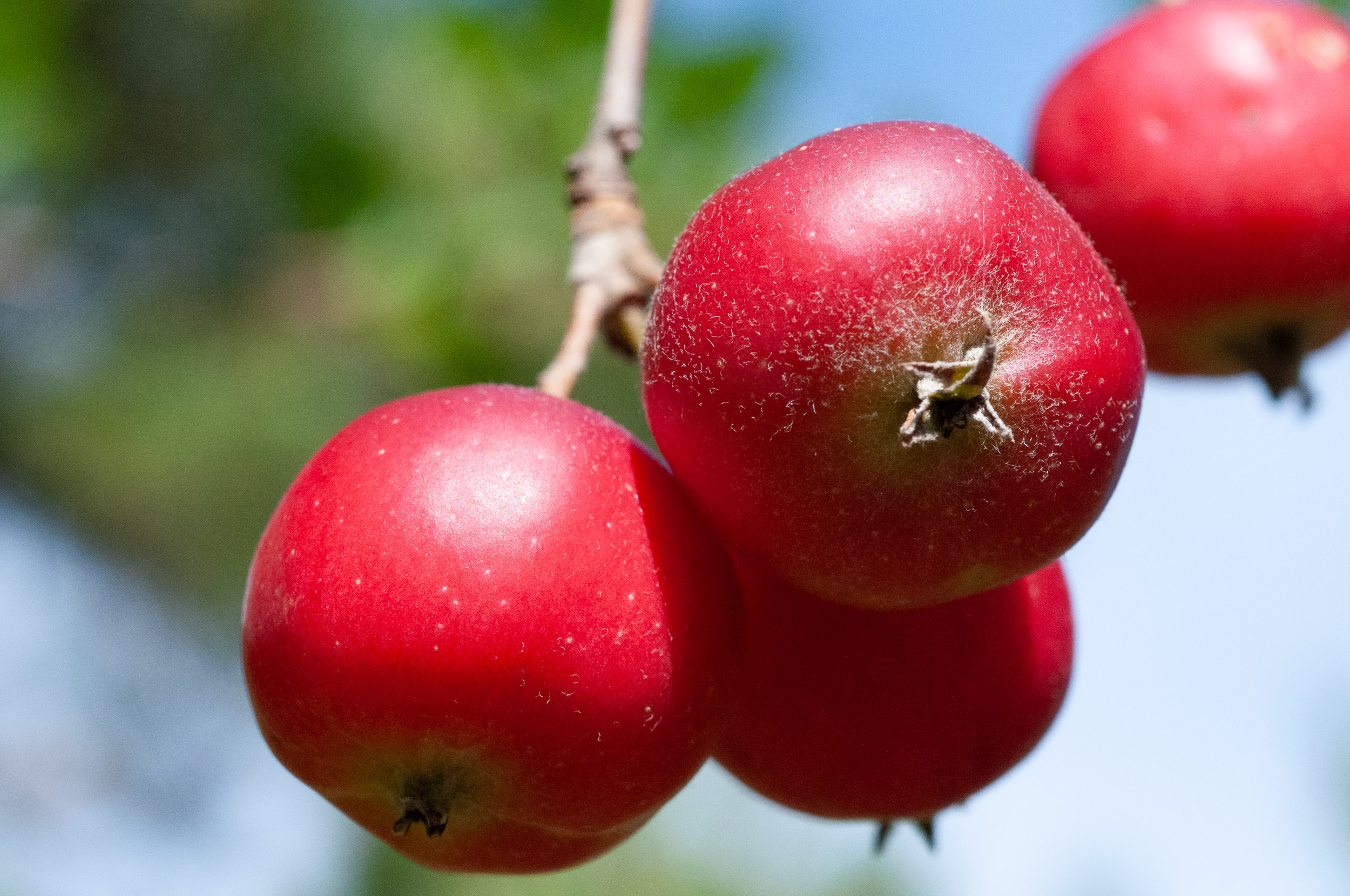
Fruits: Fertile flowers become
small green pomes that mature over the summer to red or greenish red
(rarely yellow) apples up to
4″ (10 cm) around. Skins typically have a waxy bloom. Seeds are
light brown.
Habitats: Anthropogenic (human-disturbed habitats), forest edges, roadsides, meadows and fields, at
elevations below 5249′ (1.6 km).
Edibility: Apples have been cultivated since Roman times,
prized for their taste and hardiness.

 ID is uncertain