Lophocereus schottii (Engelm.) Britton & Rose
Pachycereus schottii (Engelm.) D.R. Hunt
Señita cactus, old man cactus
Old man cactus is native to southwestern North America—Arizona, and Baja California and Sonora in Mexico.
Identification: Flowers are Fruits are (Note: there is another old man cactus too!)
Plants: Señita grows up to 12′ (3.7 m) high, with clusters of up to 100 stems 4–8″ (10–20 cm) in diameter. Near the bottom of the columns, the areoles (bumps which produce the spines) are 1/16–3/16″ (3–5 mm) around, producing 1-15 spines 1/16–¼″ (2.5–7.6 mm) long. On the upper part of the columns, areoles are ¼–½″ (7.6–15 mm) around. Each areole includes 20-75 spines 1–4″ (3–10 cm) long. It is these long, white, hairlike spines the give the cactus its common names.
Flowers: Funnel-shaped, cream-colored to bright pink, about 1½″ (3.8 cm) across. Flowers usually bloom at night.
Fruits: Round spiny red fruits, filled with red pulp, are ⅜–1″ (1–3 cm) around.
Habitats: Und in flat sandy areas and scrublands in frost free deserts.
Edibility: Fruits are edible, but rarely eaten.
Online References:
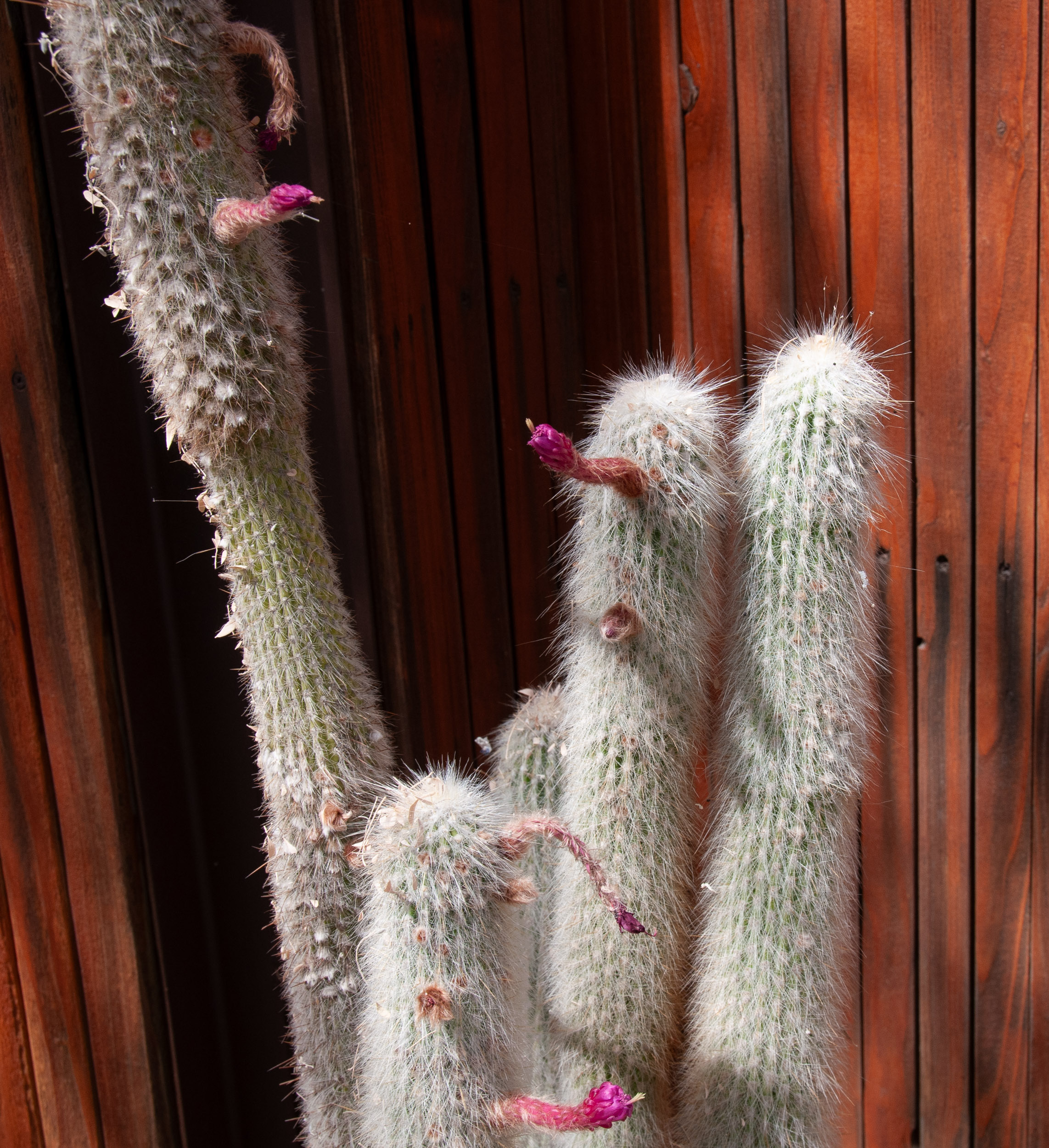
5/24/2009 · Arizona Sonora Desert Museum, Tucson, Arizona · ≈ 1 × 1½′ (41 × 45 cm) 
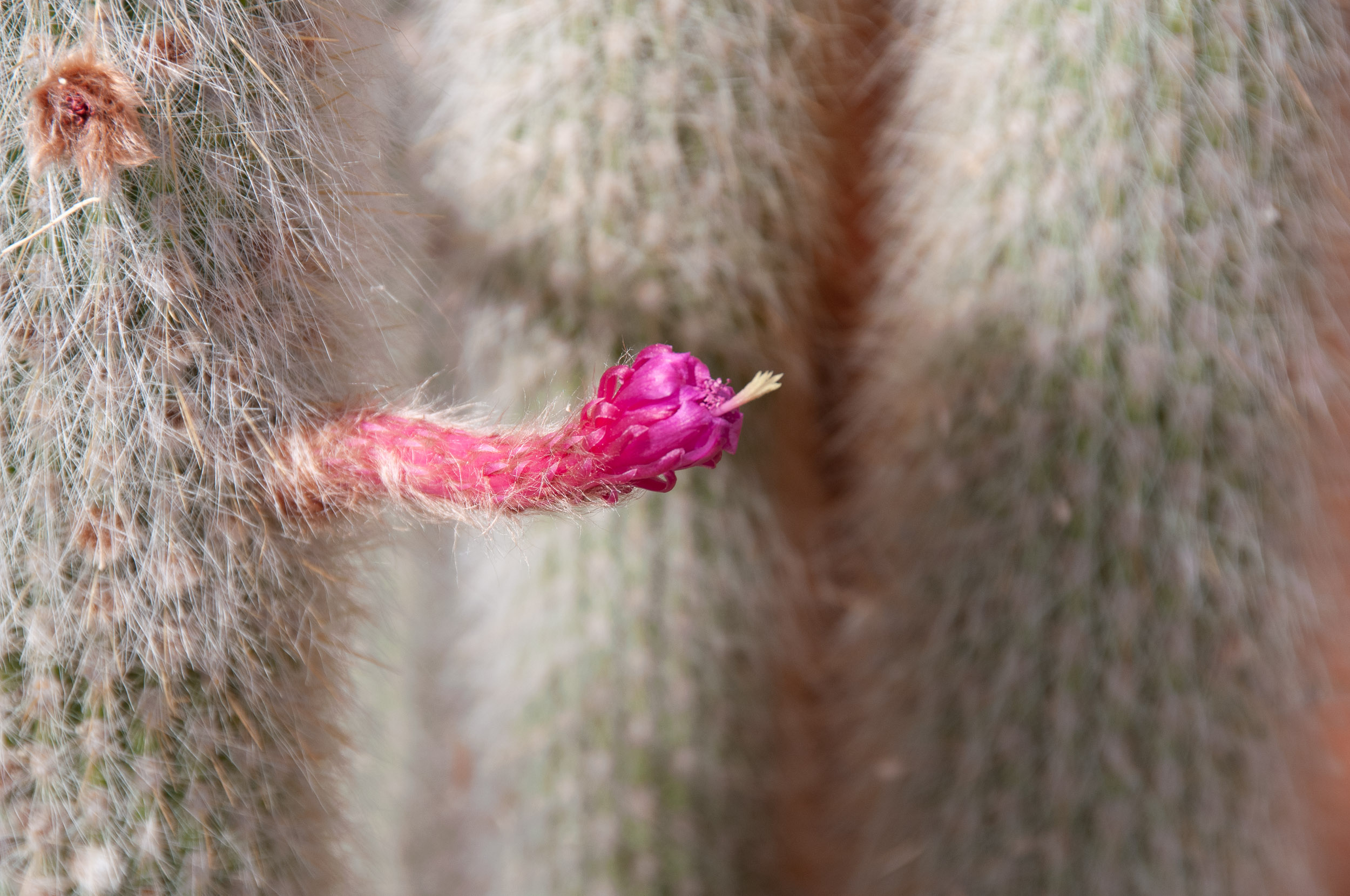
5/24/2009 · Arizona Sonora Desert Museum, Tucson, Arizona · ≈ 3½ × 2½″ (9.3 × 6.2 cm) 
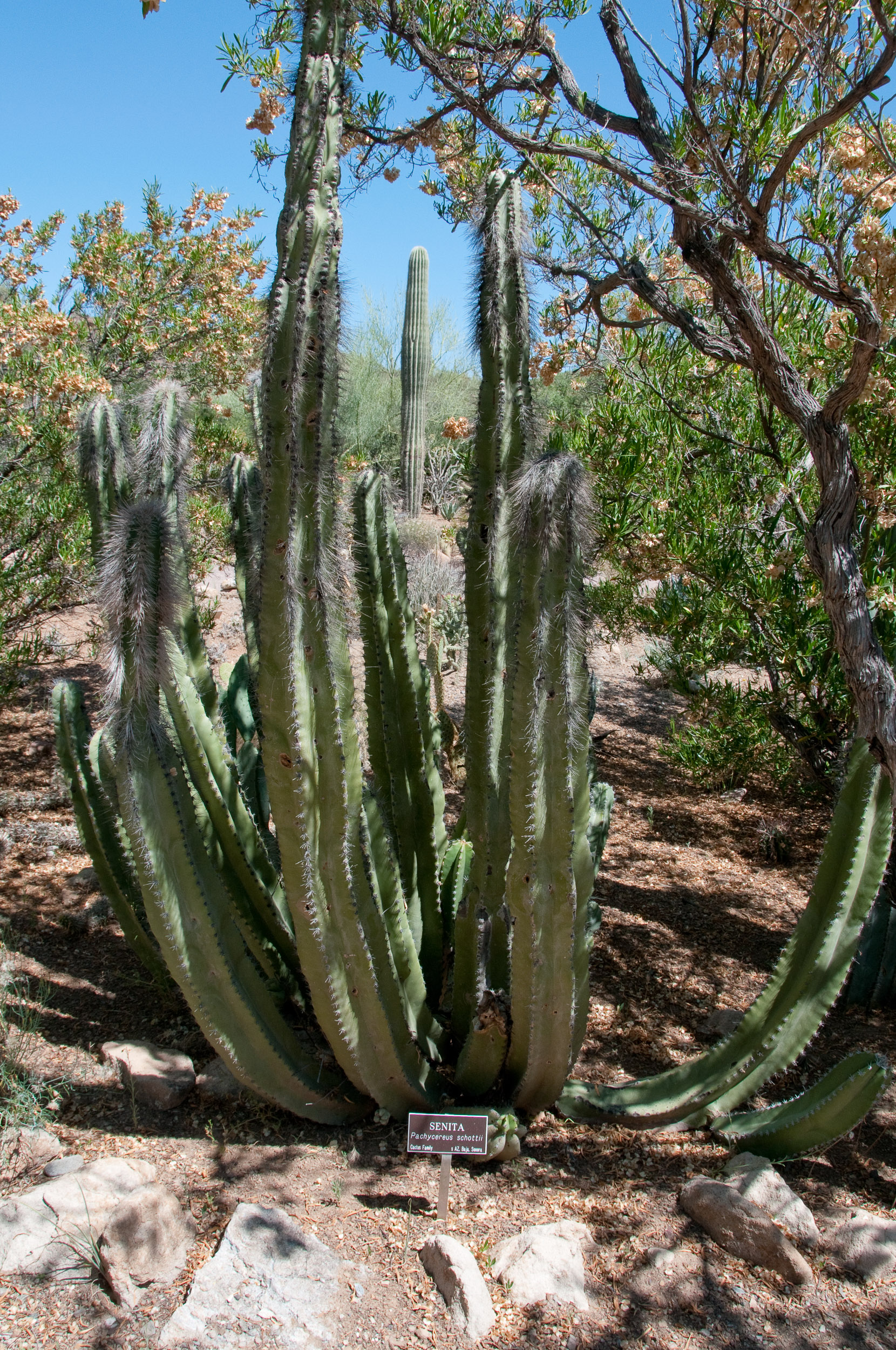
5/25/2009 · Boyce Thompson Arboretum, Superior, Arizona · ≈ 4½ × 6′ (1.5 × 1.9 m) 
| Kingdom | Plantae | Plants, but not fungi, lichens, or algae (from Stearn's Botanical Latin) |
| Subkingdom | Tracheobionta | Vascular plants—plants with a “circulatory system” for delivering water and nutrients |
| Division | Magnoliophyta | Flowering plants, also known as angiosperms |
| Class | Magnoliopsida | Dicotyledons—plants with two initial seed leaves |
| Subclass | Caryophyllidae | Cacti, many other succulents, carnivorous plants, and leadworts |
| Order | Caryophyllales | Includes cacti, carnations, amaranths, ice plants, and many carnivorous plants |
| Family | Cactaceae | Succulent (water-storing) plants, often spiny |
| Genus | Pachycereus | From the ancient Greek παχύς (pachys), “thick,” and the Latin cereus, “torch” |
| Species | schottii | After Arthur Carl Victor Schott (1814-1875), one of the naturalists of the Mexican Boundary Survey |
Pachycereus schottii description by Thomas H. Kent, not updated.

© FloraFinder.org. All rights reserved.
