Rhynchospora colorata (L.) H. Pfeiffer
Starrush whitetop, narrowleaf whitetop sedge, star sedge, white beak-sedge, whitetop sedge
Similar species
Eriophorum vaginatum var. spissum
Eriophorum virginicum
Rhynchospora colorata



|
Rhynchospora colorata (L.) H. Pfeiffer Starrush whitetop, narrowleaf whitetop sedge, star sedge, white beak-sedge, whitetop sedge Similar species | |||
Eriophorum vaginatum var. spissum |
Eriophorum virginicum |
You are here Rhynchospora colorata |
|
|---|---|---|---|
| Common Name | |
|
|
| Plant | Stems (culms) are round, oval, or triangular in cross section. The stems are very thin, about 11.8 mils (0.3 mm), and densely packed into tussocks. | Stems are not branched, hairless, and 1–4′ (40–121 cm) in height. They are single, or in small groups, with round or slightly triangular cross sections. | Grasslike clumps or solitary plants. Each is topped with a “flower” comprised of 3-10 specialized green and white leaves. The “petals” are really specialized leaves (bracts), each up to 5″ (13 cm) × 1/16–¼″ (2–7 mm). Stems are triangular in cross section. |
| Leaves | There are a few basal, alternate leaves, and a few higher up, but they are easy to miss amongst the many stems. Each leaf is up to 1/32″ (1 mm) wide, resembling a grass blade, and may be nearly as long as the stem. | Alternate, up to 1′ (30 cm) long × 1/32–⅛″ (1.5–4 mm) wide. They are linear, flat at the base, becoming triangular in cross section as they approach the tip, with parallel veins. They may be erect, or floppy. | Grasslike, linear, arising from the base of the plant in clusters, spreading or erect, 1/32–⅛″ (0.5–3 mm) wide. |
| Flowers | Flowers appear in a compact cluster at the tip of the stem, appearing elliptic at first, then more hemispheric as the plant matures. If you look closely, the numerous flowerheads are arranged in a spiral pattern. The cottony flowerheads are ¾–2″ (1.9–5 cm) in size, erect (vs. nodding) and are white (vs. brownish). | Although they often look like a single tuft of cotton, the tuft is comprised of 2-10 densely packed spikelet clusters. The lowermost spikelets are wrapped in leafy bracts, like tiny ears of corn. Each spikelet is ⅛–⅜″ (6–10 mm) long. Ten or more threadlike bristles—the “cotton”—extend from the base of each flower. The threads eventually become up to ¾″ (2 cm) long, usually brown at the base, and somewhere between off white and brown or red-brown as the plant ages. The red-brown color distinguishes tawny cotton-grass from other cotton grasses. (More subtle identifiers include a single stamen per floret instead of 3, and multiple veins on the scales of the seedheads.) Flowers appear from Jun to Sep. | A dense cluster of small spikelets ⅛–¼″ (5–7 mm) long, nestled amidst the bracts. Each spikelet is white, ovoid, and contains several tiny flowers. They appear in June and July. |
| Fruit | 1/16–⅛″ (1.9–3.5 mm) long. They are triangular to rounded in cross-section. White bristles around the base of each flower extend in length, becoming ¼–¾″ (8.3–19 mm) long, producing the “cotton.” Seeds (achenes) are 1/16–⅛″ (1.9–3.5 mm) long, and shaped like teardrops. They are three-sided when viewed in cross section. | Fruits appear from July to September. The achenes are 1/16–⅛″ (2.5–4 mm) long, shaped like a narrow ellipse with a triangular or rounded cross section. They are brown or black. | Spikelets mature to a yellow to mahogony color. Each spikelet contains several fruits, each 1/32–1/16″ (1.5–1.7 mm) in size. Fruits appear in late spring to summer. |
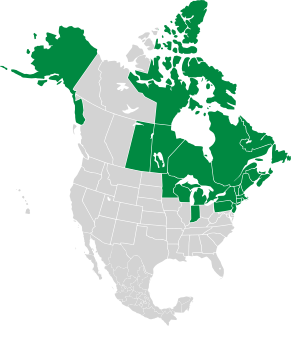
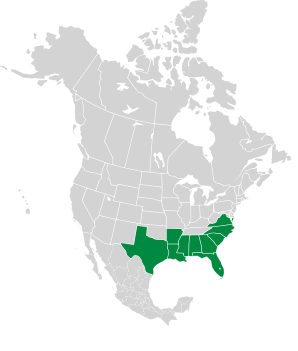
| Range/ Zones |
|
|
|
| Habitats | Peaty bogs and acidic wetlands. | Wet, peaty, acidic soil, such as bogs, damp meadows, and conifer swamps. | Wet coastal areas, dunes, flatwoods, wet prairies, swales and roadside ditches |


Rhynchospora colorata description by Thomas H. Kent, not updated.
© FloraFinder.org. All rights reserved.