Rosa L.
Rose, dwarf rose
Some wild roses
Rosa carolina
Rosa multiflora
Rosa palustris



|
Rosa L. Rose, dwarf rose Some wild roses | |||
Rosa carolina |
Rosa multiflora |
Rosa palustris |
|
|---|---|---|---|
| Common Name | |
|
|
| Plant | Pasture rose is a low shrub, 1–3′ (30–91 cm) high that prefers drier ground. It may be erect or sprawl over other plants. Stems have straight, needlelike, relatively slender thorns, vs. the stronger curved thorns on many roses. | 9½–16′ (3–5 m), disheveled and sprawling. It has strong, thorny stems, with thorns that are curved backward. | Shrubs are 6–8′ (1.8–2.4 m) tall, with multiple, thorny stems. Thorns are widely spaced, single or sometimes paired, and hooked, curving backward |
| Leaves | In clusters of five or seven, with a single leaf at the end of each branch. They are ovate (oval, with pointed ends), and serrated. Leaf undersides are bluish and hairless, or with only a few hairs. | Roughly oval in shape, with sharply toothed edges, 1¾–4″ (5–10 cm) long, in groups of 5-11 (usually 9). | Dark green, 1¼–2½″ (3.2–6.3 cm) long, roughly oval with pointed tips, with finely serrated edges. They occur in odd pinnate groups, most commonly with 7 leaflets, sometimes with 5, rarely with 9. |
| Flowers | Flowers are almost always solitary. They are pink (rarely white) with yellow centers, with five petals, and about ¾–1½″ (1.9–3.8 cm) in diameter. They have the fragrance of roses. | Abundant white or pinkish flowers, about ½–1½″ (1.5–4 cm) in diameter, with five petals and yellow centers, in large corymbs (flower clusters). | 1½–2″ (3.8–5.8 cm) in diameter, solitary (or in small clusters), light to dark pink, with five petals and strong rose fragrance. They appear from June to July. |
| Fruit | Fruits, called “rose hips,” are smooth, red, shiny globes, sometimes somewhat flattened, about ¼–⅜″ (8–12 mm) around. | Orange-red to purplish, ⅛–¼″ (6–8 mm) in diameter. | Red rose hips, with glandular hairs, are less than ½″ (1.3 cm) around. |
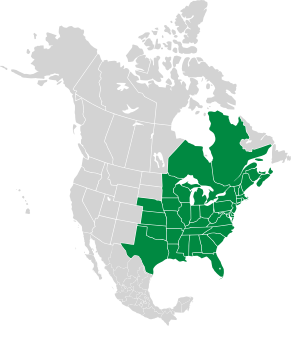
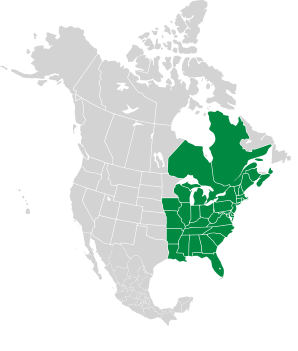
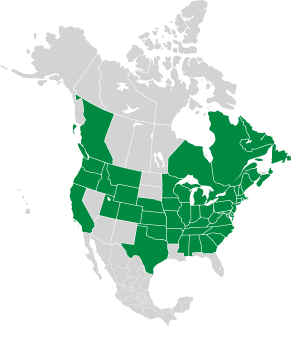
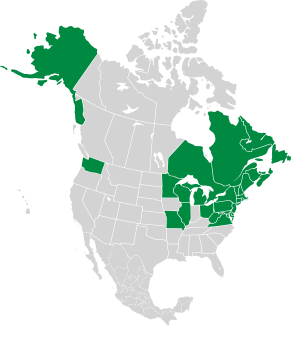
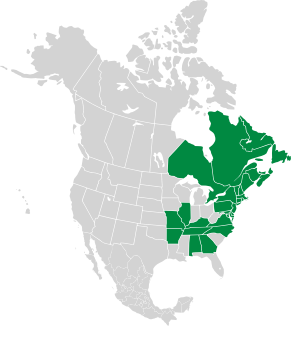
| Range/ Zones |
|
|
|
| Habitats | Wide-ranging: in dry soils, at the border of prairies, woodlands, and savannas, in thickets, in upland forested areas, and dunes; as well as wet soils along stream beds, swamps and low grassy areas. | Any open area with medium moisture: roadsides, abandoned pastures, open woodlands, thickets | Wet habitats: stream banks, swamps, marshes. |


Rosa description by Thomas H. Kent, not updated.
© FloraFinder.org. All rights reserved.