|
Aesculus hippocastanum L. Horse chestnut
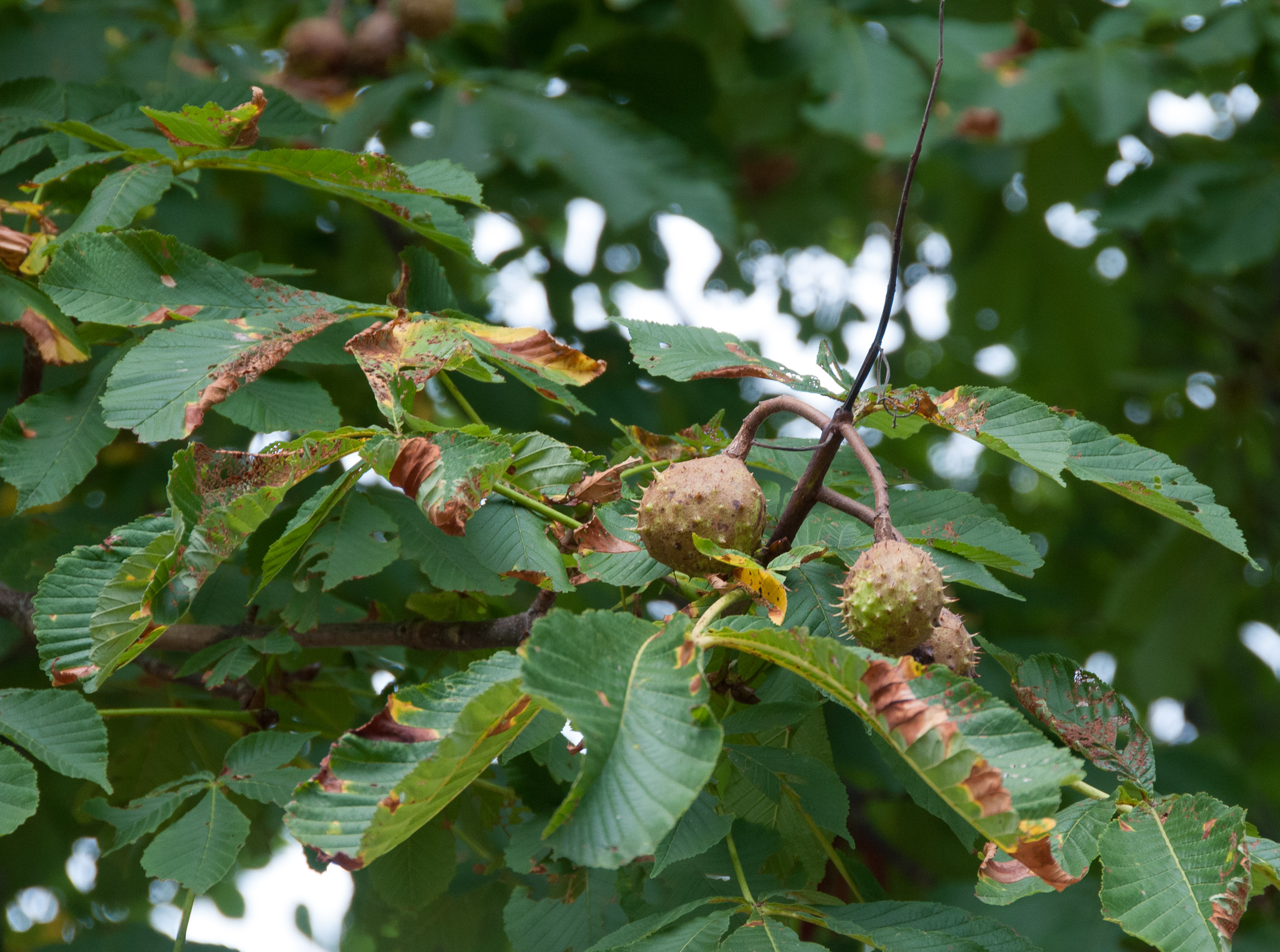
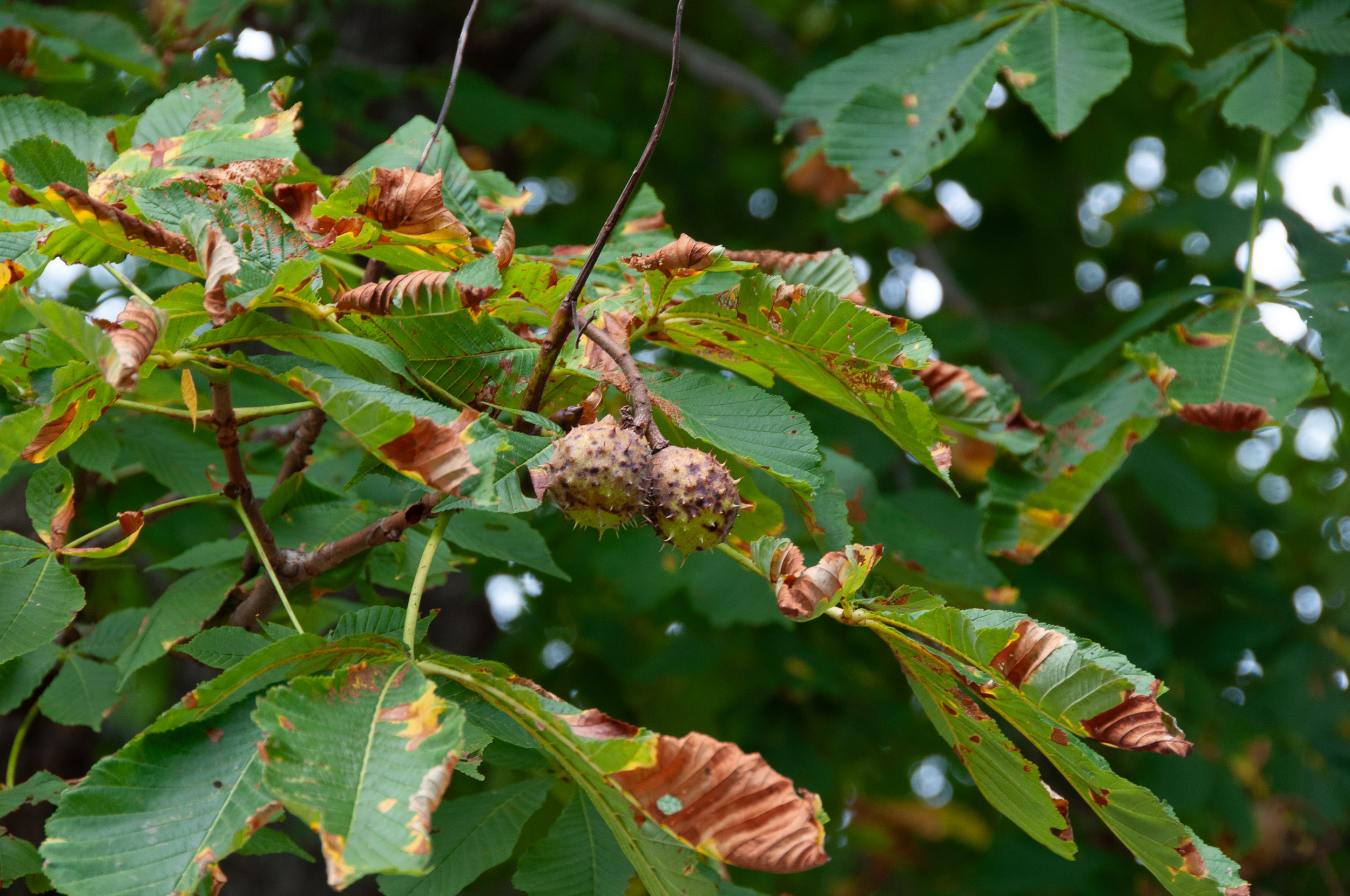
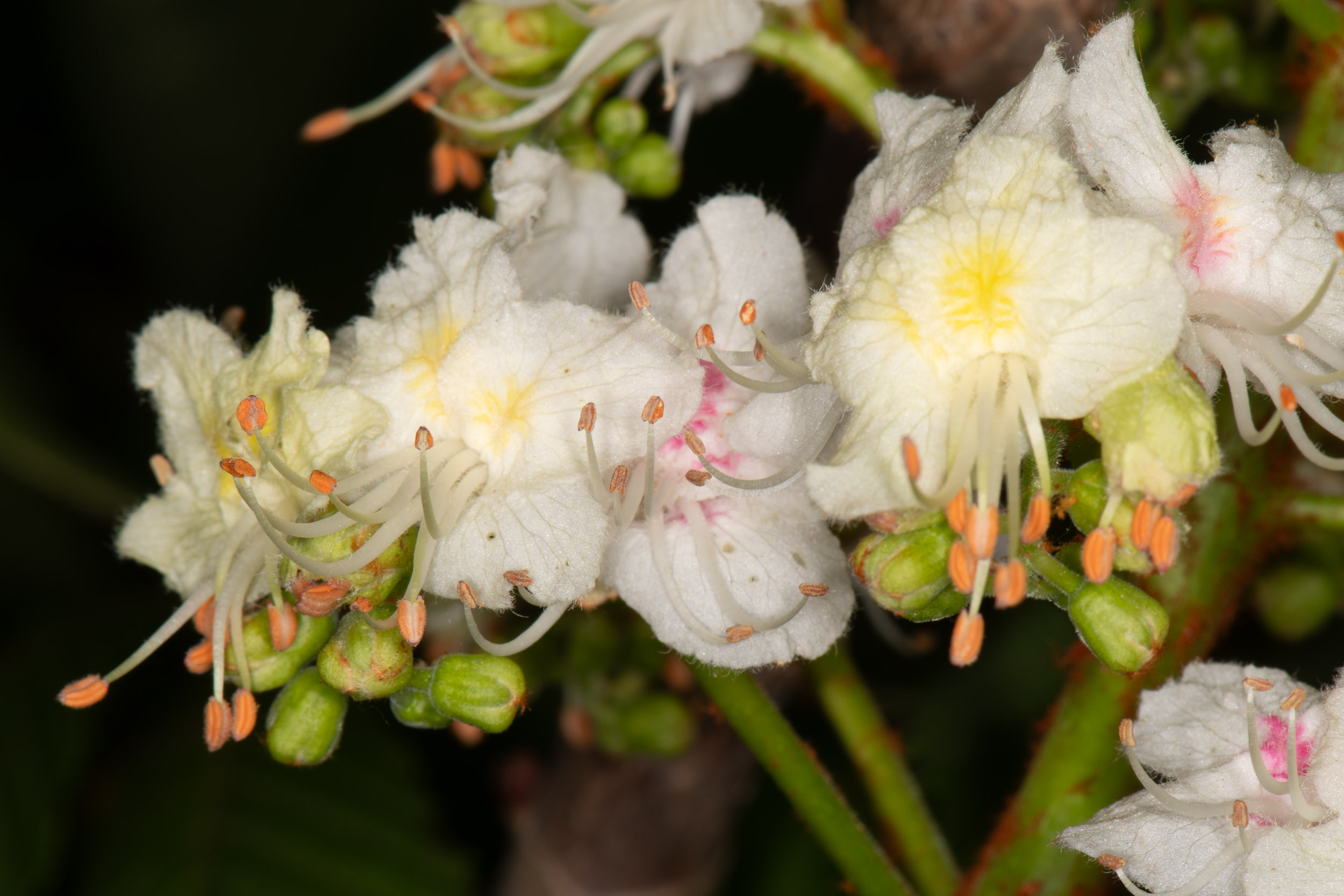
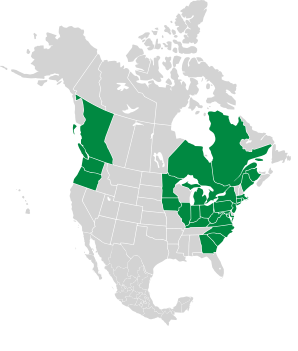
Horse-chestnuts are deciduous trees native to southeastern Europe, though they have become naturalized through many parts of Europe, and are a popular choice for parks and roadsides in the northern United States and Canada. They prefer sun or partial shade, and moist, well-drained soil. Horse-chestnuts are so named because of the leaf scar left on twigs after a leaf falls: a horseshoe shape, with seven “nails.” Plants: Trees are 50-75′ (15-22 m) in height. Leaves: Opposite, palmate, comprised of 5-7 leaflets. Each leaflet is 5-12″ (13-30 cm) long. Flowers: White, with pink and yellow blotches at the base of the petals. They appear in erect, conical panicles 4-12″ (10-30 cm) tall, with 20-50 flowers in each panicle. Flowers appear in May. Fruits: A leathery light brown husk studded with sharp spines, like a little land mine. The husks dry and crack open to reveal to beautiful smooth rounded mahogany brown chestnut, with a round beige-colored spot. Sometimes there are two or three chestnuts in a husk. Fruits ripen in September. Edibility: Medical: Horse-chestnut has been used to treat dysentary, bronchitis, hemorrhoids, and vein problems. They contain a wide range of substances that have potential benefits as medicines, but in combination they are not safe, and more research is needed to find applications for the various components. Herbal remedies based on horsechestnut are not regulated, unsafe, and not a substitute for drugs prescribed by a doctor. Online References:
Aesculus hippocastanum description by Thomas H. Kent, last updated 6 May 2023.
© FloraFinder.org. All rights reserved. |
8/15/2010 · Bristol Harbor, Rhode Island
8/15/2010 · Bristol Harbor, Rhode Island
5/19/2021 · Highland Green, Topsham, Maine · ≈ 4 × 2½″ (10 × 7 cm) Range: Zones 3-8:
|
 Unlike “real”