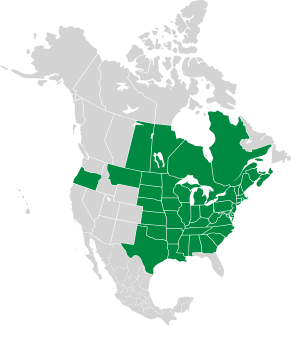
Asclepias kansana Vail
Asclepias syriaca L. var. kansana (Vail) Palmer & Steyerm.
Asclepias syriaca L.
Common milkweed, milkweed
The most common of 22 milkweed species in North America, Asclepias syriaca occurs throughout the midwest and east. Milkweeds are so named because nearly all of them exude a sticky latex when cut. The latex contains glycosides that protect against most insects, but Monarch caterpillers not only feed on milkweeds but become poisonous to their own predators because of it.
Plants: Plants are up to 3′ (1 m) tall, rarely up to 6½′ (2 m), on an erect stem that is green or patched with dark red.
Leaves: Dull green, usually opposite, up to 8 ⨉ 3½″ (20 ⨉ 8.9 cm).
Flowers: Hemispherical groups of pinkish purple flowers have a scent similar to that of violets or pansies. The individual flowers are star-shaped, about ⅛″ (4 mm) across, with five petals.
Fruits: Milkweed seed pods, and the thousands of silken parachutes that emerge from them in late fall, are unique. The pods are 2–4″ (5–10 cm) in length.
Habitats: Fields, open woods, roadsides, railroads, waste areas.
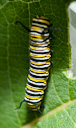
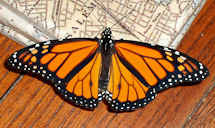
A munching monarch caterpillar, and a newly hatched butterfly. Monarch caterpillars are immune to the poisonous latex, and eat milkweeds exclusively. Photos courtesy of Heather A. Kent.
Online References:
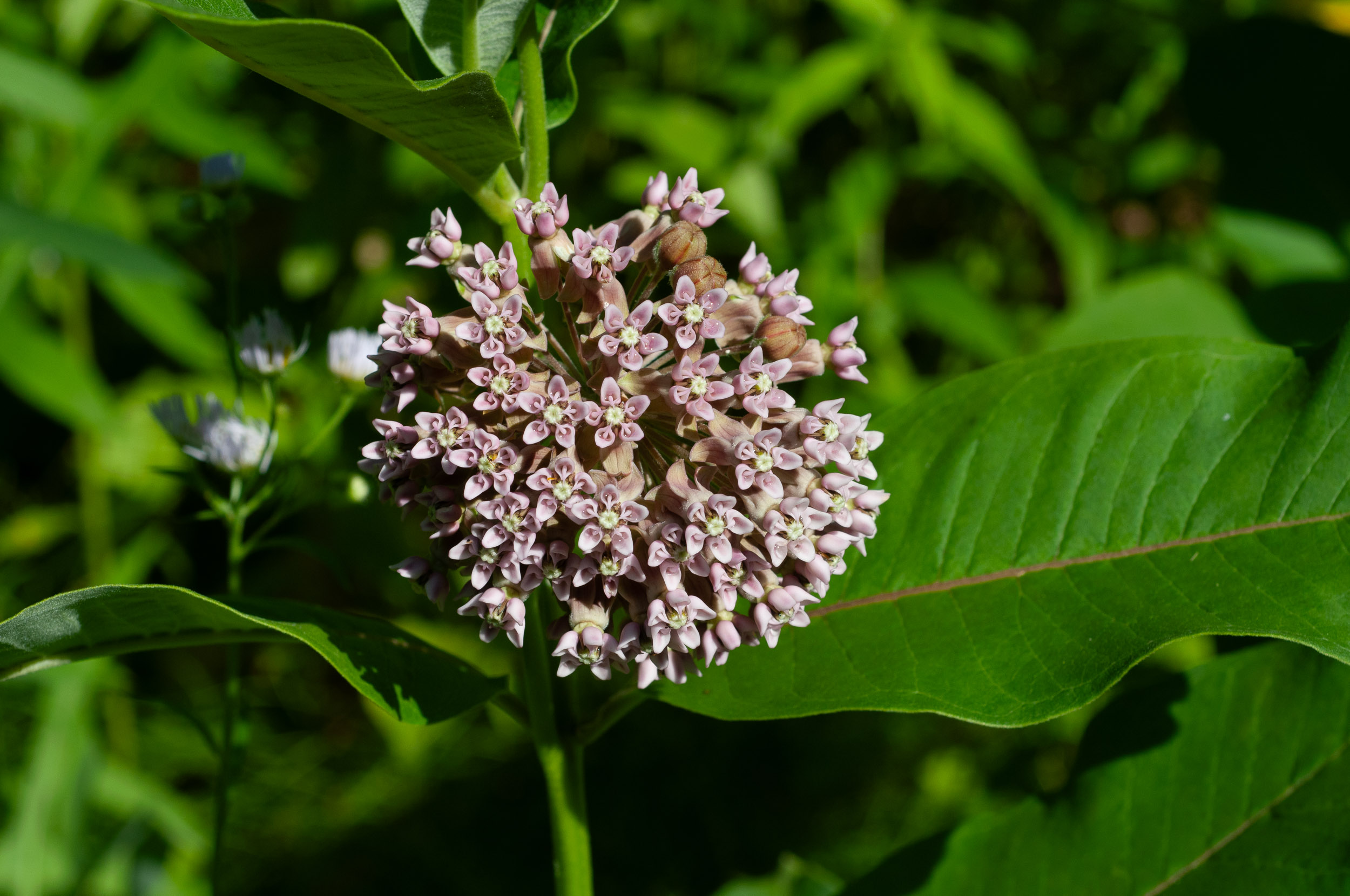
6/21/2010 · Nashua River Rail Trail, Groton Center, Groton, Massachusetts · ≈ 9 × 6″ (22 × 14 cm) 
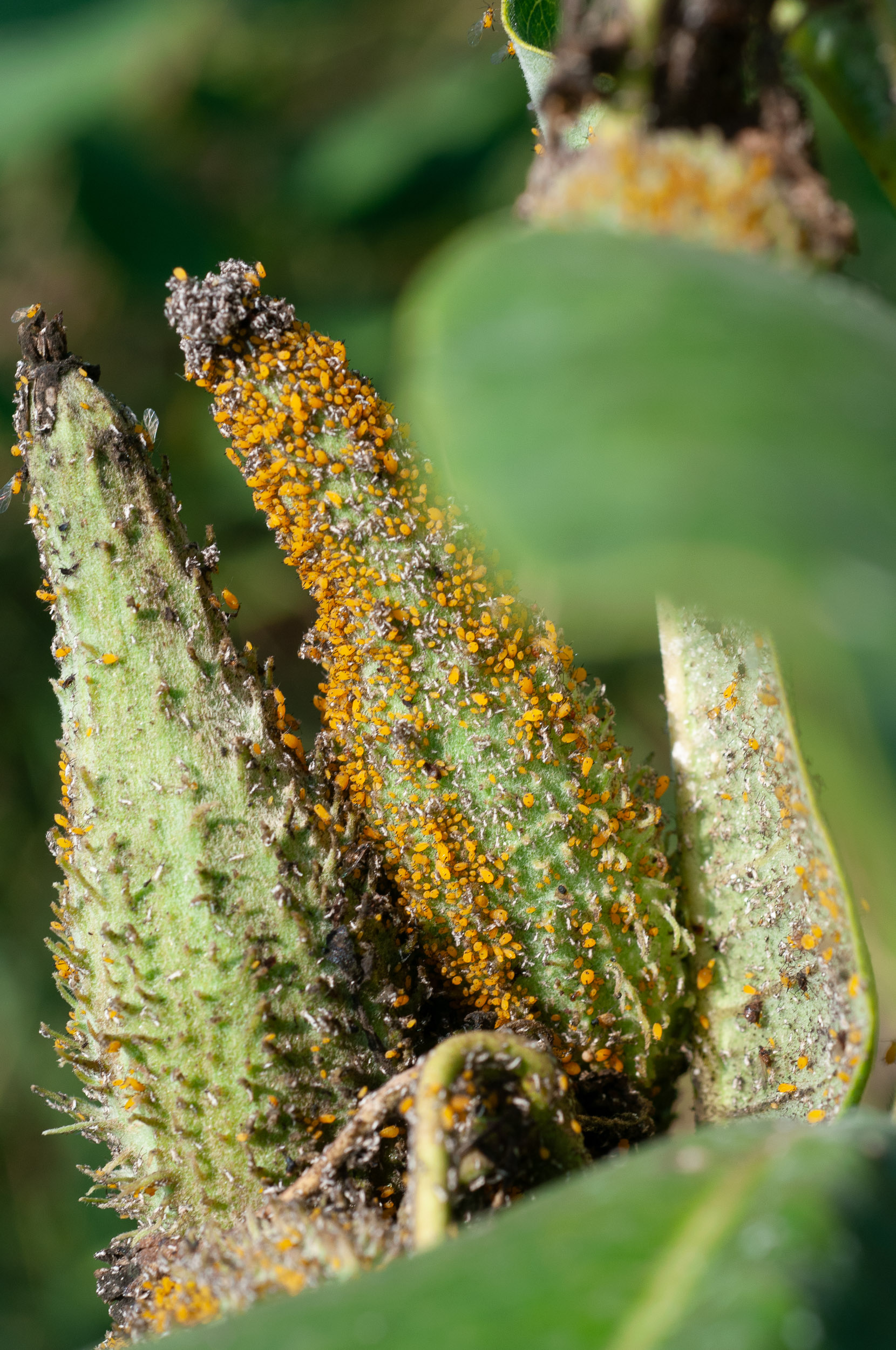
Monarch butterfly caterpillars aren’t the only insects who dine on milkweed. These are oleander aphids (Aphis nerii) · 8/2/2012 · Nashua River Rail Trail, near Nashoba Hospital, Ayer, Massachusetts · ≈ 4 × 6″ (10 × 15 cm) 
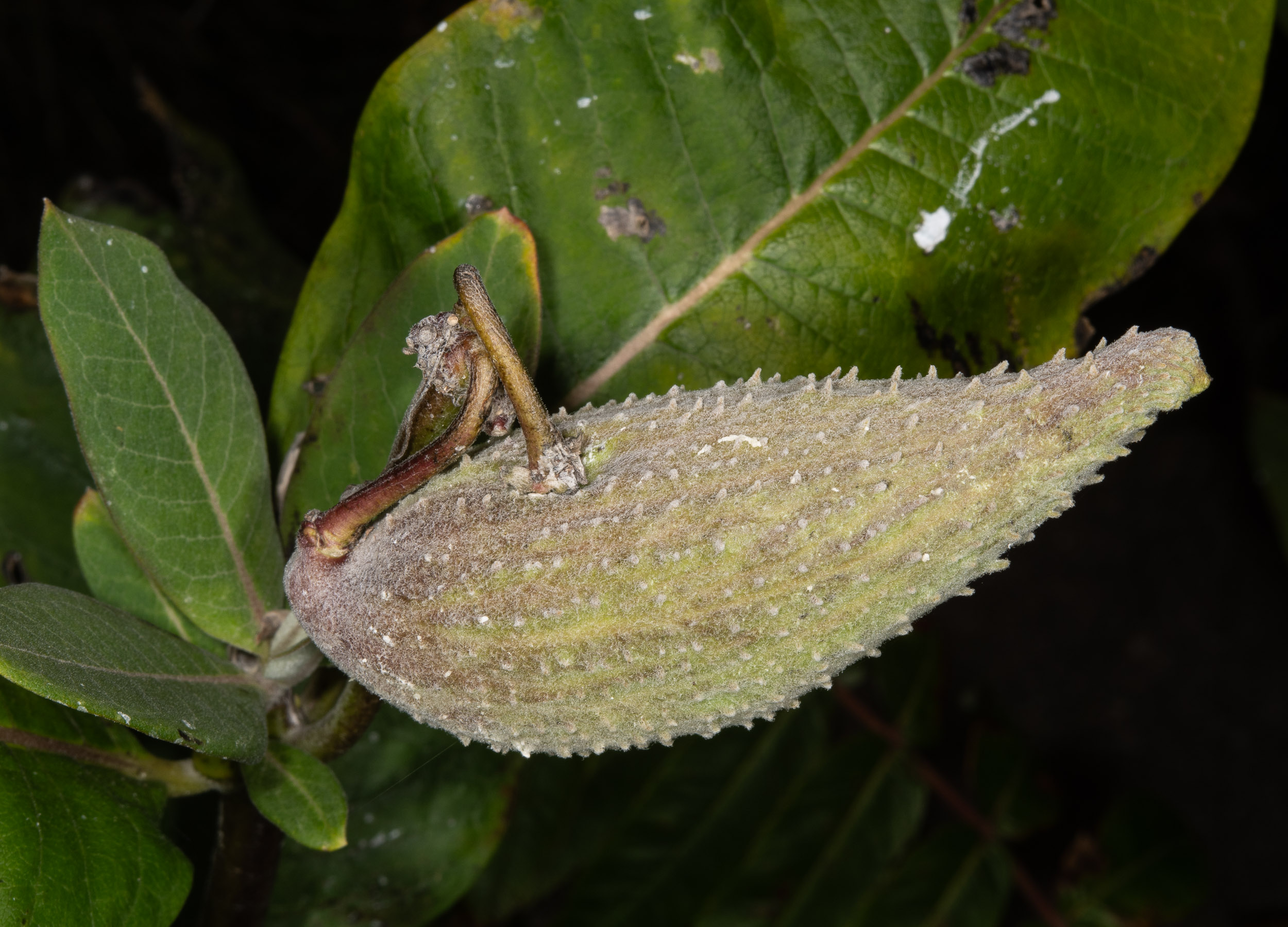
9/3/2020 · Mitchell Field, Harpswell, Maine · ≈ 6 × 4″ (15 × 11 cm) 
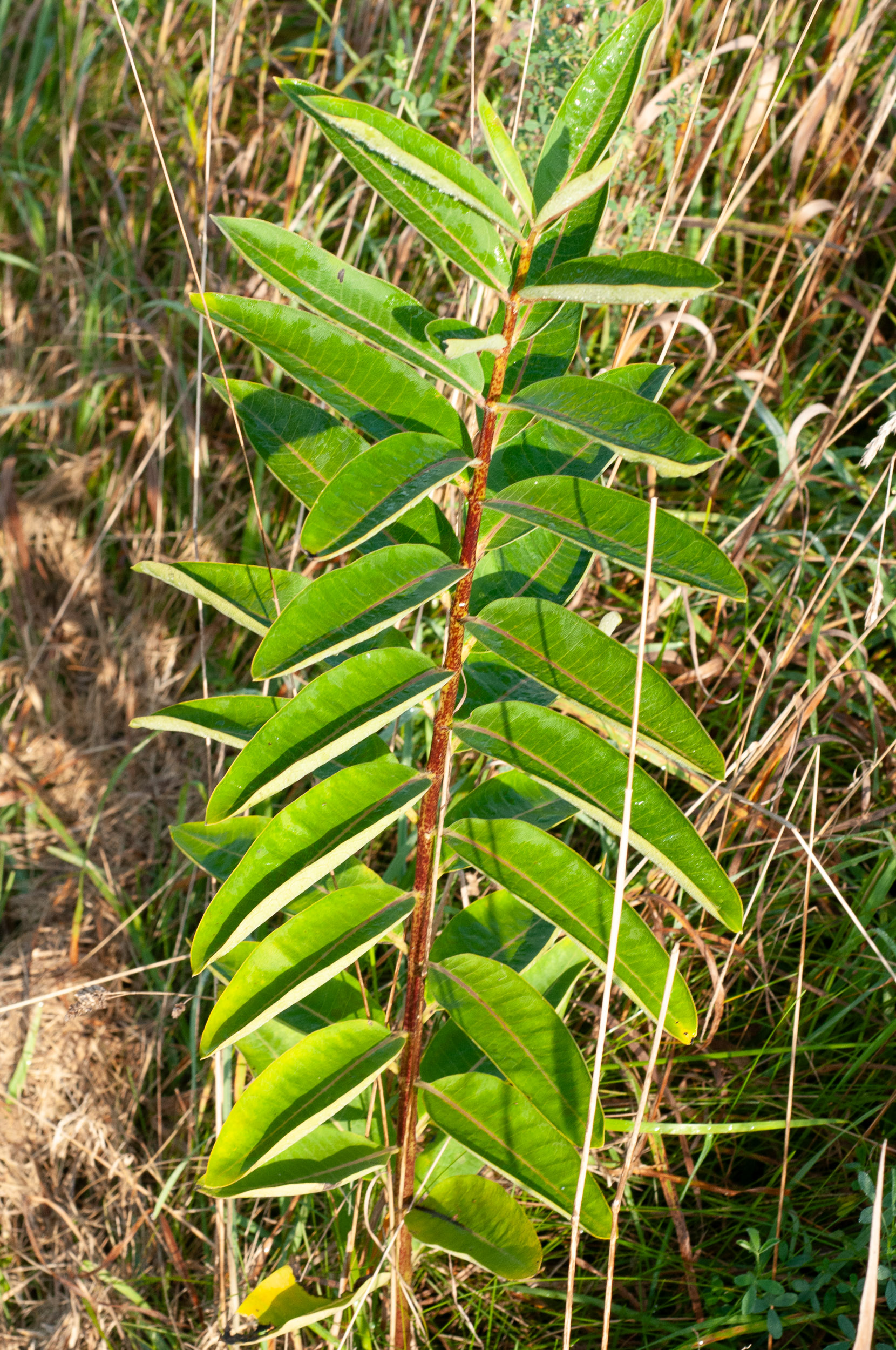
9/3/2009 · Nashua River Rail Trail, Ayer, Massachusetts · ≈ 1½ × 1′ (47 × 34 cm) 
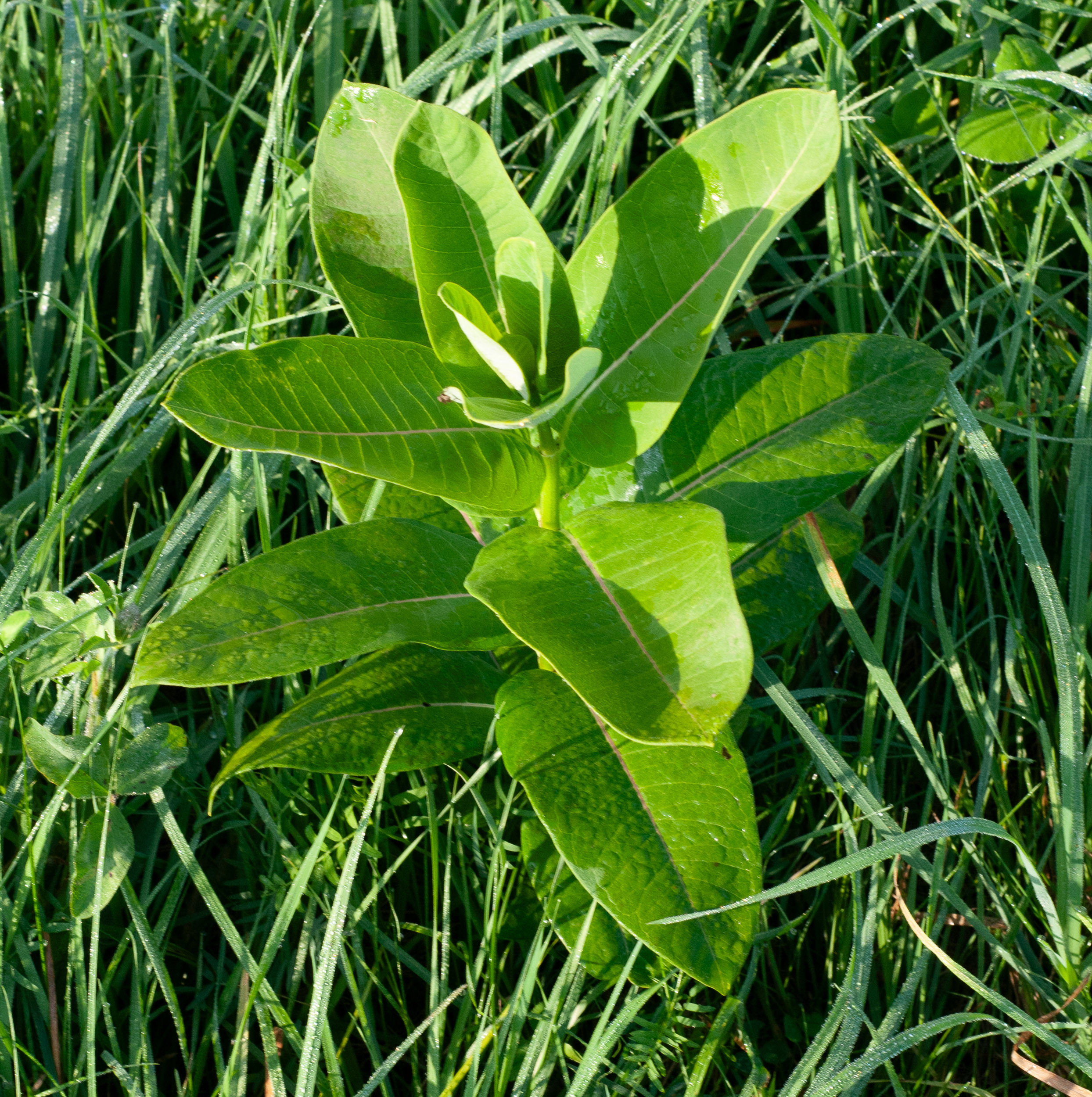
9/3/2009 · Nashua River Rail Trail, Ayer, Massachusetts · ≈ 1 × 1′ (34 × 34 cm) 

The colorful insect is Tetraopes tetrophthalmus, red milkweed beetle · 7/5/2010 · Tarrywile Park and Mansion, Danbury, Connecticut · ≈ 7 × 4½″ (17 × 11 cm) 

7/31/2016 · Skyline Drive, Shenandoah National Park, Virginia 
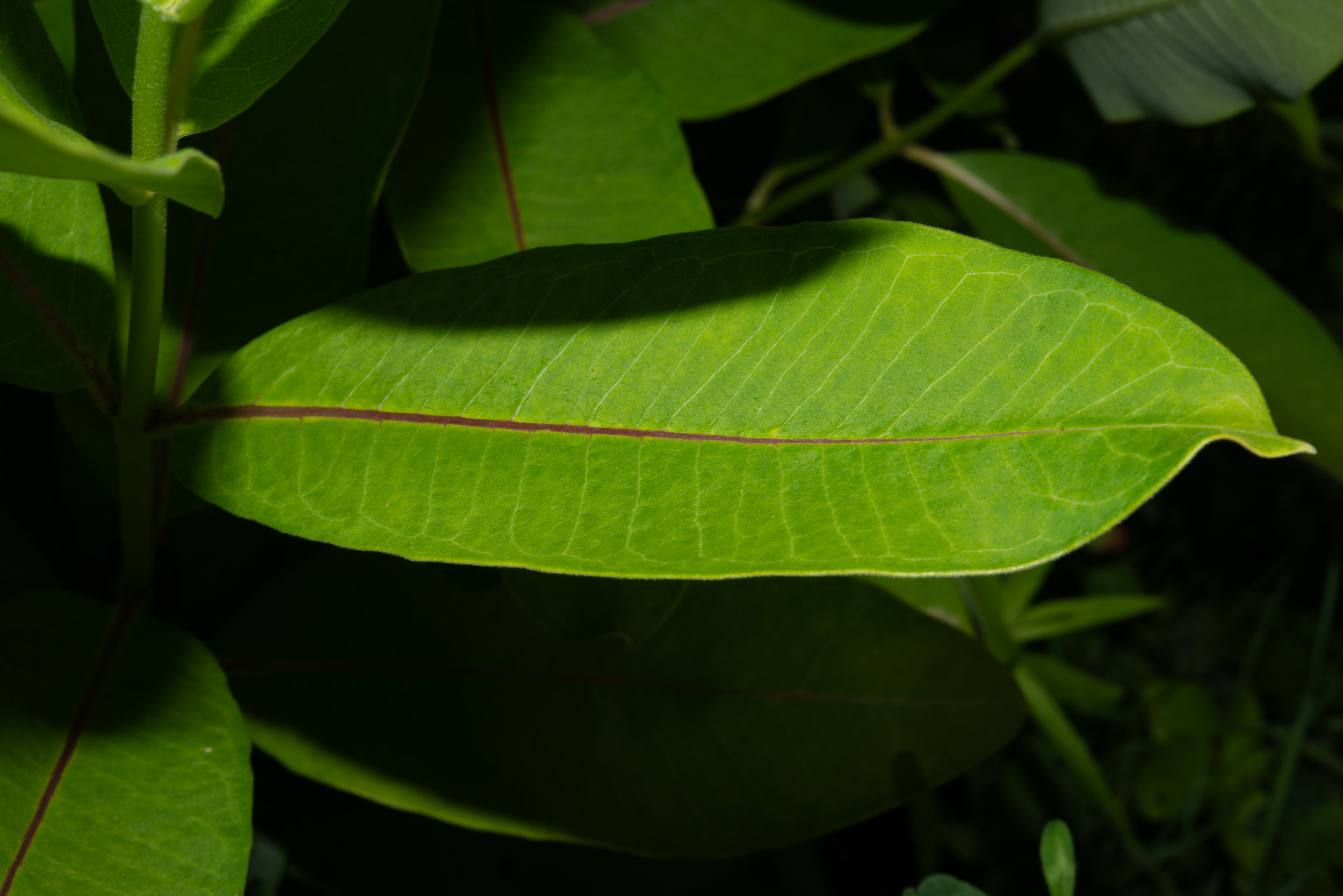
6/24/2015 · Nashua River Rail Trail, Groton Ctr, Groton, Massachusetts · ≈ 8 × 6″ (20 × 14 cm) 
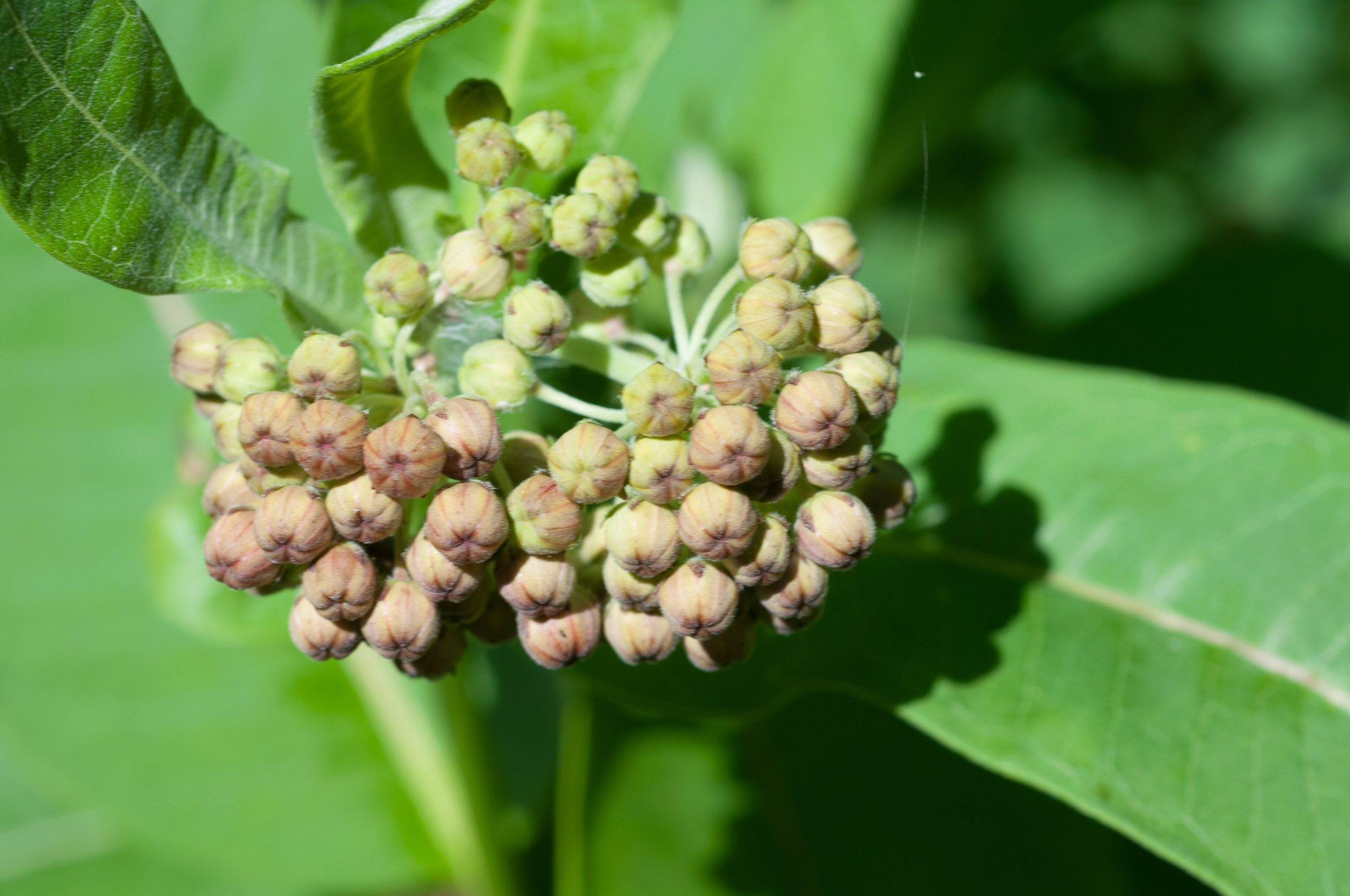
6/23/2012 · Nashua River Rail Trail, East Pepperell, Pepperell, Massachusetts · ≈ 6 × 4″ (15 × 10 cm) 
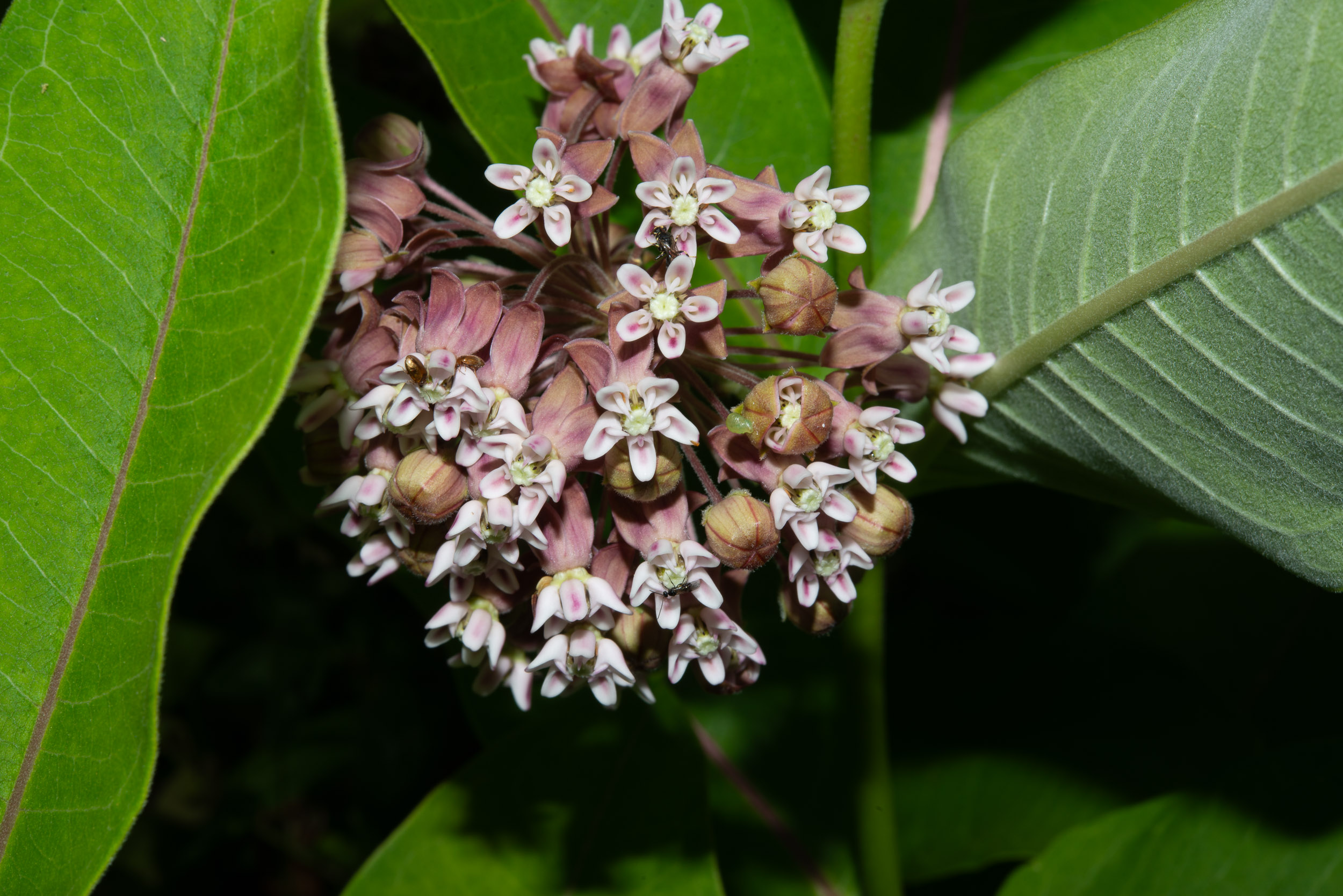
6/24/2015 · Nashua River Rail Trail, Groton Ctr, Groton, Massachusetts · ≈ 7 × 4½″ (18 × 12 cm) 
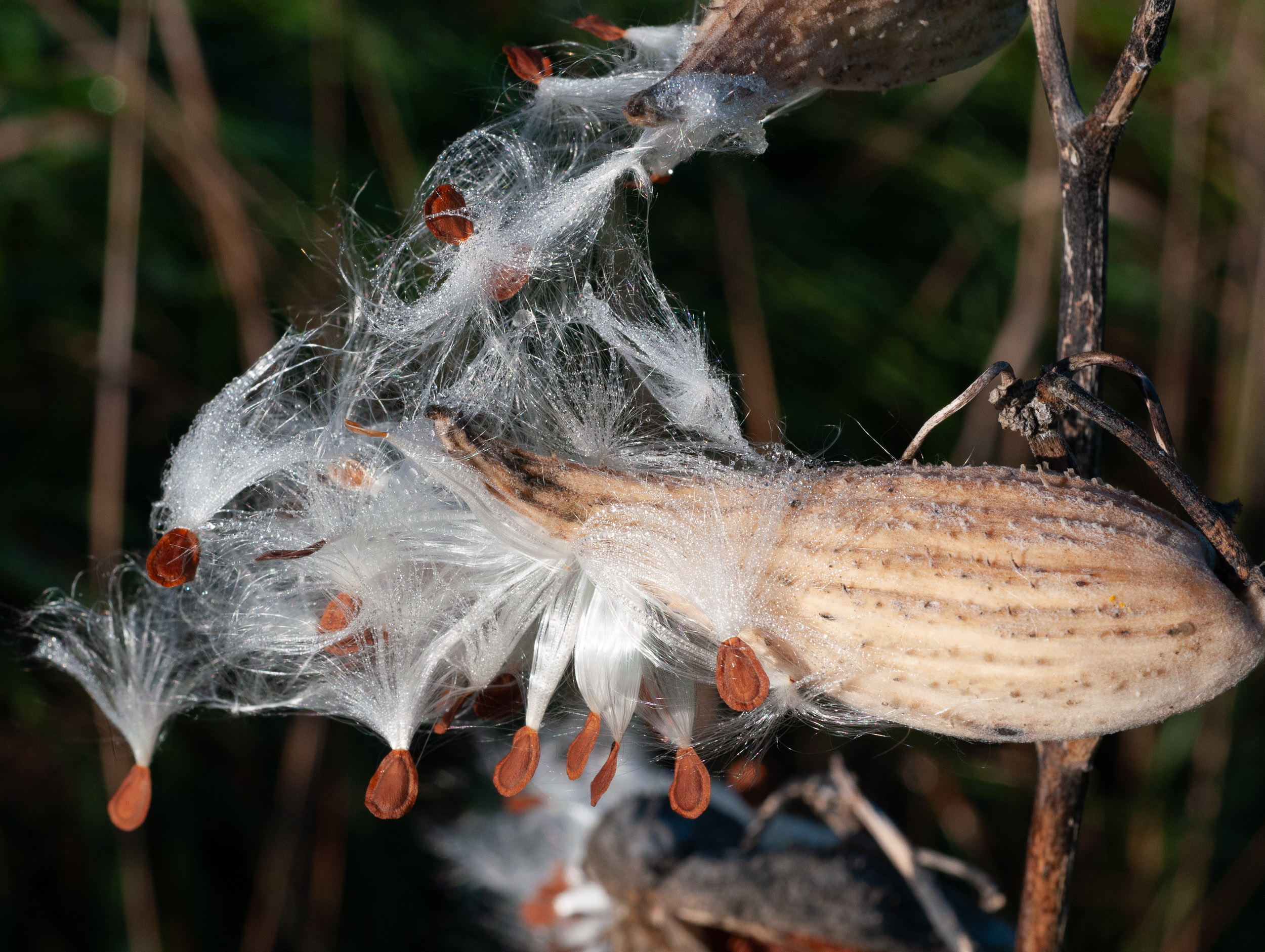
9/25/2009 · Nashua River Rail Trail, near Hospital, Ayer, Massachusetts · ≈ 7 × 5″ (17 × 13 cm) 
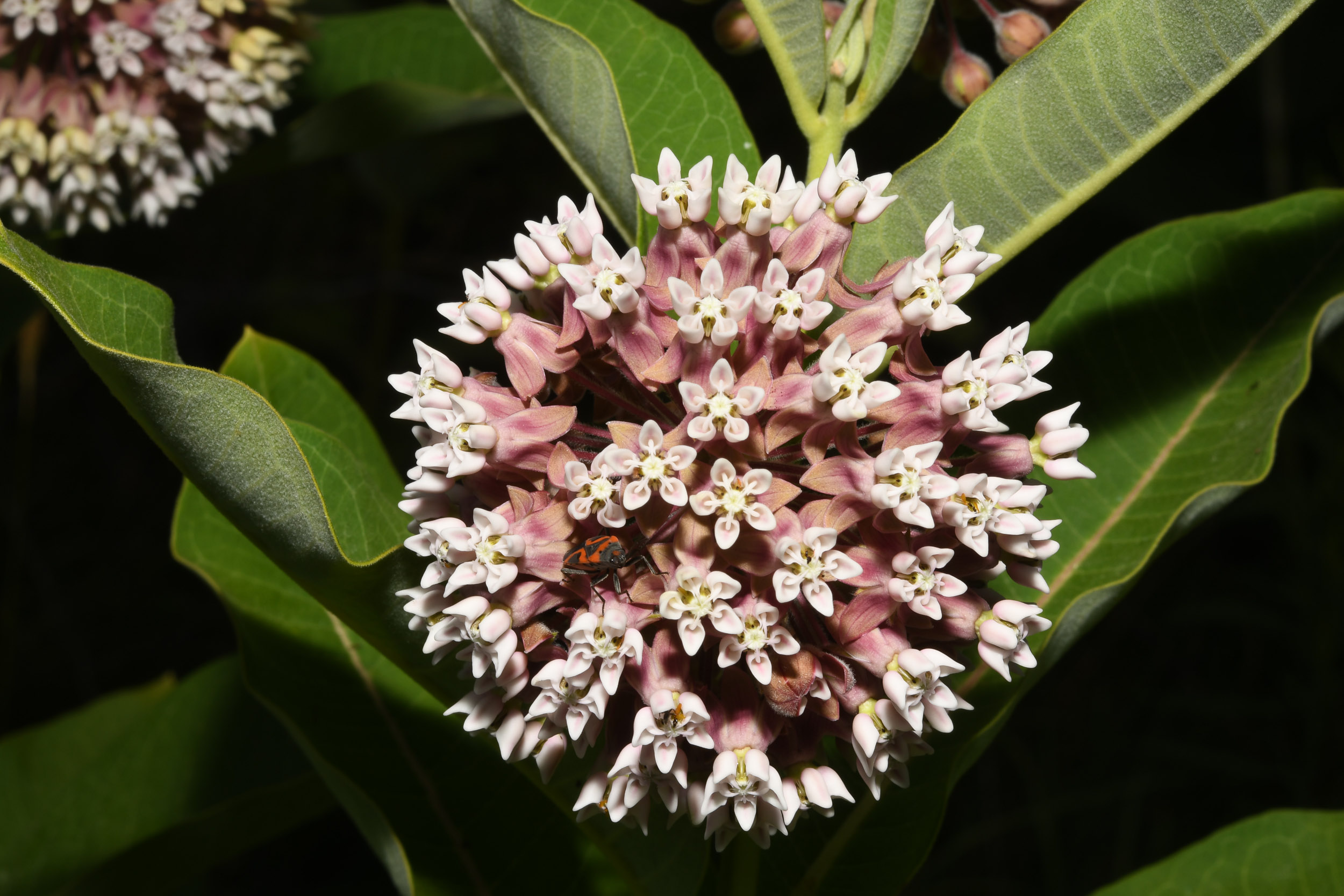
6/27/2016 · Nashua River Rail Trail, near Na, Ayer, Massachusetts 
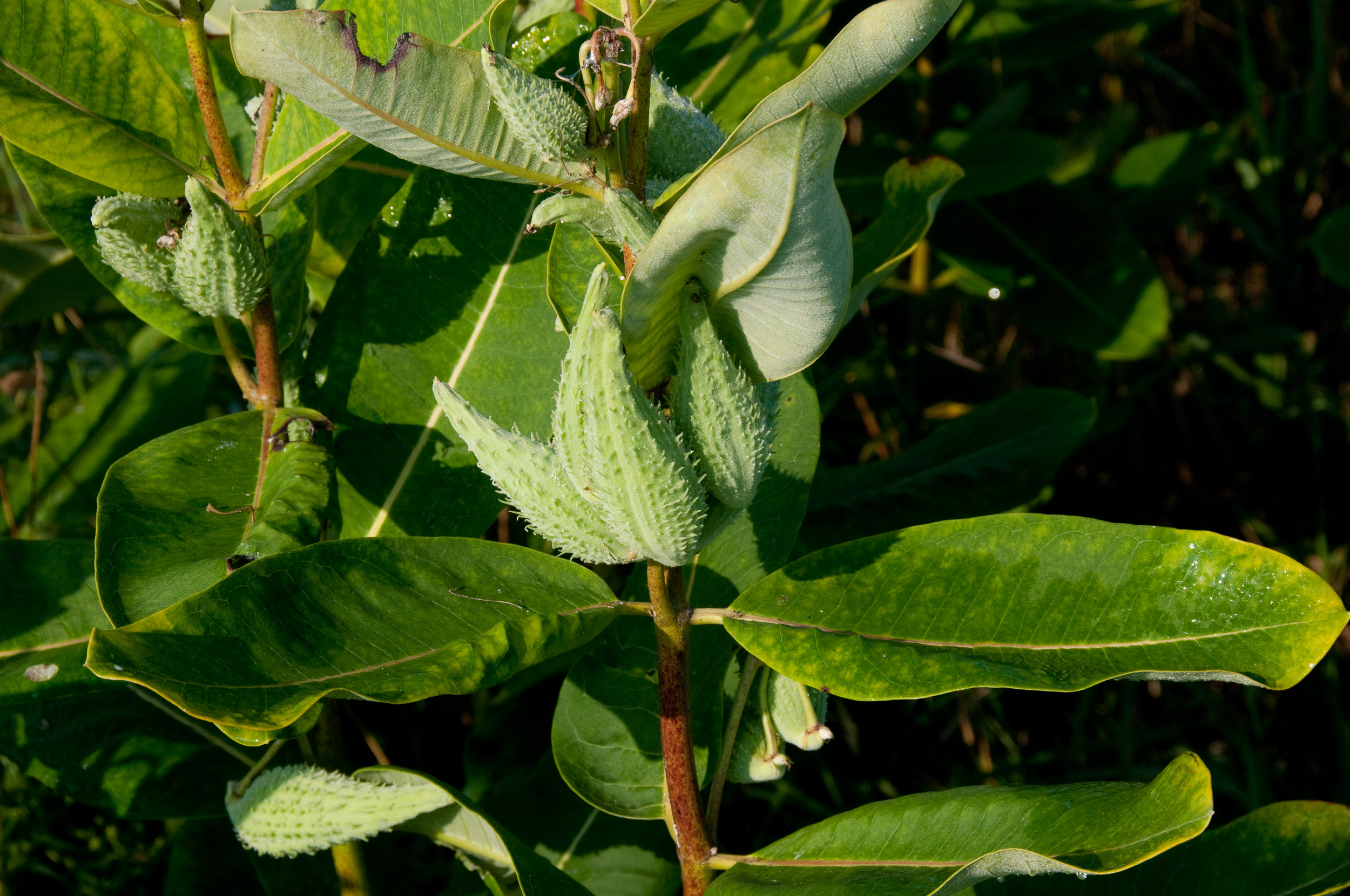
8/4/2009 · Near Nashoba Hospital, Ayer, Massachusetts · ≈ 13 × 9″ (33 × 22 cm) 

7/11/2026 · Spear Farm Estuary Preserve, Yarmouth, Maine · ≈ 6 × 4″ (16 × 10 cm) 
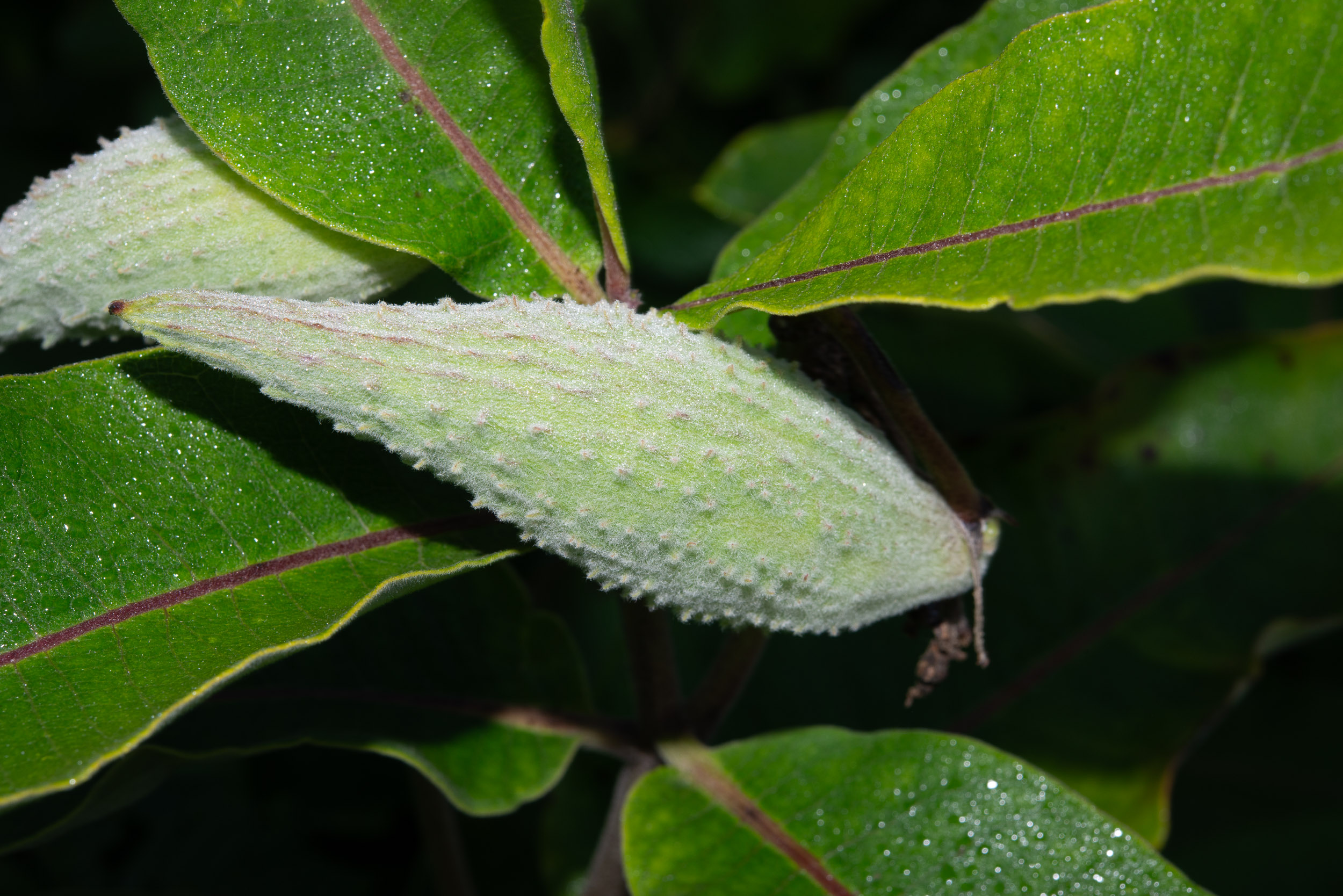
8/15/2015 · Grafton Notch State Park, Newry, Maine · ≈ 7 × 4½″ (18 × 12 cm) 
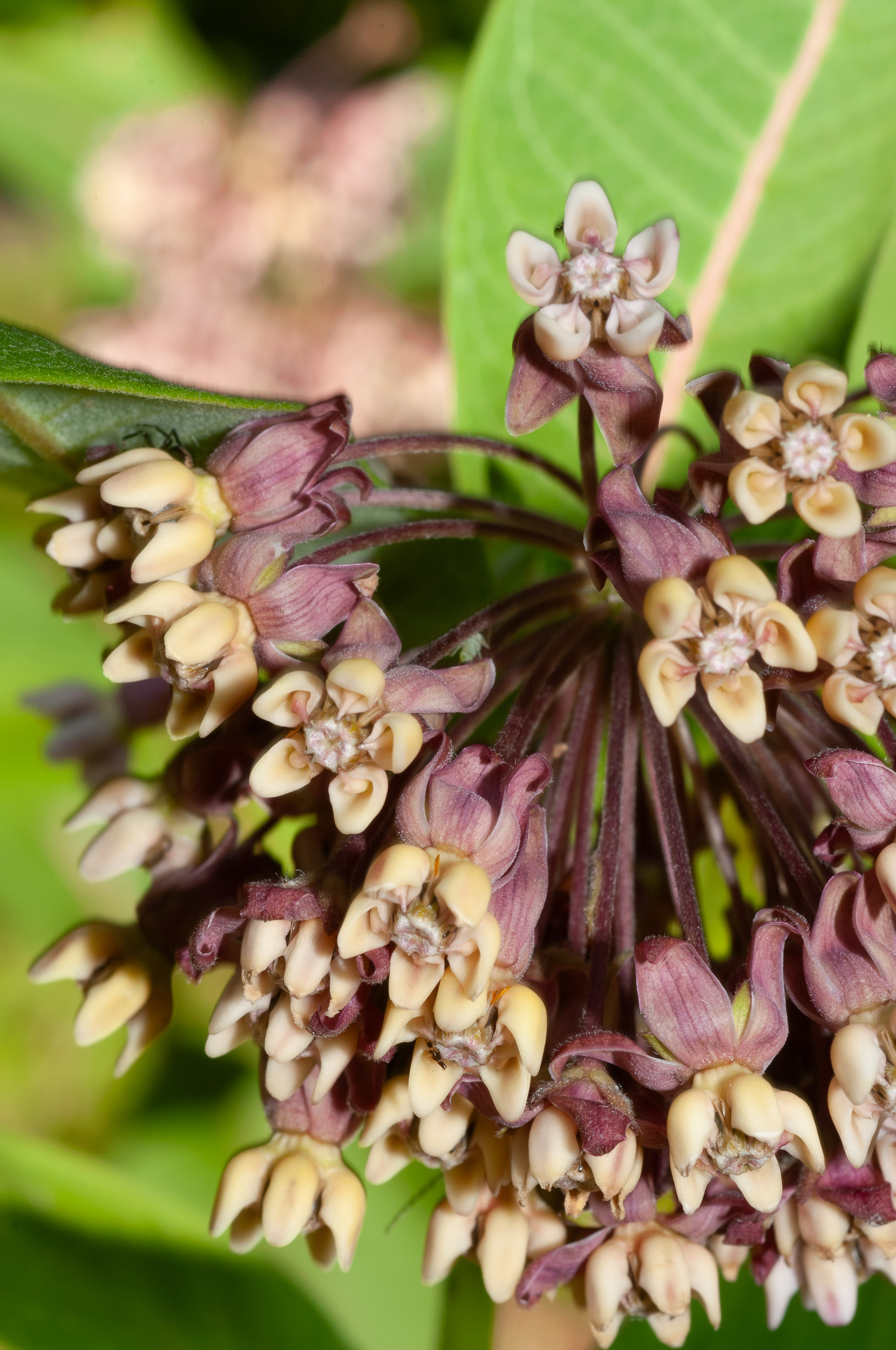
6/23/2012 · Nashua River Rail Trail, East Pepperell, Pepperell, Massachusetts · ≈ 3 × 4½″ (7.9 × 11 cm) 
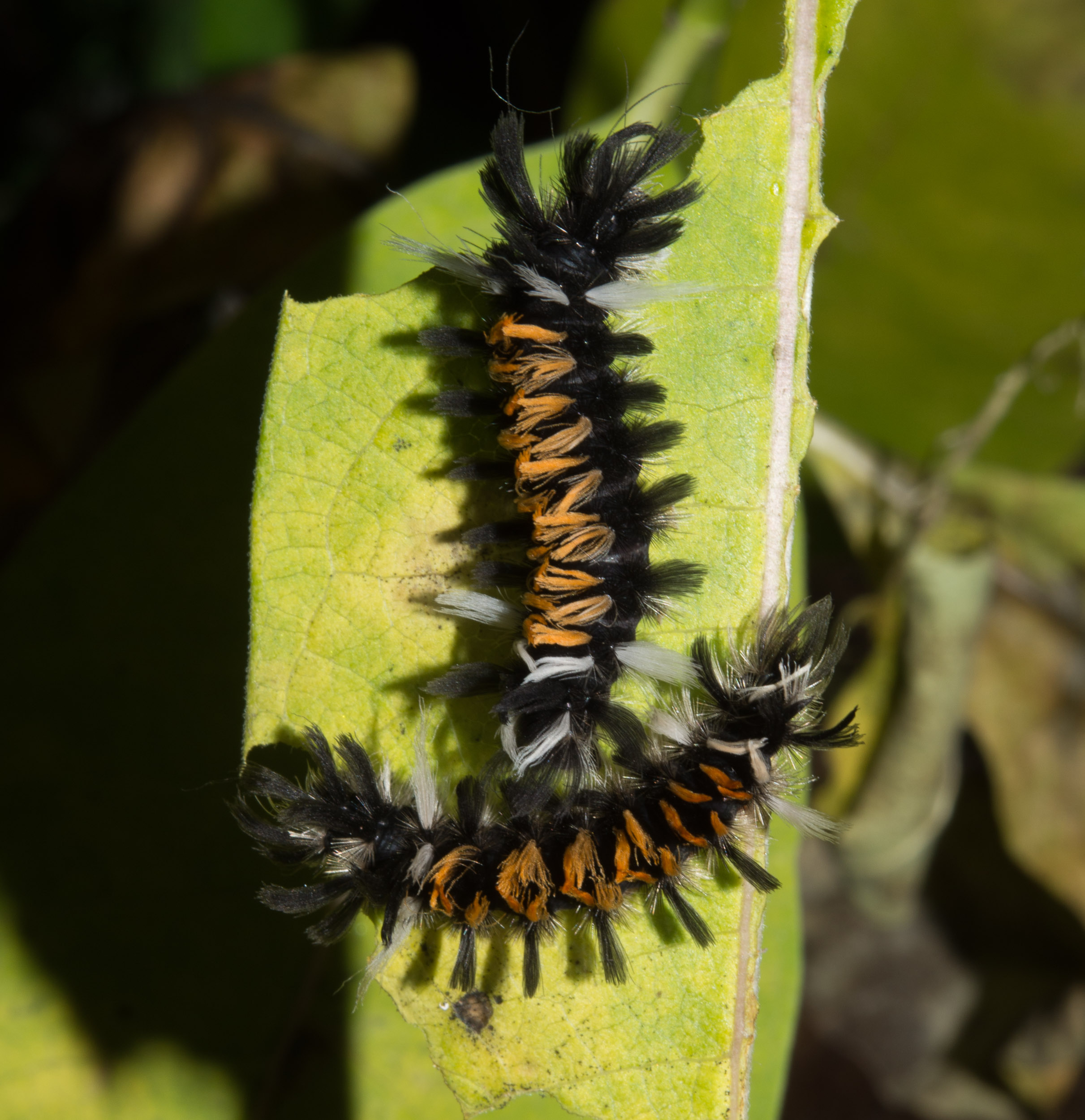
The munchers are milkweed tussock caterpillars (Euchaetes egle). · 9/17/2013 · Andres Institute of Art, Big Bear Mountain, Brookline, New Hampshire · ≈ 3 × 3″ (7.6 × 7.8 cm) 
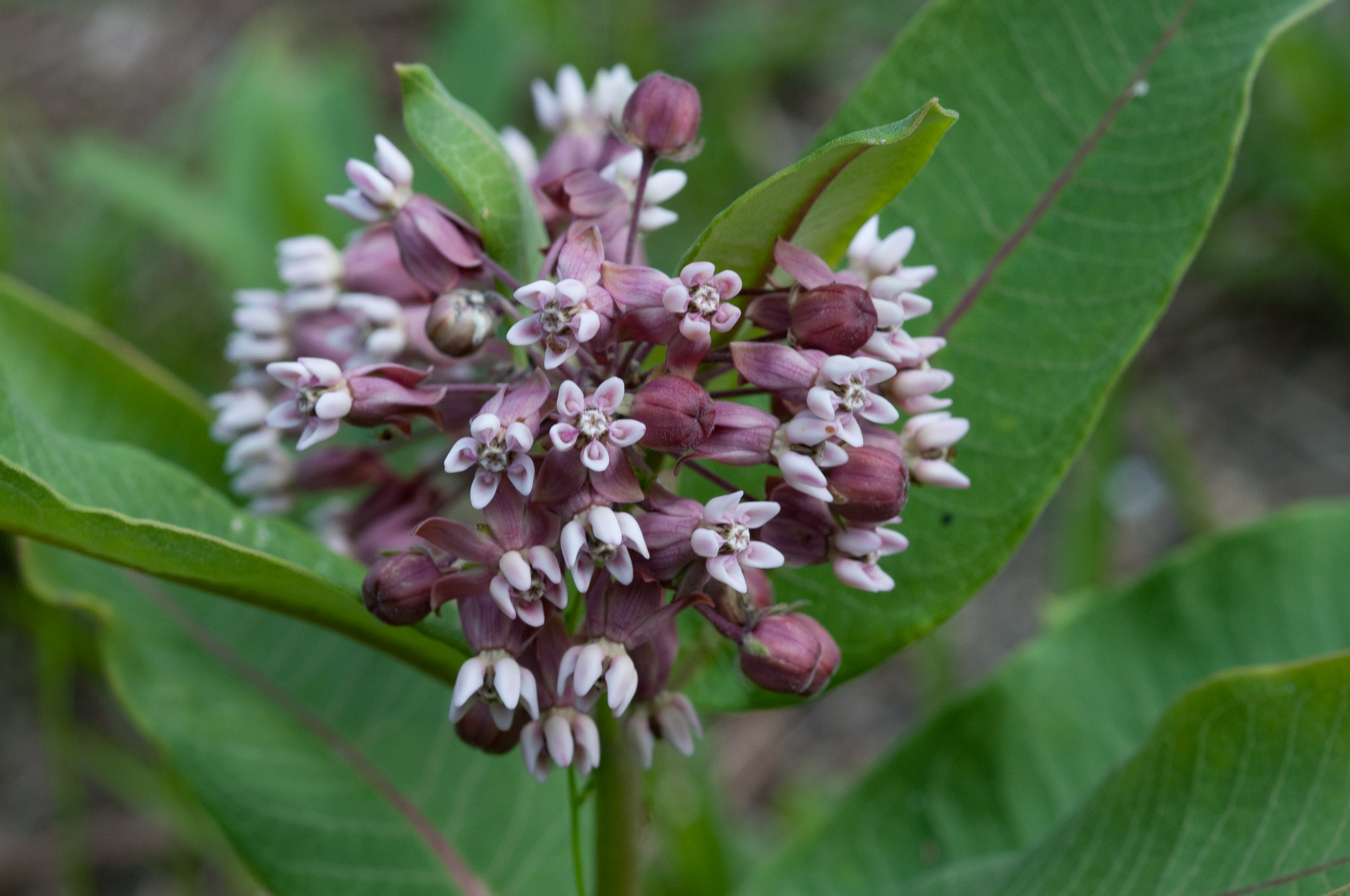
6/12/2010 · Nashua River Rail Trail, East Pepperell, Massachusetts · ≈ 6 × 4″ (16 × 10 cm) 
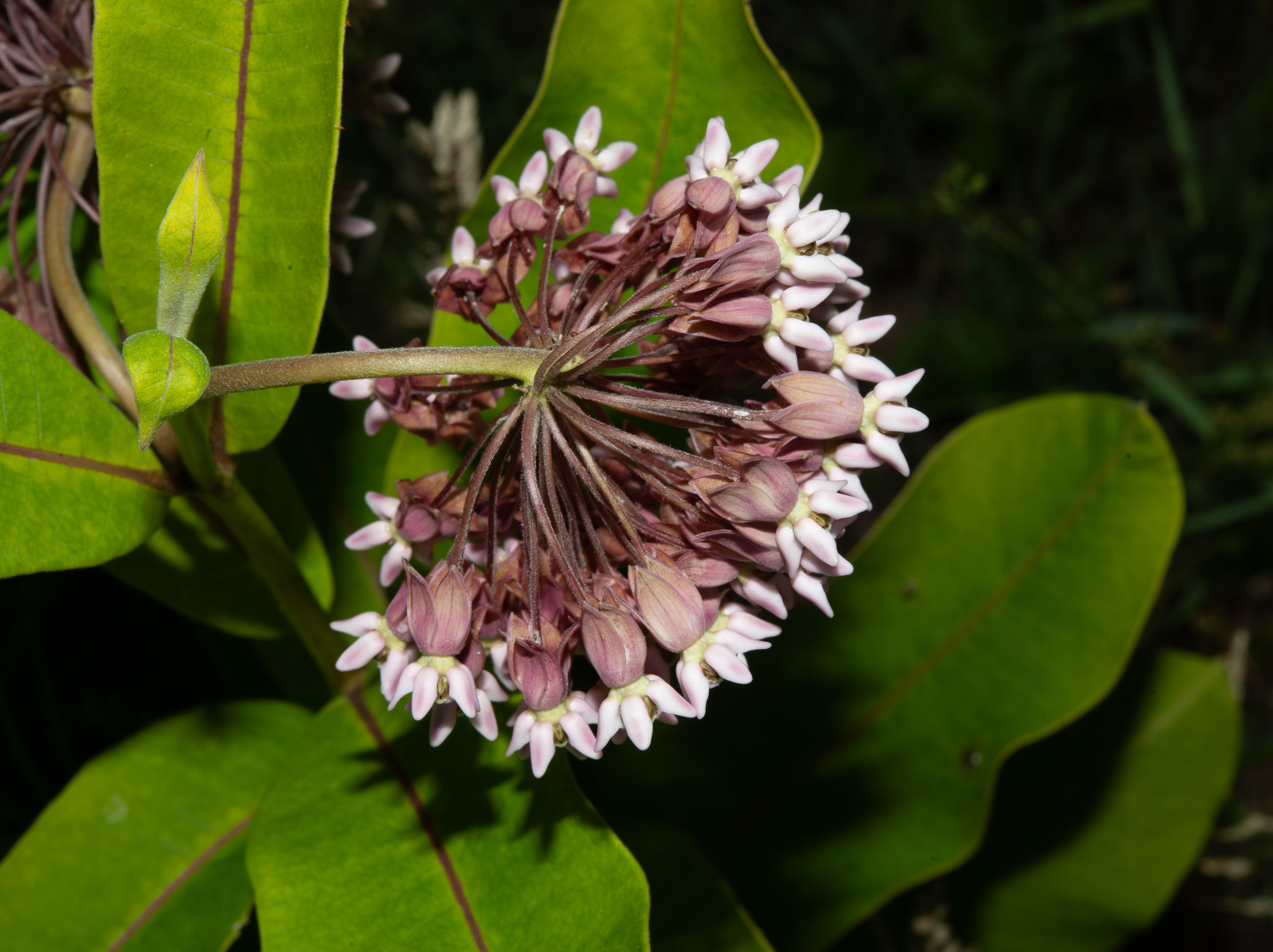
6/24/2015 · Nashua River Rail Trail, Groton Ctr, Groton, Massachusetts · ≈ 7 × 5″ (17 × 12 cm) 
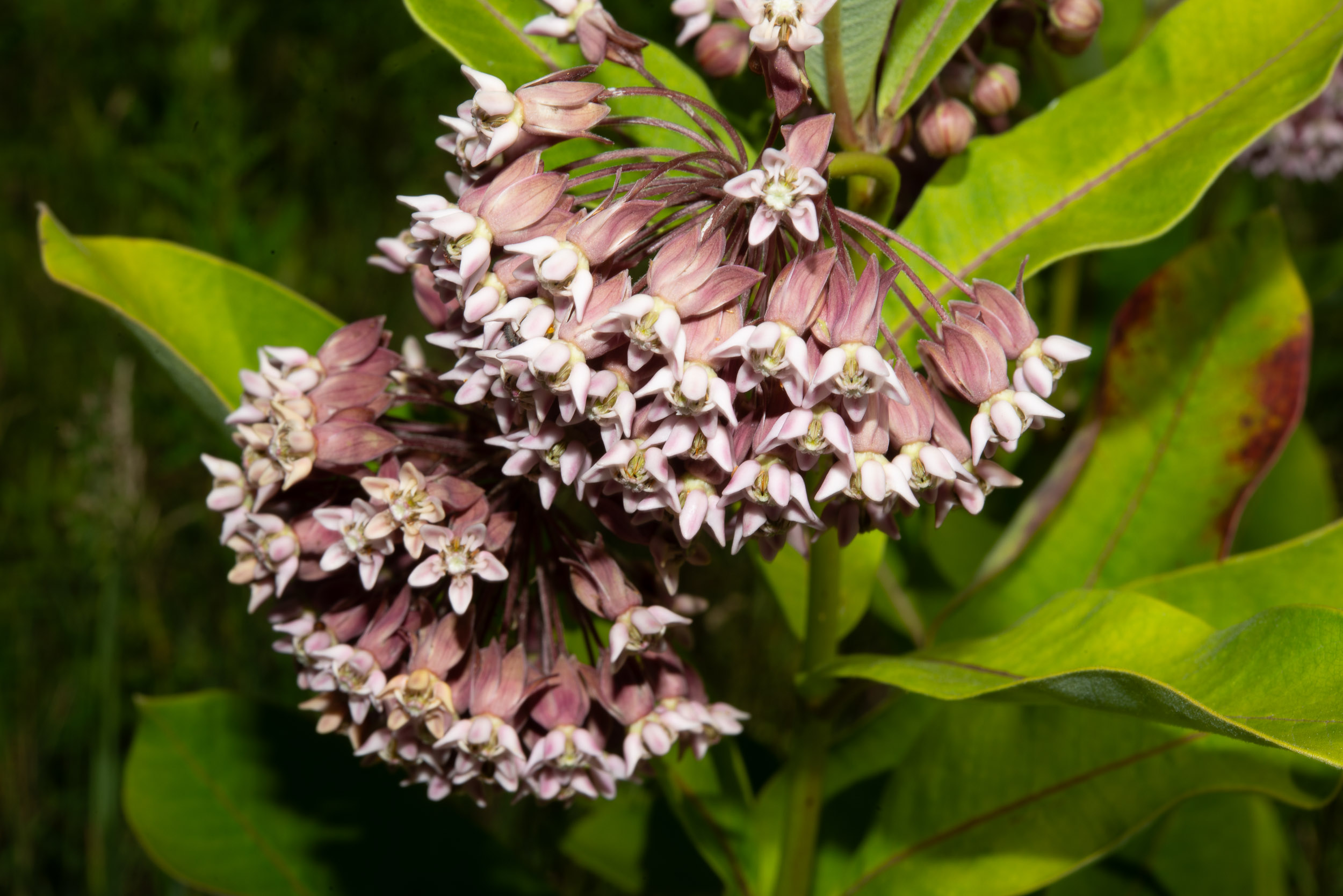
6/24/2015 · Nashua River Rail Trail, Groton Ctr, Groton, Massachusetts · ≈ 8 × 5″ (19 × 12 cm) 
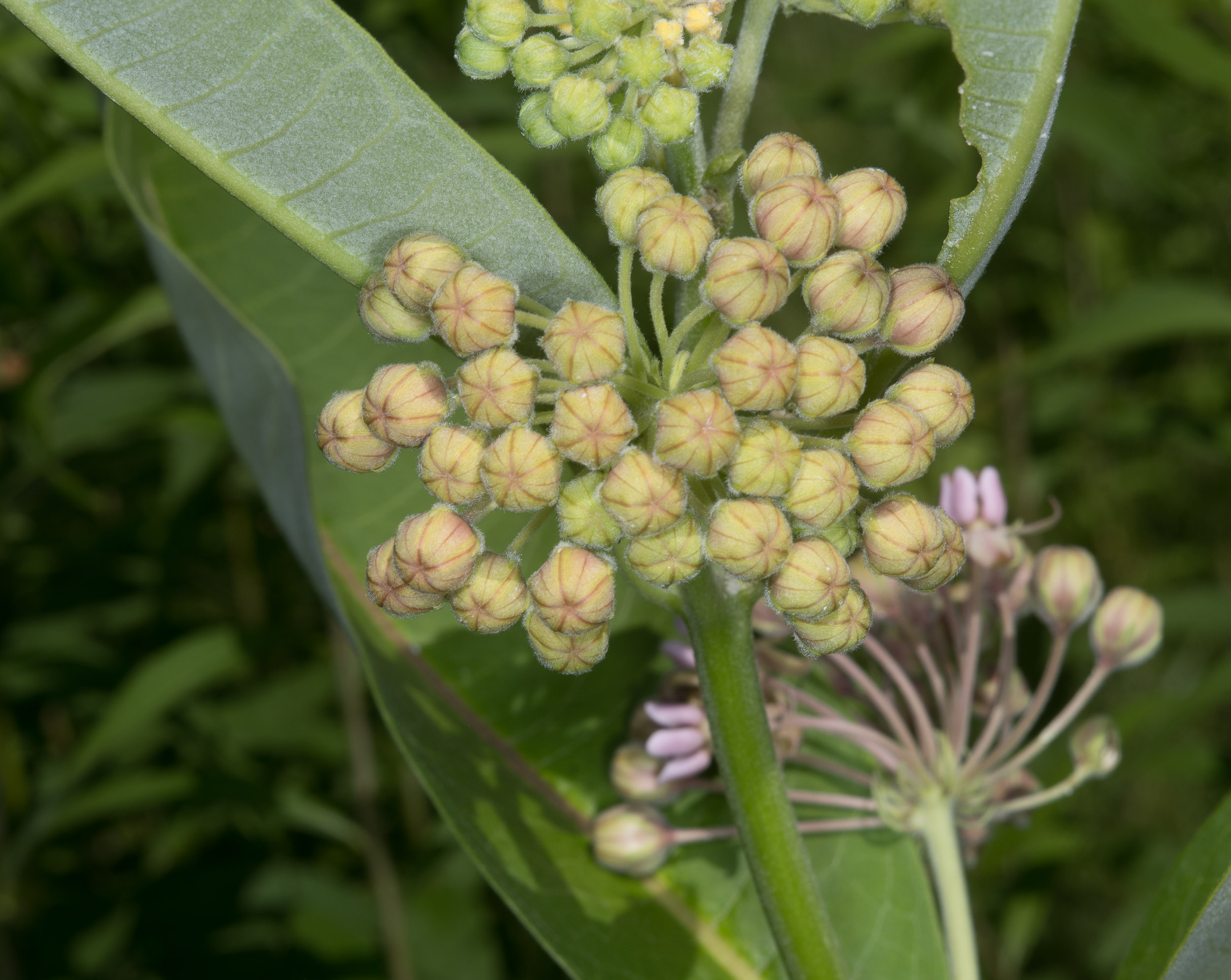
7/4/2017 · Kibby Climb, Beaver Brook Conservation Area, Hollis, New Hampshire · ≈ 5 × 4″ (13 × 11 cm) 
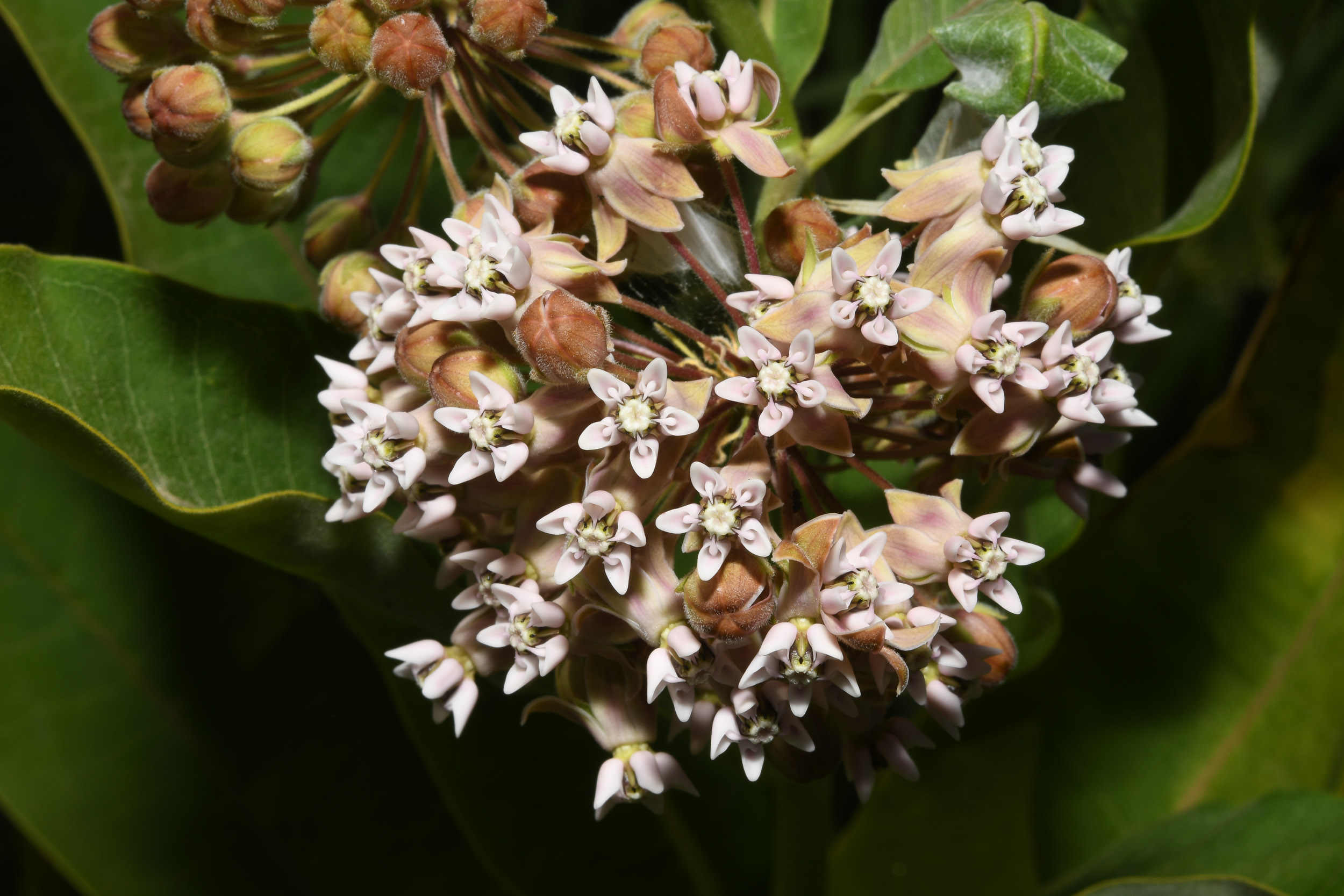
6/27/2016 · Nashua River Rail Trail, near Na, Ayer, Massachusetts 
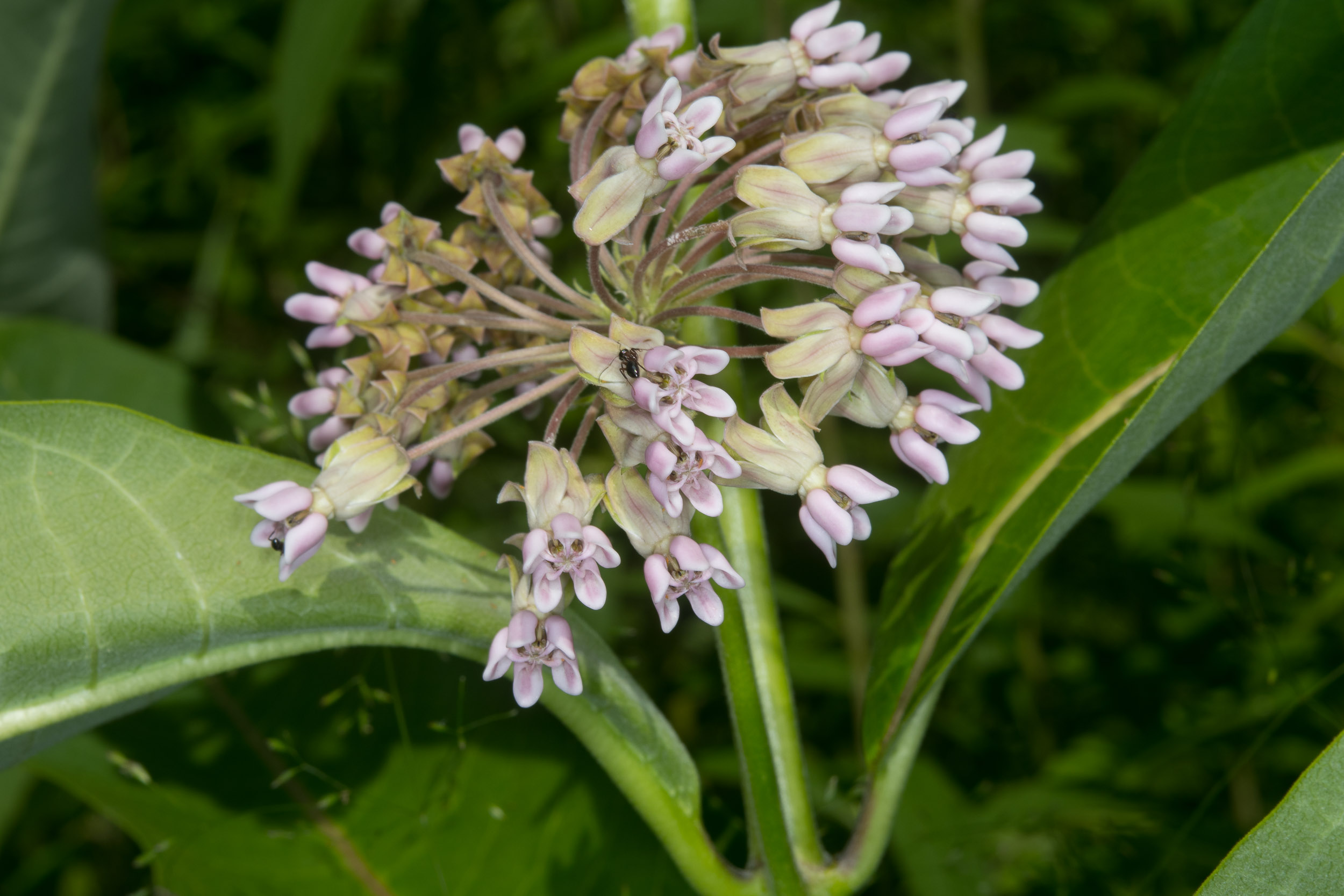
7/4/2017 · Kibby Climb, Beaver Brook Conservation Area, Hollis, New Hampshire · ≈ 6 × 4″ (15 × 10 cm) 
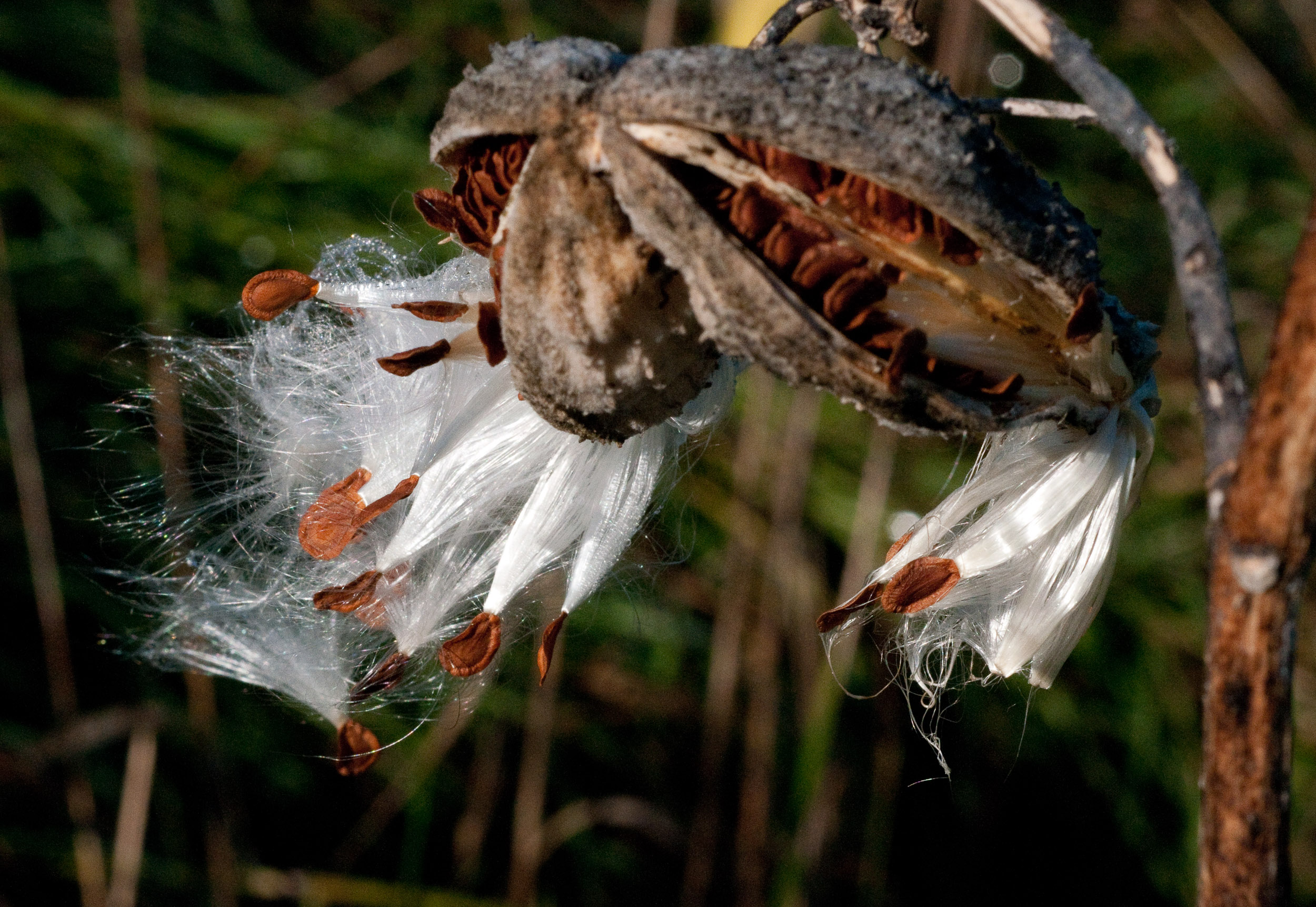
9/25/2009 · Nashua River Rail Trail, near Hospital, Ayer, Massachusetts · ≈ 6 × 4″ (15 × 11 cm) 
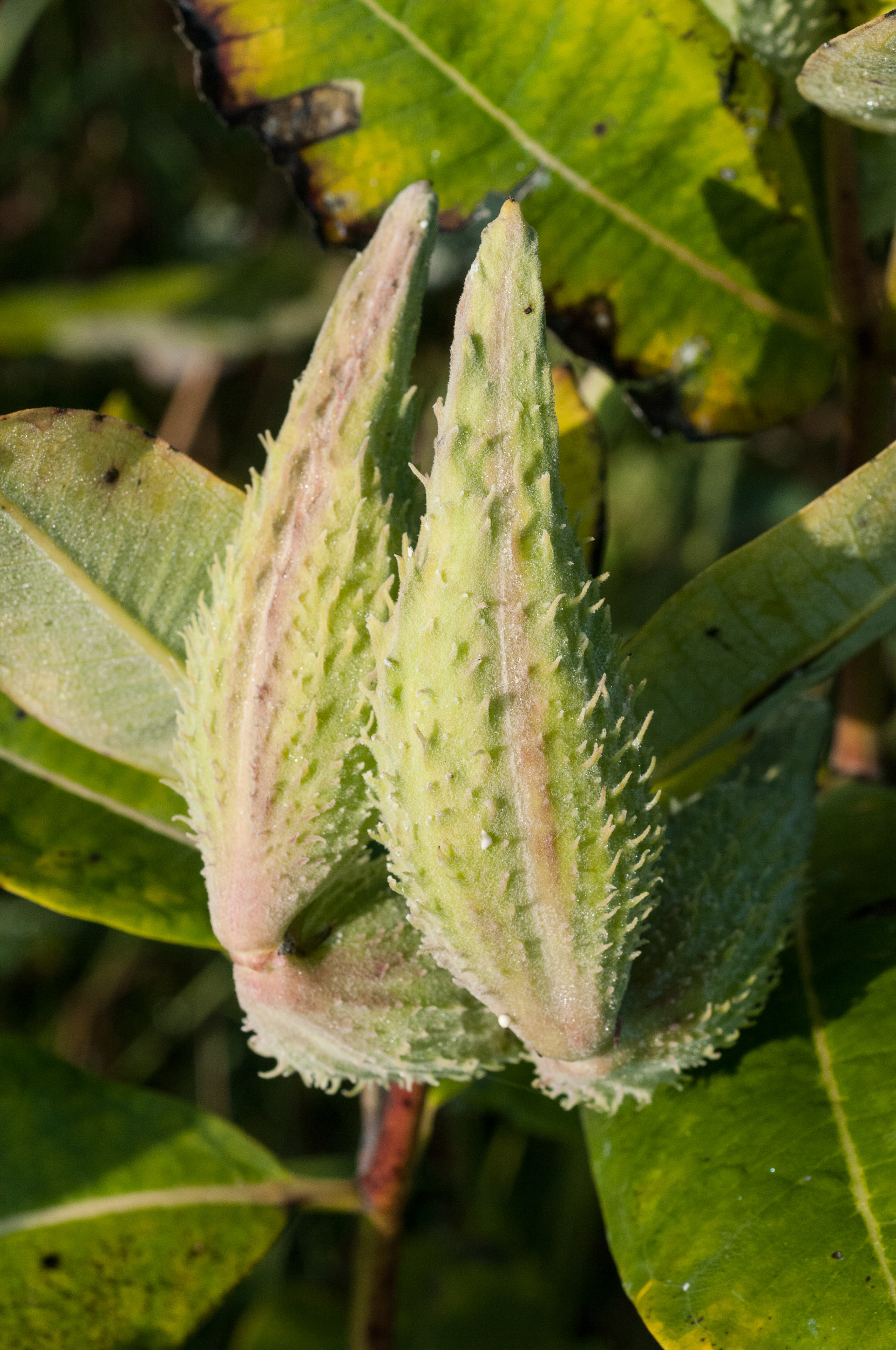
9/3/2009 · Nashua River Rail Trail, Ayer, Massachusetts · ≈ 4½ × 7″ (11 × 17 cm) 
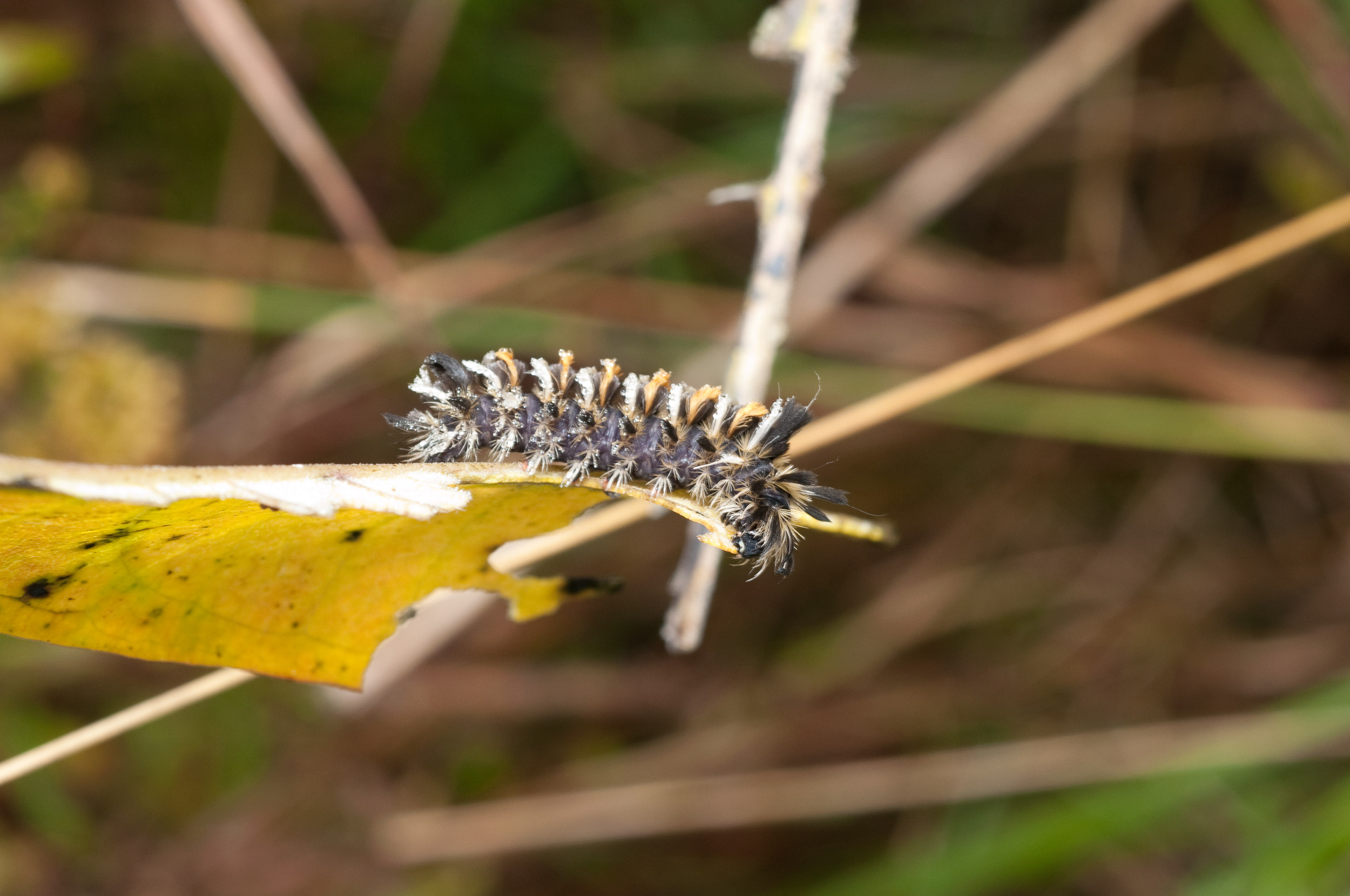
An (Euchates egle), or milkweed tussock moth. · 9/14/2009 · Near Nashoba Hospital, Ayer, Massachusetts · ≈ 6 × 4″ (15 × 10 cm) 
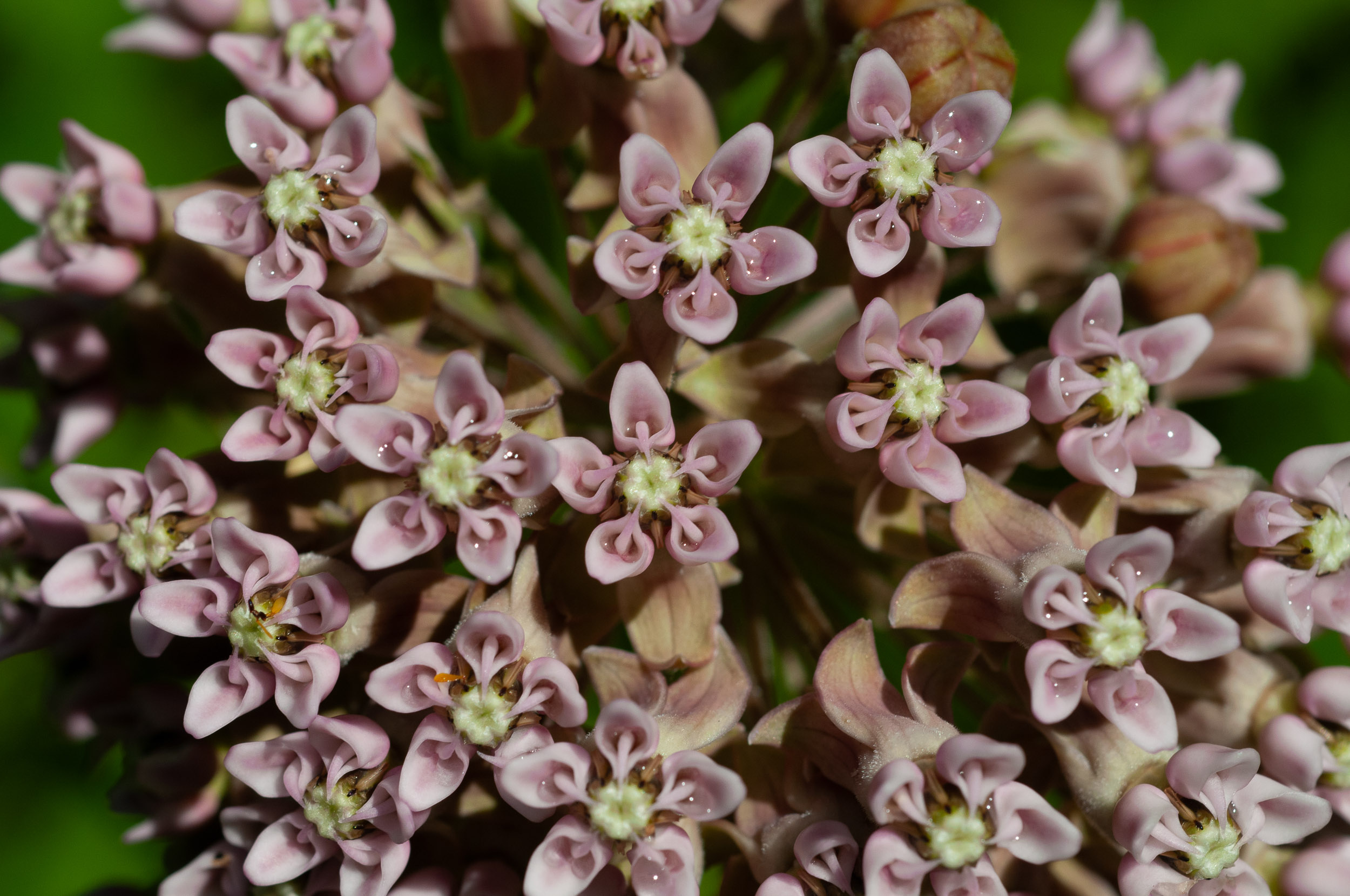
6/21/2010 · Nashua River Rail Trail, Groton Center, Groton, Massachusetts · ≈ 4½ × 3″ (11 × 7.9 cm) 
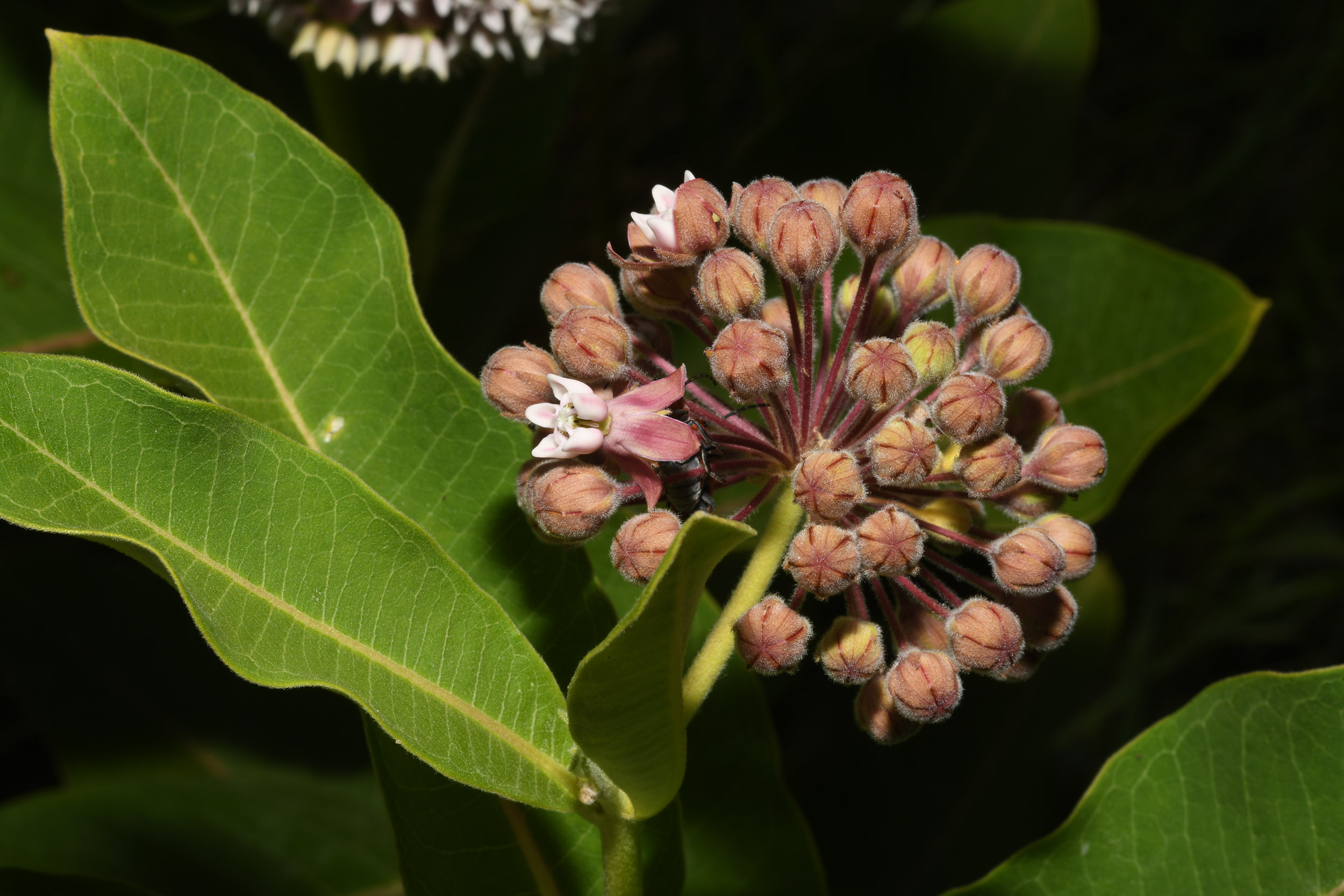
6/27/2016 · Nashua River Rail Trail, near Na, Ayer 

The colorful insect is Tetraopes tetrophthalmus, red milkweed beetle · 7/5/2010 · Tarrywile Park and Mansion, Danbury, Connecticut · ≈ 7 × 4½″ (17 × 11 cm) 
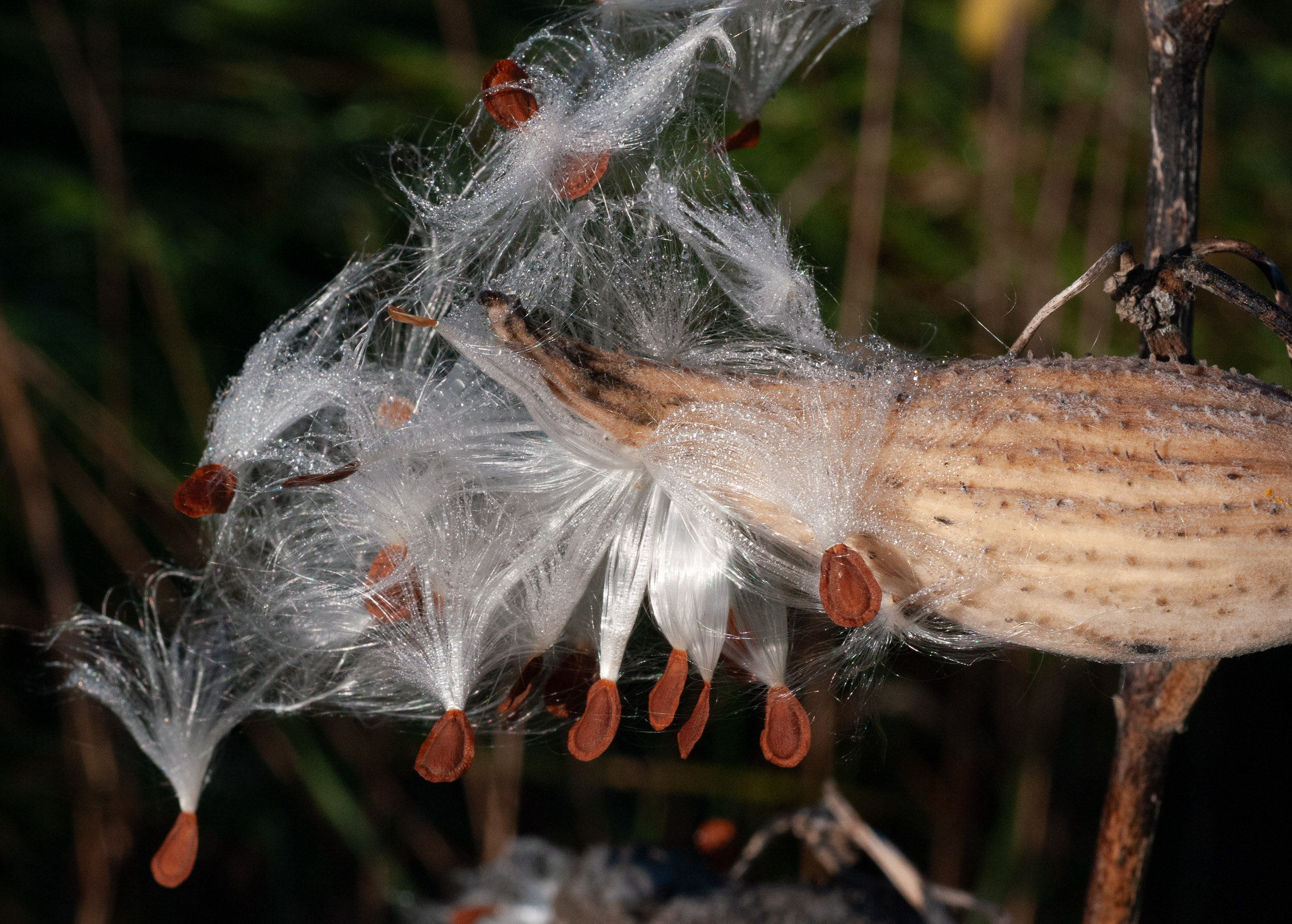
9/25/2009 · Nashua River Rail Trail, near Hospital, Ayer, Massachusetts · ≈ 6 × 4½″ (16 × 11 cm) 
| Kingdom | Plantae | Plants, but not fungi, lichens, or algae (from Stearn's Botanical Latin) |
| Subkingdom | Tracheobionta | Vascular plants—plants with a “circulatory system” for delivering water and nutrients |
| Division | Magnoliophyta | Flowering plants, also known as angiosperms |
| Class | Magnoliopsida | Dicotyledons—plants with two initial seed leaves |
| Subclass | Asteridae | A large class that encompasses asters |
| Order | Gentianales | Gentians, coffee, gardenias, frangipani, many others |
| Family | Asclepiadaceae | Includes some herbs, twining shrubs, lianas, leafless stem succulents, rarely trees |
| Genus | Asclepias | For Asklepios, the Greek god of healing |
| Species | syriaca | “Syrian” |
Asclepias syriaca description by Thomas H. Kent, not updated.

© FloraFinder.org. All rights reserved.