Equisetum L.
Horsetail
Horsetails are an ancient group of plants, little changed over 300 million years. The genus Equisetum means “horse bristles,” and refers to the plants’ unusually high levels of silica. They are often classified with ferns, but they are a distinct group of vascular plants. Like ferns, they reproduce by spores, not seeds. Although Equisetum includes all the now-living relatives of these plants, extinct relatives reached 100′ (30 m) in height as far back as the Carboniferous era, and were dominant species during the late Paleozoic Era. All horsetails prefer damp to wet freshwater soils.
See also this Equisetum comparison key.
 |
Equisetum comparisions. |
Online References:
References:
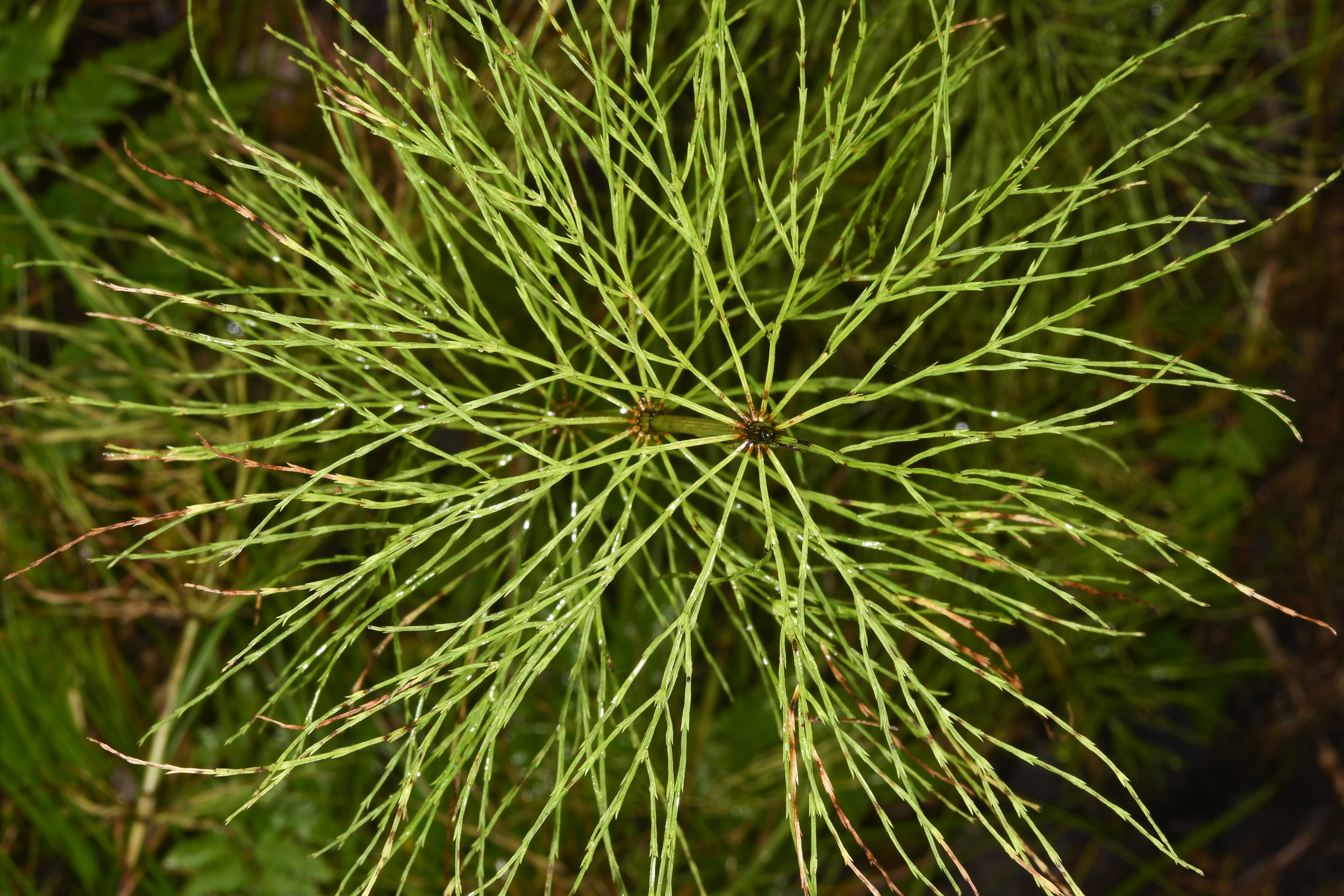
Field horsetail (Equisetum arvense) · 9/18/2016 · Shore Acres Preserve 
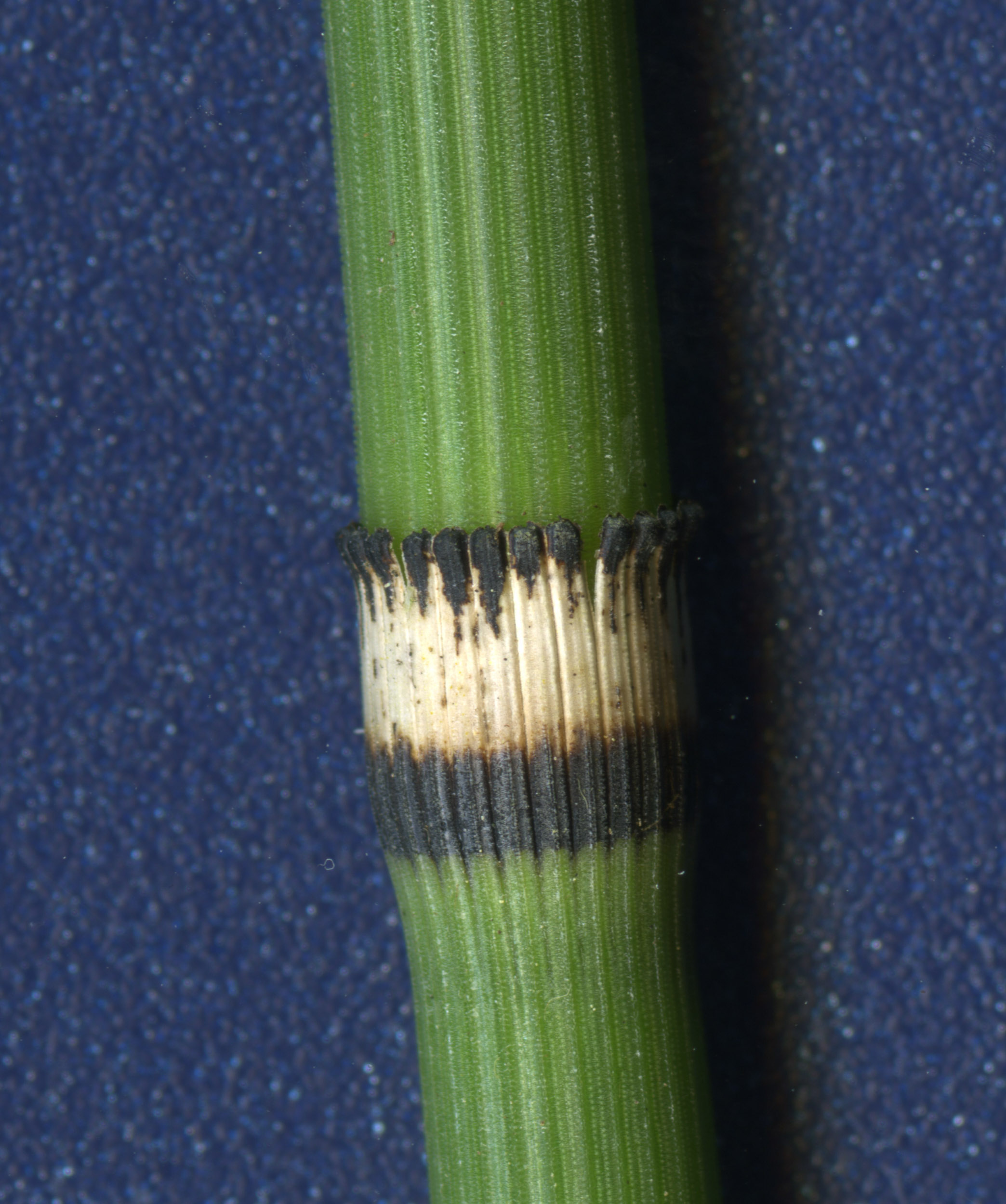
Common scouring rush (Equisetum hyemale) · The sheaths are black at both the bottom and top. · 1/5/2026 · Mitchell Field, Harpswell, Maine 
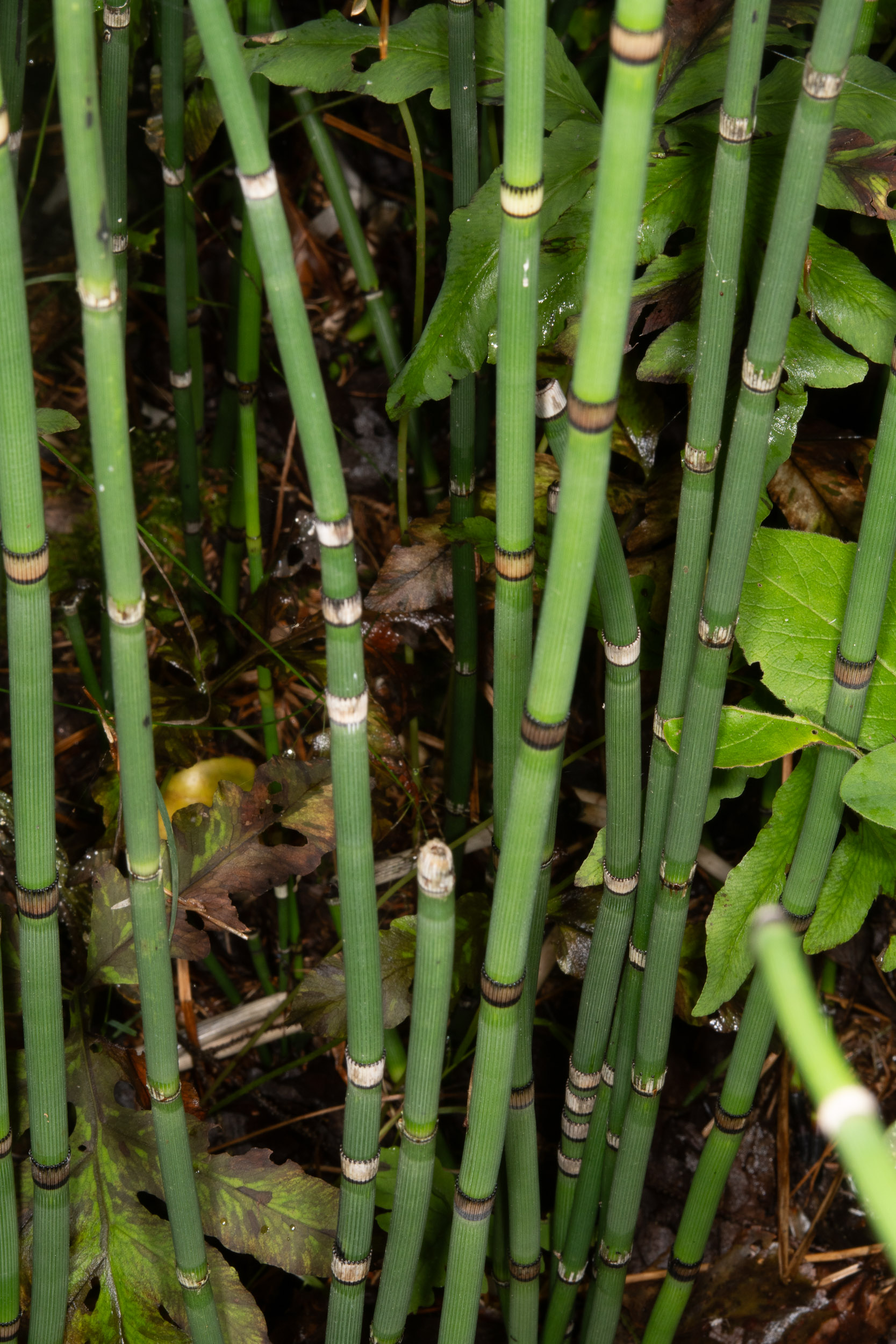
Common scouring rush (Equisetum hyemale) · 9/3/2020 · Mitchell Field, Harpswell, Maine · ≈ 6 × 10″ (16 × 24 cm) 
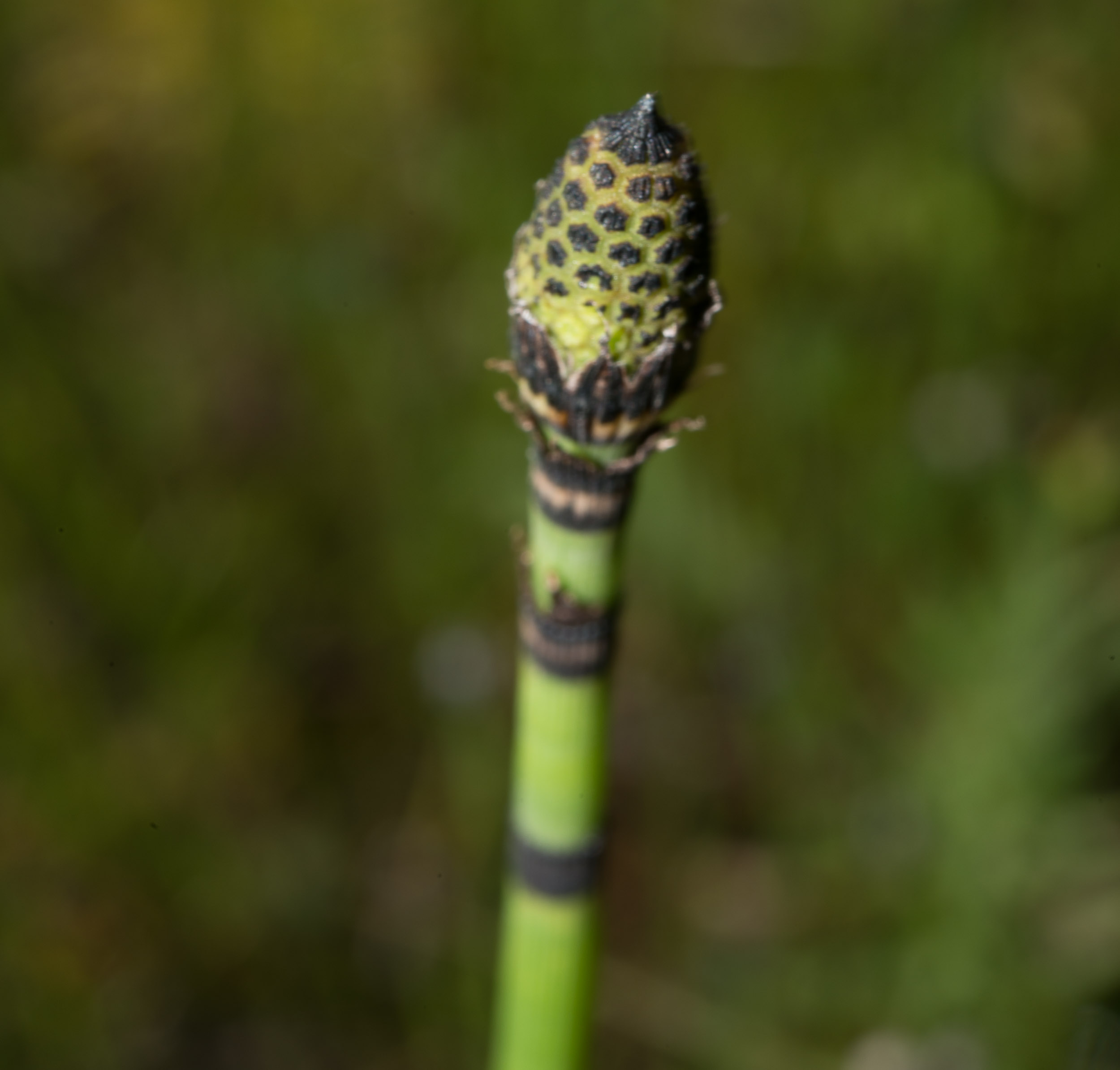
Rough horsetail (Equisetum hyemale) · 9/4/2013 · Amos Kendall Conservation Area, Dunstable, Massachusetts · ≈ 3 × 3″ (8 × 7.6 cm)  ID is uncertain
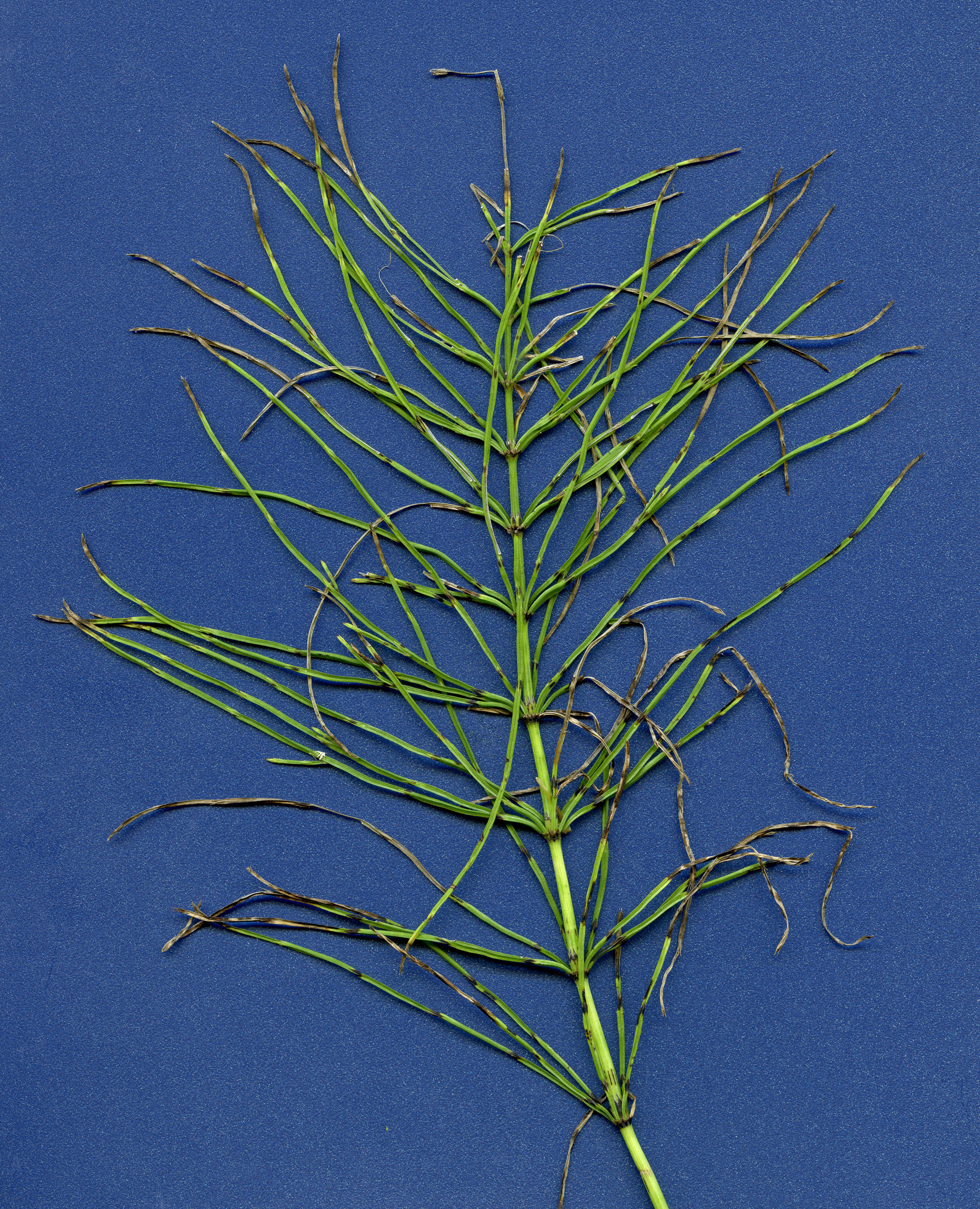
Meadow horsetail (Equisetum pratense) · About 8 x 5" · 9/4/2010 · Old Rail Trail near Wilkins Farm, Pepperell, Massachusetts ID is uncertain 
| Kingdom | Plantae | Plants, but not fungi, lichens, or algae (from Stearn's Botanical Latin) |
| Subkingdom | Tracheobionta | Vascular plants—plants with a “circulatory system” for delivering water and nutrients |
| Division | Equisetophyta | Horsetails, which date back to the Devonian era |
| Class | Equisetopsida | Horsetails, spore-bearing plants related to ferns |
| Order | Equisetales | Living horsetails (most are extinct) |
| Family | Equisetaceae | Living horsetails |
| Genus | Equisetum | From equus, horse; and seta, bristle |
Equisetum description by Thomas H. Kent, not updated.

© FloraFinder.org. All rights reserved.