Vaccinium ovatum Pursh
Evergreen huckleberry, California huckleberry
Evergreen huckleberry is native to the west coast of North America.
Plants: These plants are bushy shrubs up to 2–3′ (60–91 cm) in full sun, and up to 15′ (4.6 m) in the shade.
Leaves: Dark green and shiny, alternate, 1–2″ (2.5–5 cm) long. They are ovate (oval, wider at the base) in shape, with pointed tips, tough and leathery, with small serrations along the edges.
Flowers: About ½″ (1.3 cm) long, pinkish white, bell-shaped, in clusters of 3 to 10.
Fruits: Berries are purplish black, ⅛–¼″ (4–7 mm) in diameter.
Habitats: Redwood forest, closed-cone pine forest, mixed evergreen forest.
This Vaccinium comparison chart also includes a couple of similar-appearing species that are not Vaccinium.
Edibility: As with other members of Vaccinium (such as blueberries), berries are edible, though these taste better after the first frost. They were highly prized by native American tribes along the Pacific coast, dried and formed into cakes. Today they are used anywhere blueberries might be—in bread, muffins, jams, etc.
Medical:
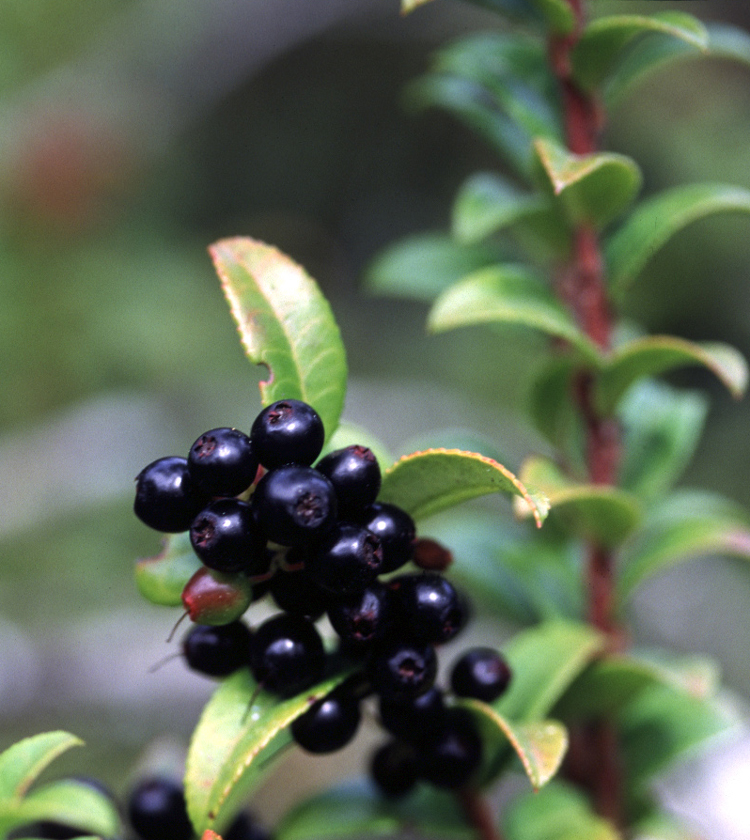
By Gordon Leppig & Andrea J. Pickart. 
Online References:
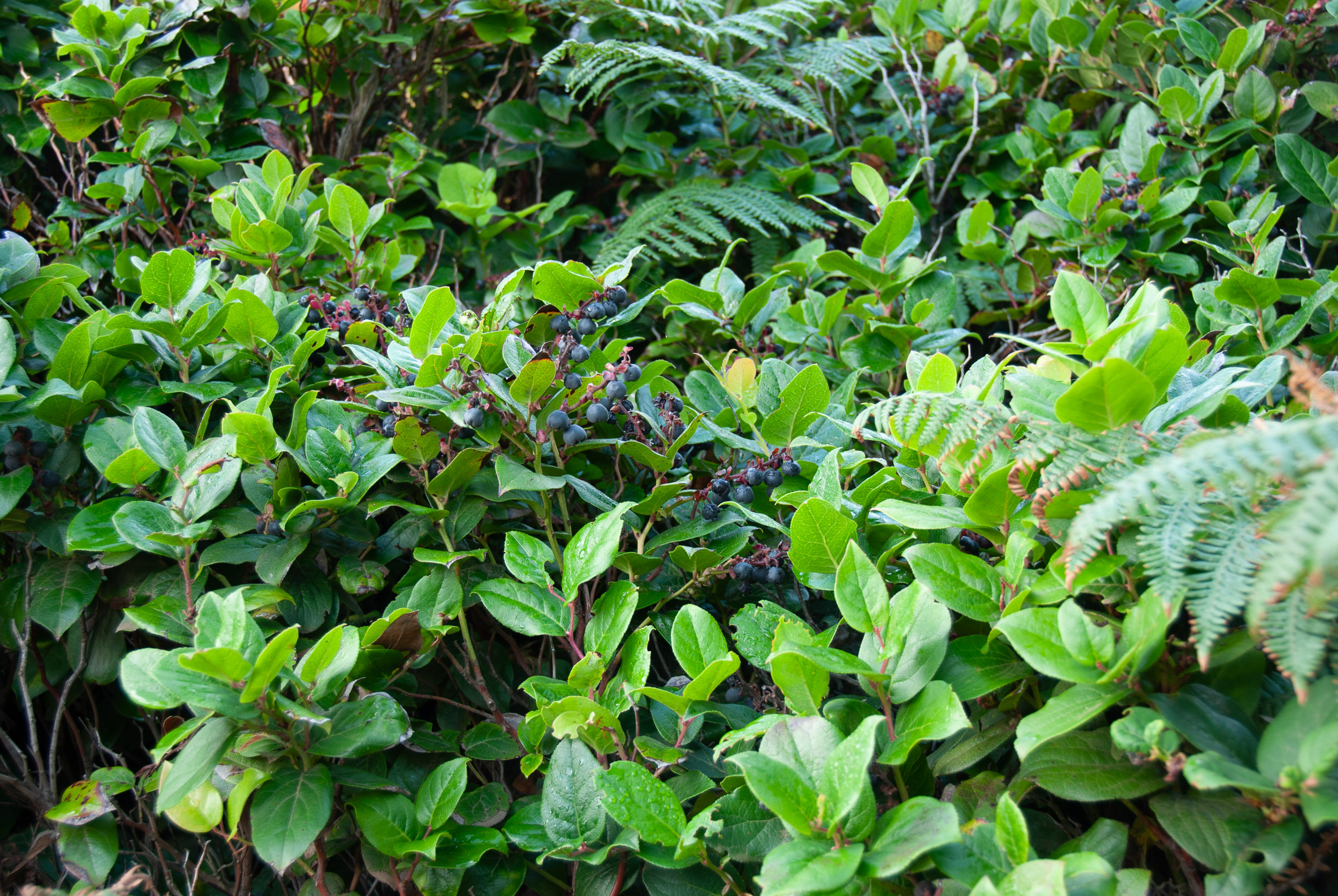
Could be any of several other huckleberries. · 8/26/2007 · Cape Meares State Park, Oregon  ID is uncertain
| Kingdom | Plantae | Plants, but not fungi, lichens, or algae (from Stearn's Botanical Latin) |
| Subkingdom | Tracheobionta | Vascular plants—plants with a “circulatory system” for delivering water and nutrients |
| Division | Magnoliophyta | Flowering plants, also known as angiosperms |
| Class | Magnoliopsida | Dicotyledons—plants with two initial seed leaves |
| Subclass | Asteridae | A large class that encompasses asters |
| Order | Ericales | Tea, persimmon, blueberry, Brazil nut, azalea, many others |
| Family | Ericaceae | Heath or heather family |
| Genus | Vaccinium | Ancient Latin name for billberry |
| Species | ovatum |
Vaccinium ovatum description by Thomas H. Kent, not updated.

© FloraFinder.org. All rights reserved.