Bluish-green rounded leaves, about 1½″ (3.8 cm) in size, are deeply divided into many rounded lobes, somewhat fernlike in appearance.
Divided into progressively smaller groups of three, up to 3″ (7.6 cm) long.
Fernlike leaves have three leaflets and three lobes. They are smooth and hairless.
Flowers
By Juan José Sánchez, taken at Lac Forchou, Belledone, Isere, Francia.
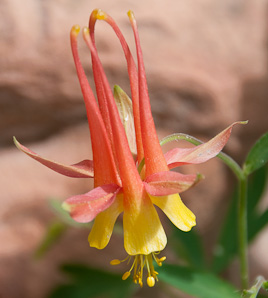
Light pink to deep red, with yellow. 1½–2″ (3.8–5 cm) long. With five spurs on the back.
The spurs on the back of each flower are up to 2½″ (6.7 cm) long. Flowers are about 2–3″ (5–7.6 cm) in length and plants are 2–3′ (60–91 cm) in height. Each flower has five pointed sepals and five petals. They may be bright or pale yellow.
Fruit
Five pod-shaped follicles with long beaks split open along one side to release shiny black seeds.
Five pod-shaped follicles with long beaks split open along one side to release shiny black seeds.
Range/ Zones
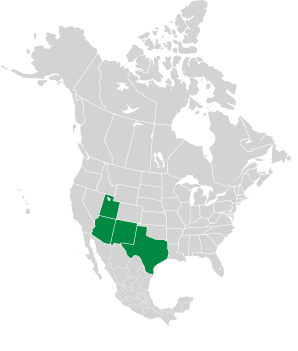
USDA Zones: 4a-7b
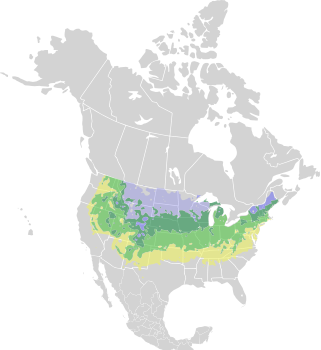
USDA Zones: 3-8
Habitats
Stony or rocky pastures in subalpine regions, with calcerous bedrock, at elevations of 4265–6234′ (1.3–1.9 km).
Up to 1–3′ (30–91 cm) high. This is a highly variable plant.
Forms mounds of think, leafy stems 12–28″ (30–72 cm) tall.
Leaves
Dark green; purple, maroon, or pink in the fall. Leaves are variously divided and ½–1½″ (1.3–4.2 cm) in size.
Divided into three lobes, each also three-lobed (“twice ternately compound,” if you prefer fancier talk). Each leaf is 4–12″ (10–30 cm) long. Leaflets are ½–1¾″ (1.5–4.7 cm).
Flowers
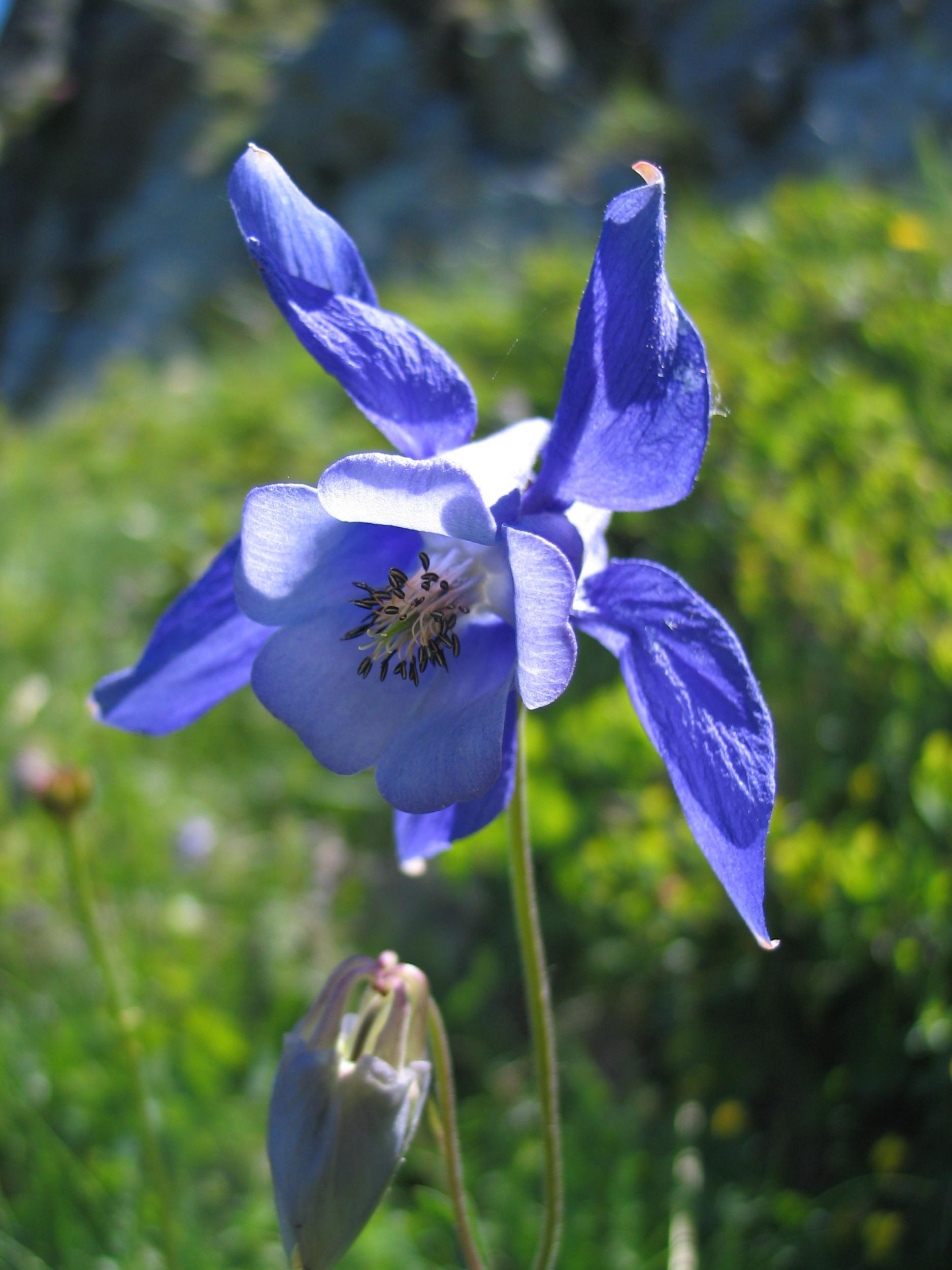
Although it is commonly blue, the flowers also appear pale yellow, white, pale pink, and bicolored. They are 1¾–4″ (5–10 cm) around, rarely up to 6″ (15 cm). Cultivars are available in many more color variations.
Flowers are nodding, with highly distinctive rear-facing spurs, often curled inward, resembling a the claws of an eagle. (The genus Aquilegia derives from the Latin for an eagle’s claw, though it could also refer to claw-like groups of fruit.) Sepals are lanceolate, ½–⅞ ⨉ ¼–⅜″ (1.5–2.5 cm ⨉ 8–12 mm). Petals are ⅜–½ ⨉ ⅛–⅜″ (1–1.3 cm ⨉ 6–10 mm), with 13 or more stamens ¼–½″ (9–13 mm) long. The original wild flowers are blue or purple, but escaped cultivars may also be white, pink, red, or other colors. Flowers appear from May to July.
Fruit
Five pod-shaped follicles with long beaks split open along one side to release shiny black seeds.
Dry seedpods 11.8–102.4 mils (0.3–2.6 mm) long.
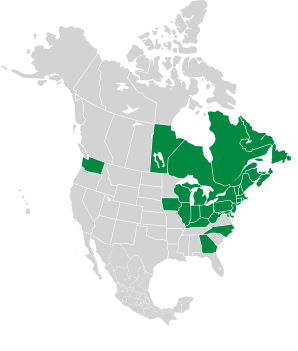
Range/ Zones
USDA Zones: 3-8
Habitats
Mountain meadows.
Anthropogenic (man-made or disturbed habitats), forest edges.
Aquilegia description by Thomas H. Kent, not updated.