Aralia nudicaulis L.
Wild sarsaparilla
Wild sarsaparilla’s scientific name, Aralia nudicaulis, means simply “bare stem.” It is a native of northern and eastern North America. These plants are very common forest understory plants in northeastern hardwood forests.
| Okay, so you’re a plant, and you’ve decided that you’re going to eke out an existence on the bottom of forest floors. All those trees overhead have leaves everywhere, so there’s something to catch light regardless of the angle of the sun, and with every passing breeze. There isn’t much left for you, a few dappled rays. You need a more frugal strategy. So you make only a few leaves, and spread them out in a single plane, facing straight up, with almost no overlap. Now every leaf collects as much sunlight as possible. And you even put your flowers under the leaves so they don’t get in the way. That’s sarsaparilla. |
Plants: 1–2′ (30–60 cm) high.
Leaves: There is a single basal leaf, and a whorl of three compound leaves at the tip of the long, leafless stem. Leaves are compound in groups of 3 to 7. Each leaflet is 3–5 ⨉ 2″ (7.6–12 ⨉ 5 cm), generally oval or widest above the middle. Young leaves are often a shiny red-bronze color. It has a sharply pointed tip and finely toothed edges that may be a little wavy. The leaves are all lined up in a flat plane.
Flowers: Tiny white or pale green flowers form attractive spherical clusters about 1½″ (3.8 cm) around, underneath the leaves. They resemble wild leek flowers, but lack the leeks’ odor of onions. Flowers appear from May to July.
Fruits: The flower clusters become similarly shaped berry clusters, with dark blue berries about ¼″ (6.3 mm) around.
Habitats: Northern hardwood, beech-maple, and oak-hickory forests.
Edibility: “Sarsaparilla” is Spanish for “little grape vine”—a name well-suited to real sarsaparilla, but not to wild sarsaparilla. I couldn’t verify this, but it looks as if roots of wild sarsaparilla were sometimes used as a flavoring agent in place of the real variety, leading to the name confusion. They are edible, though.
Wild sarsaparilla is sometimes confused with “real” sarsaparilla, even though the plants bear no resemblance to each other and do not overlap in range. Here are some other possible sources of confusion:
| Wild sarsaparilla (Aralia nudicaulis) | Short plants often found in North American forests, with bare stems topped with leaves in a flat plane, and flowers nestled underneath the leaves. |
| Bristly sarsaparilla (Aralia hispida) | A close relative, but larger and with stems that are covered with bristly hairs; stems of A. nudicaulis are smooth. |
| Sarsaparilla (Smilax officinalis and other species) | A vine native to Jamaica, reaching up to 50′ (15 m) in length, with long underground roots that have been used in some soft drinks and for various ailments. |
| Poison ivy (Toxicodendron radicans) | An unrelated but highly toxic  plant that is vaguely similar in appearance
to wild sarsaparilla and has leaves in groups of three. plant that is vaguely similar in appearance
to wild sarsaparilla and has leaves in groups of three. |
| Australian sarsaparilla tree (Alphitonia petriei) | A fast-growing evergreen tree with bark and leaves that smell like liniment when rubbed. |
Online References:
References:
Clemants, Steven; Gracie, Carol, Wildflowers in the Field and Forest, Oxford University Press, 2006, p. 388

5/2/2013 · Beaver Brook Conservation Area, Hollis, New Hampshire · ≈ 6 × 5″ (14 × 13 cm) 

6/7/2017 · Burns Loop Trail, Beaver Brook Conservation Area, Burns/Holland Farm, Milford, New Hampshire · ≈ 6 × 6″ (14 × 14 cm) 
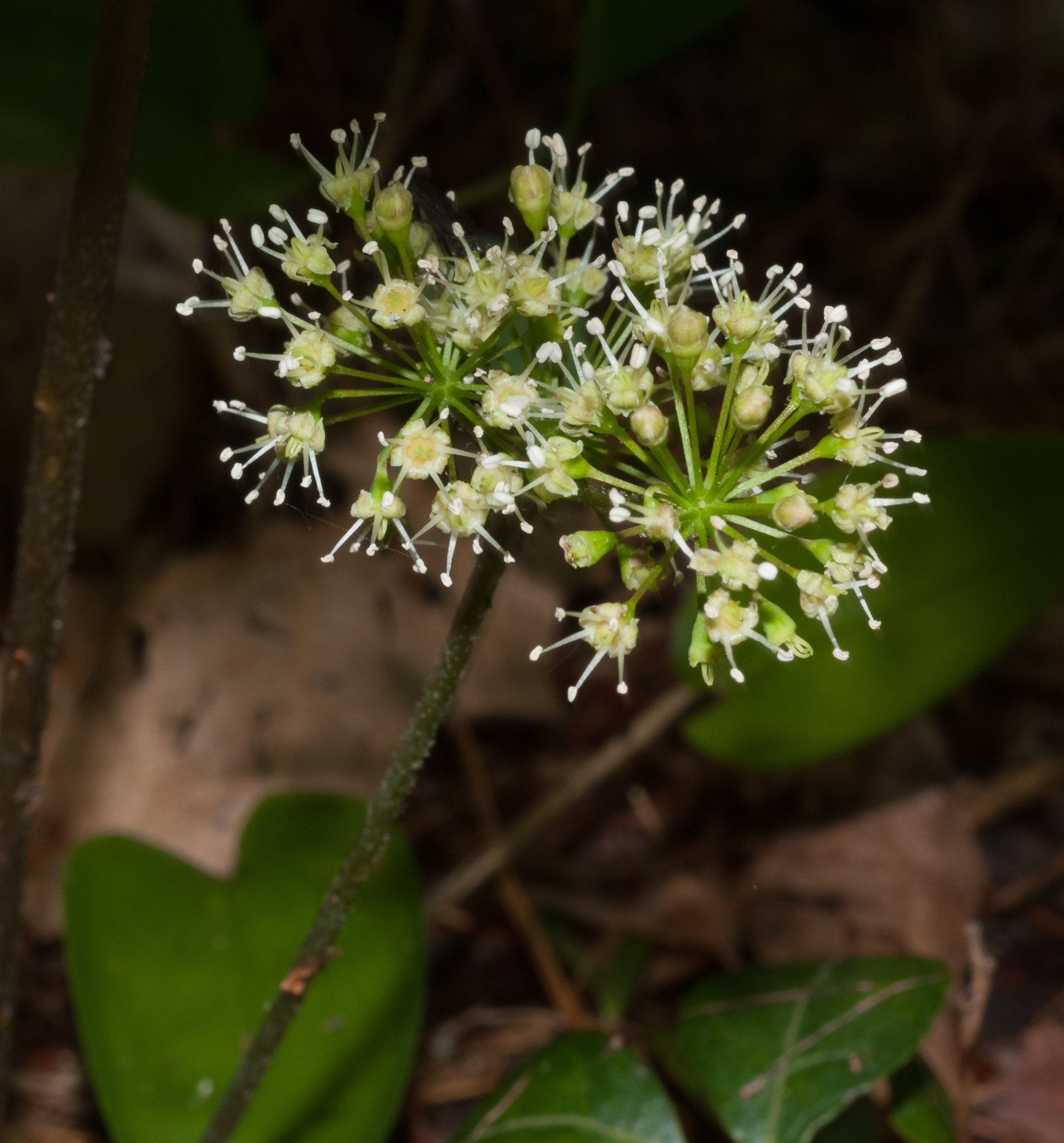
5/9/2010 · Tom and Susan’s, Pepperell, Massachusetts · ≈ 3½ × 3½″ (8.6 × 9.3 cm) 

5/18/2016 · Worcester Road, Beaver Brook Conservation Area, Hollis, New Hampshire · ≈ 1 × 1½′ (34 × 52 cm) 

5/7/2021 · Long Reach Preserve, Harpswell, Maine · ≈ 7 × 5″ (18 × 12 cm) 
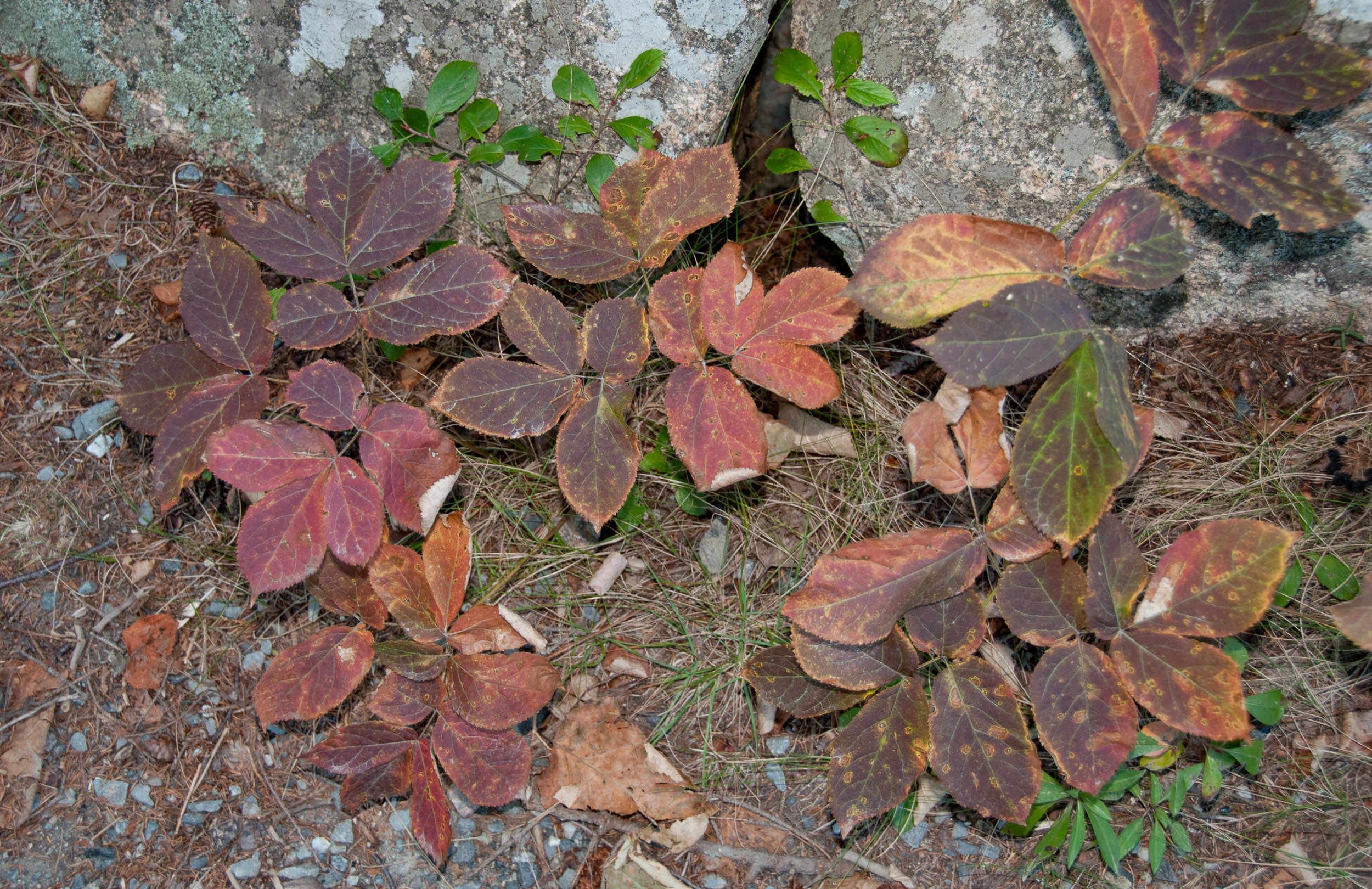
9/18/2009 · Acadia National Park, Bar Harbor, Maine · ≈ 2½ × 1½′ (82 × 53 cm) 

5/25/2023 · Maquoit Bay Conservation Land, Brunswick, Maine 

5/21/2013 · Beaver Brook Conservation Area, Hollis, New Hampshire · ≈ 8 × 8″ (21 × 19 cm) 

5/12/2023 · Long Reach Preserve, Harpswell, Maine 

Berries will become black when ripe. (The leaves are false Solomon’s seal.) · 6/4/2013 · Tom and Susan’s, Pepperell, Massachusetts · ≈ 7 × 5″ (17 × 13 cm) 

5/17/2010 · Wildlife Pond Loop Trail, Beaver Brook Conservation Area, Hollis, New Hampshire · ≈ 1 × 1½′ (34 × 52 cm) 
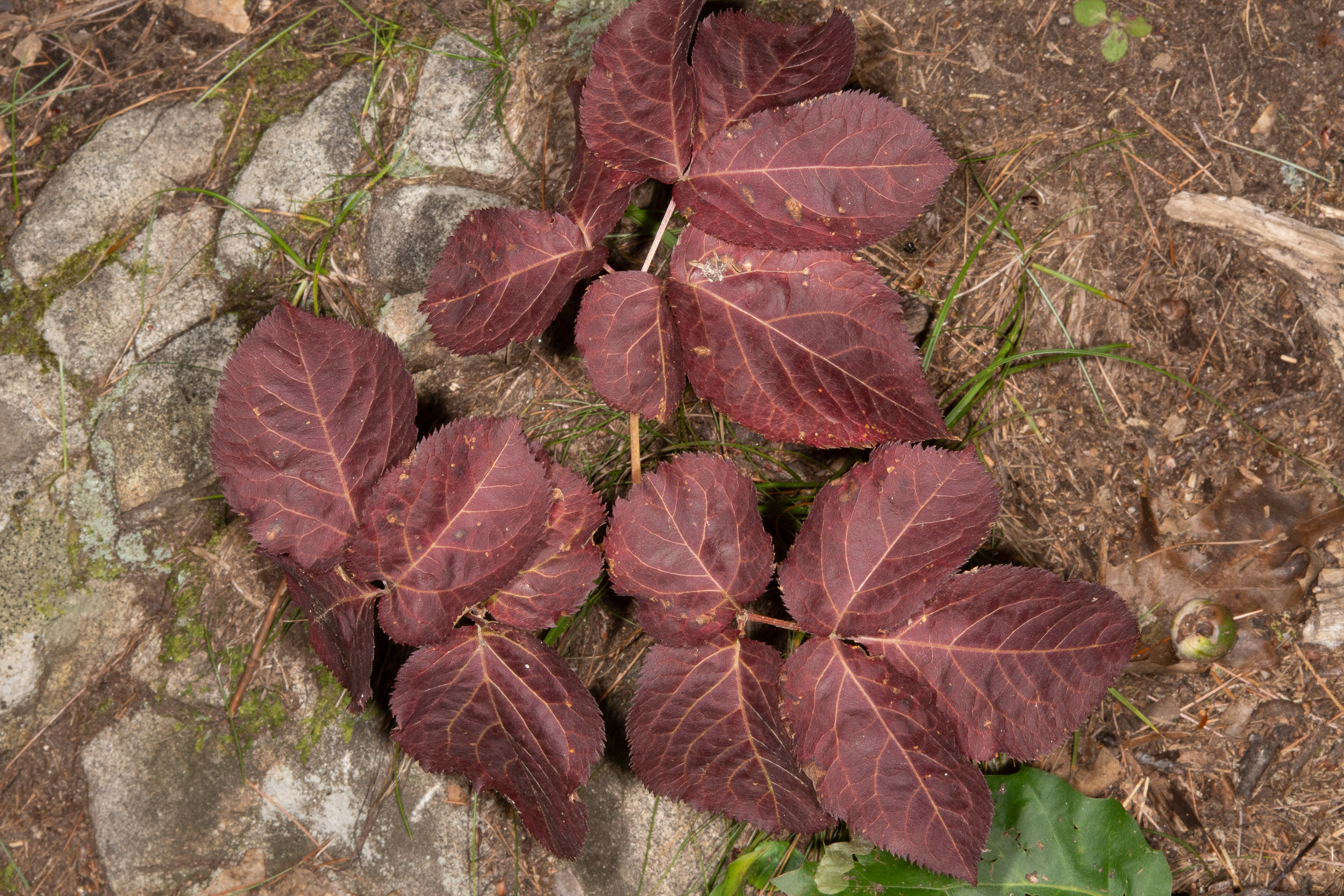
8/12/2023 · Highlands Trail via Pismire Bluffs Trail, Raymond Community Forest, Raymond, Maine · ≈ 12 × 8″ (31 × 20 cm) 

5/9/2010 · Tom and Susan’s, Pepperell, Massachusetts · ≈ 4 × 4½″ (10 × 11 cm) 

5/20/2023 · Knight’s Pond Preserve, Cumberland, Maine 
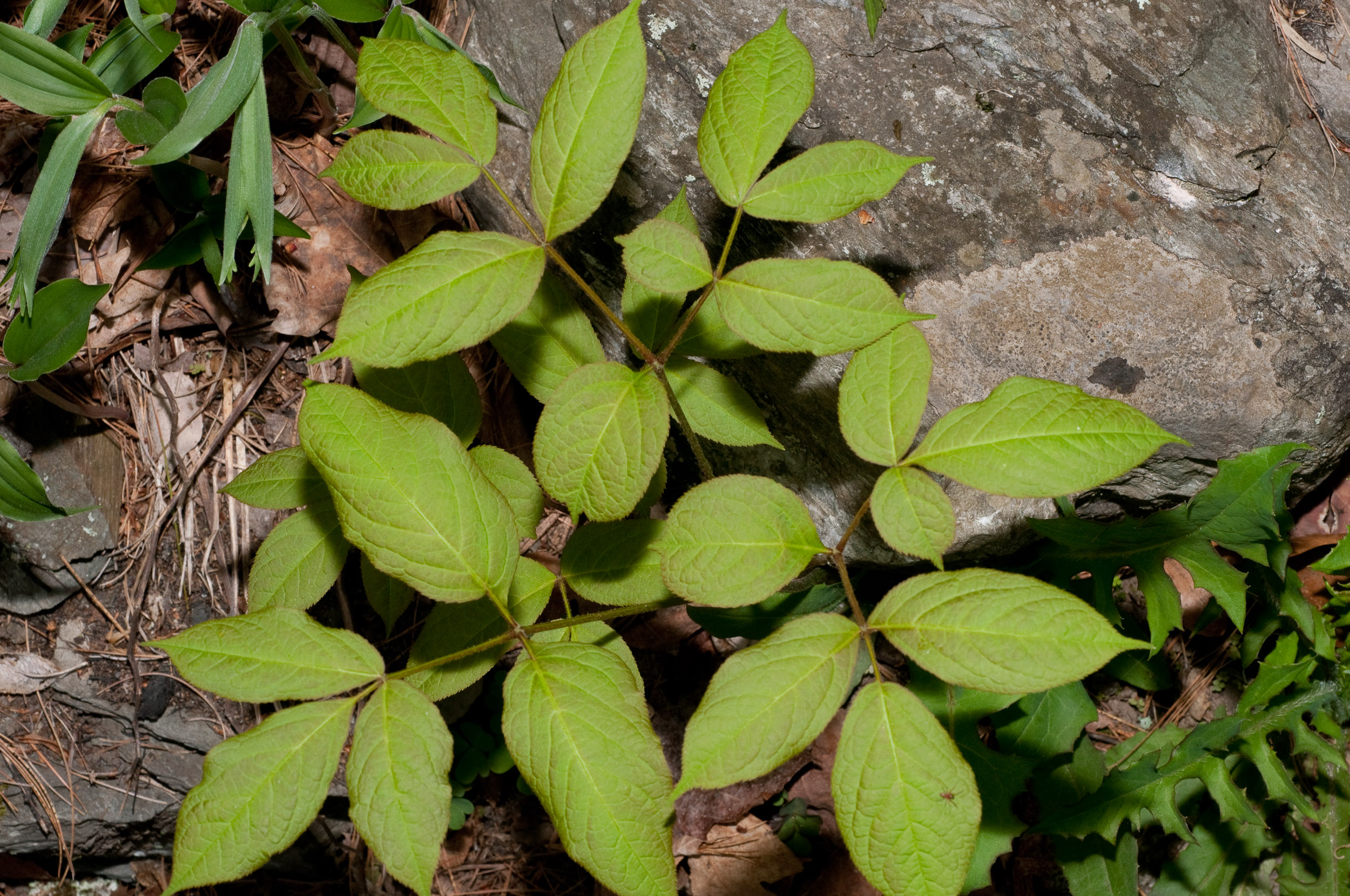
5/2/2010 · Tom and Susan’s, Pepperell, Massachusetts · ≈ 15 × 10″ (39 × 26 cm) 

5/30/2021 · Trail near fire tower, Highland Green, Topsham, Maine · ≈ 4½ × 3½″ (11 × 9.8 cm) 

The berries are sarsaparilla. Foliage is bunchberry. · 7/15/2012 · Fort Point State Park, Stockton Springs, Maine · ≈ 15 × 10″ (39 × 26 cm) 

5/18/2025 · Center Point Preserve, Bowdoinham, Maine · ≈ 1 × 1½′ (38 × 51 cm) 

5/25/2023 · Maquoit Bay Conservation Land, Brunswick, Maine 

5/24/2021 · Long Reach Preserve, Harpswell, Maine · ≈ 6 × 8″ (15 × 20 cm) 

5/18/2016 · Worcester Road, Beaver Brook Con, Hollis, New Hampshire 
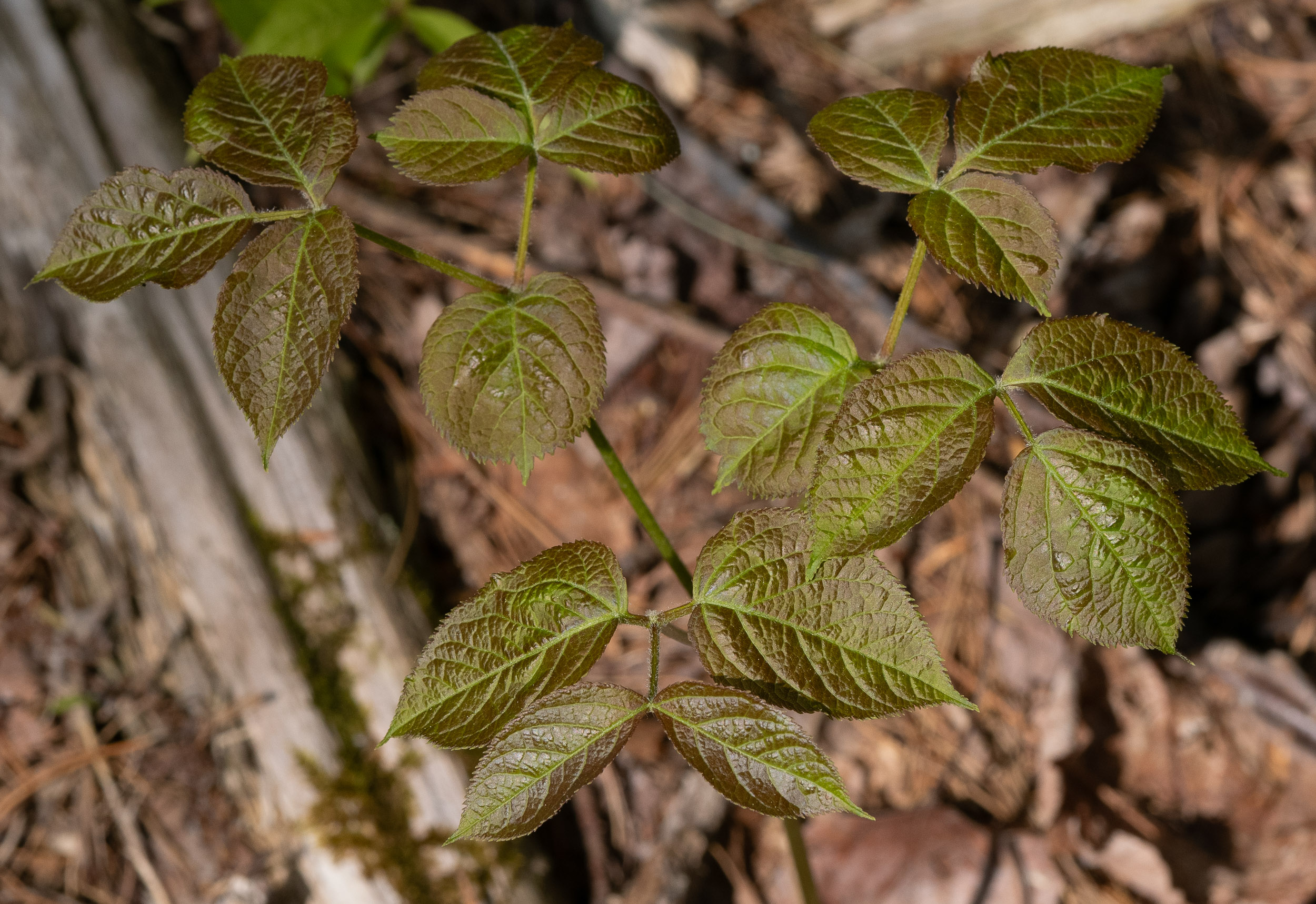
5/11/2023 · White Trail, Knight’s Pond Preserve, Cumberland, Maine 

5/20/2023 · Knight’s Pond Preserve, Cumberland, Maine 
| Kingdom | Plantae | Plants, but not fungi, lichens, or algae (from Stearn's Botanical Latin) |
| Subkingdom | Tracheobionta | Vascular plants—plants with a “circulatory system” for delivering water and nutrients |
| Division | Magnoliophyta | Flowering plants, also known as angiosperms |
| Class | Magnoliopsida | Dicotyledons—plants with two initial seed leaves |
| Subclass | Asteridae | A large class that encompasses asters |
| Order | Apiales | Includes carrots, celery, parsley, and ivy |
| Family | Araliaceae | Ivy family |
| Genus | Aralia | Latinized version of French Canadian or American Indian name aralie |
| Species | nudicaulis | From Latin nudus, “bare, naked,” and Greek kaulos, “stem”: bare-stemmed |

Aralia nudicaulis description by Thomas H. Kent, not updated.

© FloraFinder.org. All rights reserved.