Isocoma pluriflora (Torr. & A. Gray) Greene
Jimmyweed, jimmy goldenweed, southern goldenbush
Similar species
Isocoma pluriflora
Ericameria linearifolia
Ericameria nauseosa


|
Isocoma pluriflora (Torr. & A. Gray) Greene Jimmyweed, jimmy goldenweed, southern goldenbush Similar species | |||
| You are here Isocoma pluriflora |
Ericameria linearifolia |
Ericameria nauseosa |
|
|---|---|---|---|
| Common Name | |
|
|
| Plant | Herbaceous perennial subshrubs are 1–3½′ (30–106 cm) tall, with over 25 erect or ascending stems that are usually hairless. | Perennial shrubs 1–5′ (40–150 cm) tall, either erect or spreading. They prefer sandy or rocky soil, and dry creekbeds, deserts, mountainsides, and mesas. | Shrubs 6½–26′ (2–8 m) in size. Stems are whitish to green or gray and flexible. Some subspecies contain a sap that is a high quality source of rubber. It is a highly variable species, with several subspecies. |
| Leaves | Alternate, light or dull green, linear, and ⅜–1¾″ long ⨉ 1/16–⅛″ wide (1–5 cm ⨉ 2–4 mm). Leaf axils often contain small leaflets. | Leaves are linear, ⅜–1¾″ (1–5 cm) long by up to ⅛″ (3 mm) wide. They are sessile—attached directly to the stem—and alternate. Stems have a resinous coating. Plants are drought deciduous—they drop leaves in high summer heat to conserve water. | Lanceolate or spatulate, ¾–3″ (2–7.5 cm) long and 1/32–⅛″ (0.5–3 mm) wide. Leaves are grayish, due to a soft feltlike covering of fine hairs. Crushed leaves or flowers produce an unpleasant odor. |
| Flowers | Inflorescences contain many flowerheads, each containing 8-17 disc florets and flat or rounded yellow-tipped phyllaries. Flowers appear from July to October. | These composite flowers are bright yellow, and up to 1¾″ (4.5 cm) in diameter. Each flower has 3-18 ray florets, each ¼–½″ (7–15 mm) long; and 16-60 disc florets. Flowerheads appear at the ends of long leafless stems. They appear from March to May. | Flowerheads are ⅛–½″ (6–13 mm), umbrella-shaped umbels comprised of five small yellow tubular disc flowers. Each flower is ¼–⅜″ (6.3–10 mm) long. Flowers appear from July to October. |
| Fruit | Cypselae. | Achenes are tan to brown, ⅛–3/16″ (4–5 mm) long and narrow, with a pappus of bristles, each ⅛–¼″ (6–7 mm) long. | Small seeds with “parachutes” (pappi) are scattered by winds. |
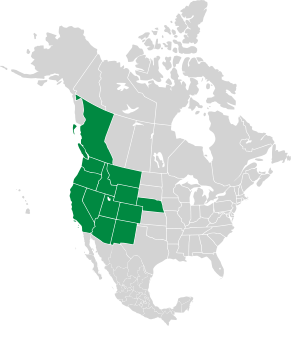
| Range/ Zones |
|
|
|
| Habitats | Creosote and mesquite communities. mesas and plains with saline, sandy, clay or alkaline soils, common along roadsides, at elevations of 3500–6500′ (1–2.0 km). | Rocky or sandy soils of mountainsides, dry creek beds, deserts, mesas, and interior plains; at elevations of 230–6562′ (70–2000 m). | Disturbed soils and arid climates, in plains, valley bottoms, foothills, and mountains. |

Isocoma pluriflora description by Thomas H. Kent, not updated.
© FloraFinder.org. All rights reserved.