Lupinus L.
Lupines, lupine
There are about 280 species of lupines worldwide. The genus, Lupinus (from Lupus, “wolf”), reflects an old belief that lupines consume nutrients voraciously from the soil. Ironically, the opposite is true. Lupines trap or “fix” nitrogen directly from the atmosphere, creating their own fertilizer. Sometimes they are even planted among other crops because they produce enough nitrogen to improve their growth as well. Lupines are early colonizers of disturbed areas. They are prized by gardeners for their attractive spikes of flowers.
Identification: Lupines’ tall, attractive flower spikes are a their most noticeable feature from a distance. Up close, lupines have palmlike leaves—rosettes of several narrow leaflets, like spokes on a wheel. Yellow bush lupine (Thermopsis villosa) has similar flowerheads, but different leaves. They have pealike pods, but don’t eat them, as they have several poisons.
 |
Some lupines. |
Online References:

(Lupinus) · 6/15/2013 · Sonny and Donna’s, Tenant’s Harbor, Maine · ≈ 1 × 1½′ (31 × 47 cm)  Species not yet identified

(Lupinus) · 6/15/2013 · Sonny and Donna’s, Tenant’s Harbor, Maine · ≈ 11 × 16″ (27 × 41 cm) Species not yet identified 
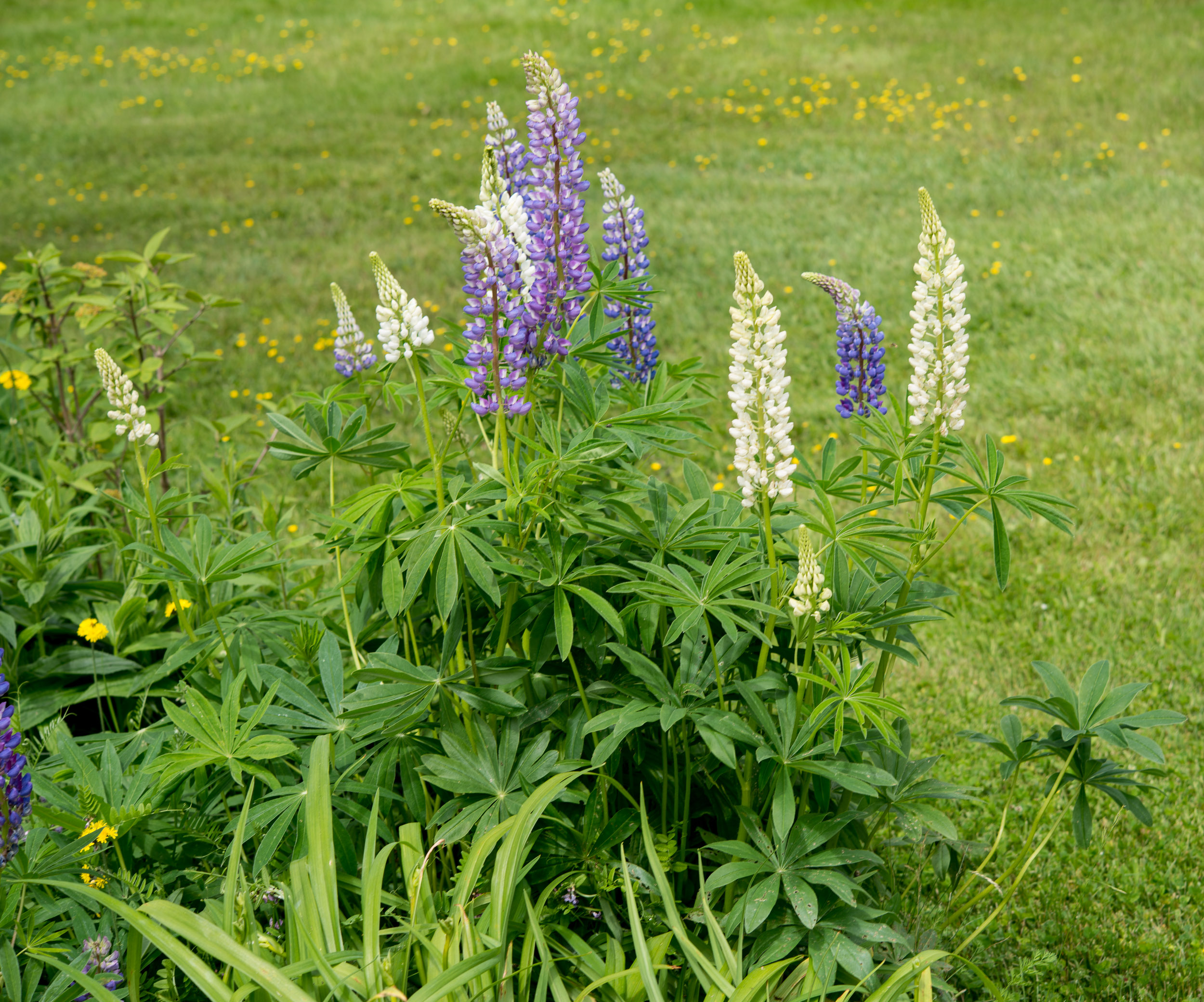
(Lupinus) · 6/16/2013 · Sonny and Donna’s, Tenant’s Harbor, Maine Species not yet identified 

(Lupinus) · 6/16/2013 · Sonny and Donna’s, Tenant’s Harbor, Maine Species not yet identified 
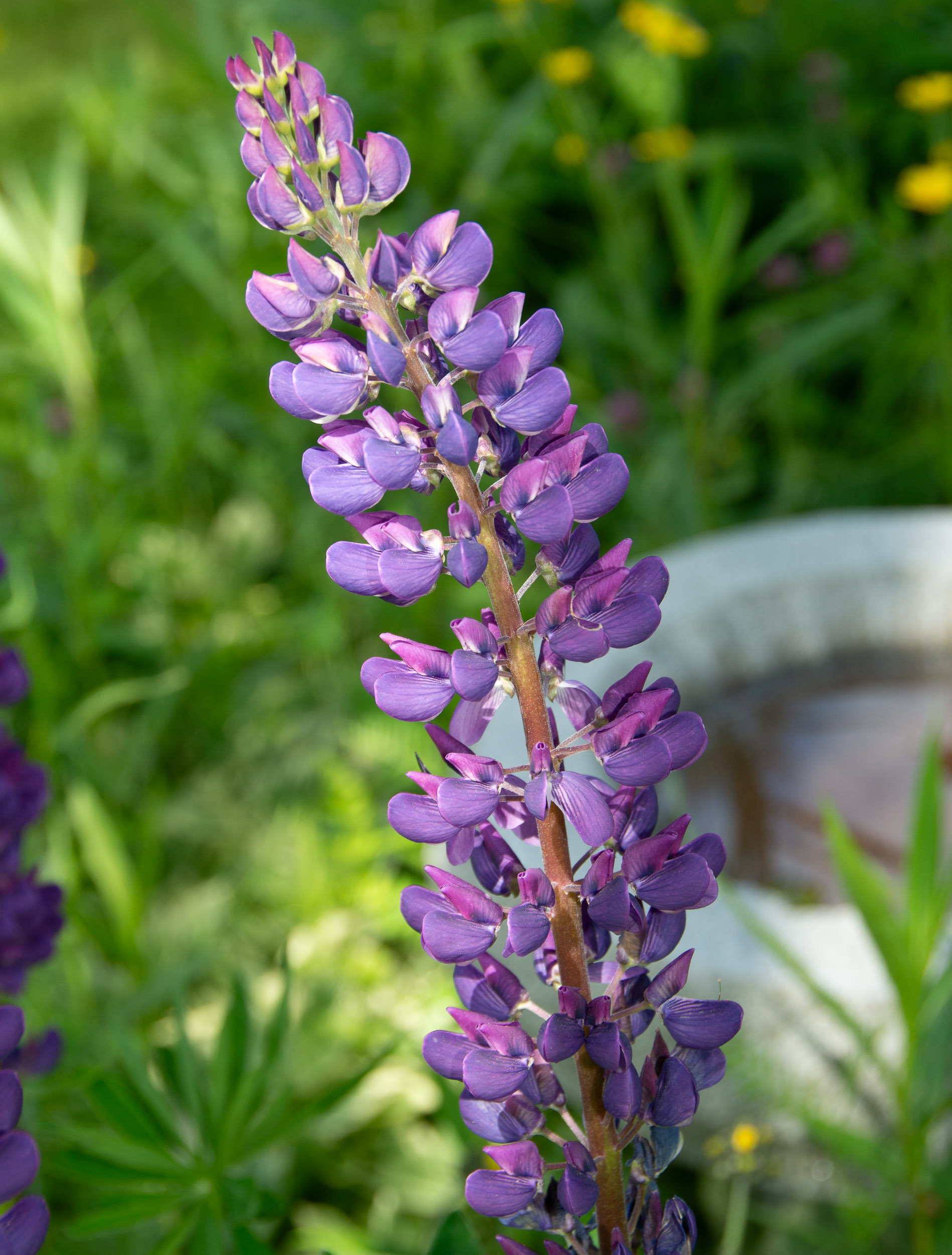
(Lupinus) · 6/15/2013 · Sonny and Donna’s, Tenant’s Harbor, Maine · ≈ 11 × 15″ (28 × 37 cm) Species not yet identified 

(Lupinus) · 6/15/2013 · Sonny and Donna’s, Tenant’s Harbor, Maine · ≈ 7 × 11″ (18 × 28 cm) Species not yet identified 
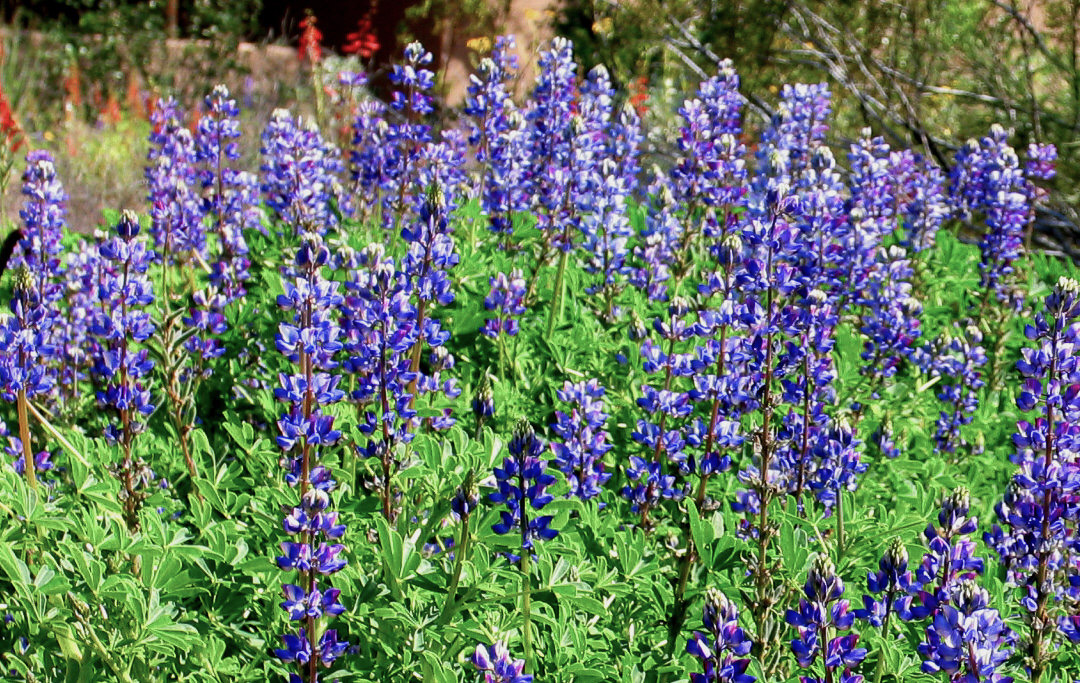
(Lupinus) · Much more lush than when seen in the desert ... tall and full and blue. By Karol M from Arizona, USA. · 3/8/2005 · Desert Botanical Garden, Phoenix, Arizona 
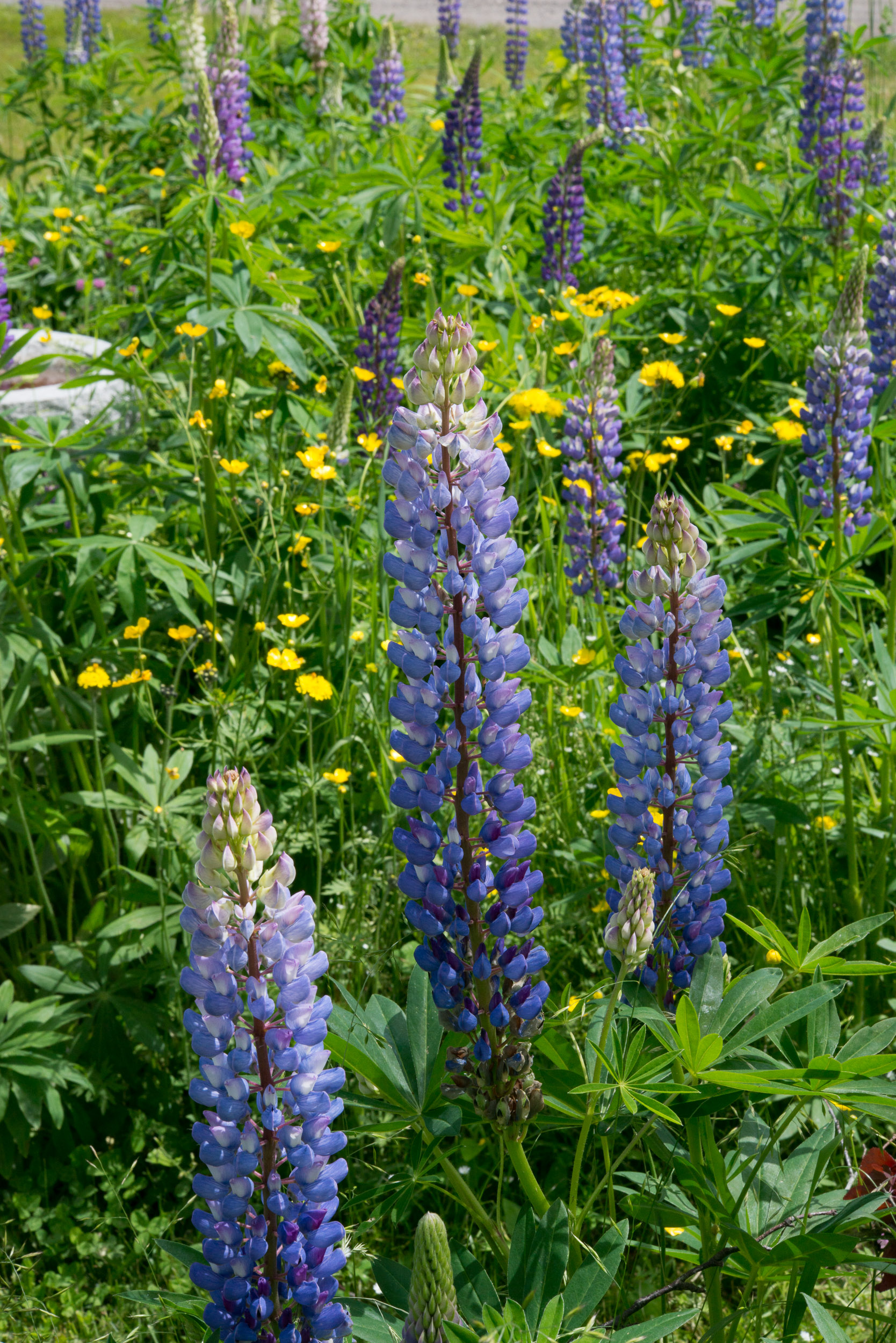
(Lupinus) · 6/16/2013 · Sonny and Donna’s, Tenant’s Harbor, Maine · ≈ 1 × 2′ (39 × 59 cm) Species not yet identified 

(Lupinus) · 6/15/2013 · Sonny and Donna’s, Tenant’s Harbor, Maine · ≈ 1½ × 2′ (44 × 66 cm) Species not yet identified 
| Kingdom | Plantae | Plants, but not fungi, lichens, or algae (from Stearn's Botanical Latin) |
| Subkingdom | Tracheobionta | Vascular plants—plants with a “circulatory system” for delivering water and nutrients |
| Division | Magnoliophyta | Flowering plants, also known as angiosperms |
| Class | Magnoliopsida | Dicotyledons—plants with two initial seed leaves |
| Subclass | Rosidae | Roses, legumes, proteas, dogwoods, hydrangeas, mistletoes, euphorbias, grapes, many more |
| Order | Fabales | Legumes (pea and bean families) |
| Family | Fabaceae | Legume family (peas and beans) |
| Genus | Lupinus | “Wolf,” because of the mistaken belief that lupines ravage land they grow on; in fact, they contribute nutrients |

Lupinus description by Thomas H. Kent, not updated.

© FloraFinder.org. All rights reserved.