Stylophorum diphyllum (Michx.) Nutt.
Yellow wood poppy, celandine poppy
Sometimes these are confused
Stylophorum diphyllum
Ranunculus ficaria
Chelidonium majus



|
Stylophorum diphyllum (Michx.) Nutt. Yellow wood poppy, celandine poppy Sometimes these are confused | |||
| You are here Stylophorum diphyllum |
Ranunculus ficaria |
Chelidonium majus |
|
|---|---|---|---|
| Common Name | |
|
|
| Plant | Plants reach 1–1½′ (30–45 cm). Stems and leaves exude a bright yellow-orange sap when cut. | Low-growing, 4–14″ (10–35 cm) in height. It is a perennial that stores energy in numerous white finger-like tubers. | Greater celandine reaches 1½–2′ (45–60 cm) in height, with ribbed stems. Leaves contain an irritating yellow-orange sap. |
| Leaves | This plant has basal leaves, as well as a pair of opposite leaves on the stem, both up to 6″ (15 cm) × 4″ (10 cm). Leaves are divided into 3-5 lobes which in turn are further divided, making them bipinnatifid. Leaf surfaces are dark green and hairless, while leaf undersides are pale as a result of fine hairs. Leaf stems (petioles) are up to 4″ (10 cm) long. | Thick, heart-shaped (cordate), spirally arranged, ¾–1½″ (1.9–3.8 cm), on long stems (petioles). Leaves are sometimes mottled with darker green patches. | Up to 8″ (20 cm) long and 3″ (7.6 cm) wide, compound in groups of 5 to 9, green with a slight bluish tint. |
| Flowers | Each flower has four partially overlapping yellow petals, two sepals (which fall away early after flowering), a knobby stigma, and multiple yellow-orange stamens. They appear in groups of one to four, and are 1¼–2″ (3.2–5.7 cm) around. Flowers May-June. | Up to 1″ (2.5 cm) around, with 7-12 glossy yellow petal-like tepals, and 3 sepal-like tepals (confused yet?). They appear as early as February, or, further north, from April-May. | About ¾″ (1.9 cm) around, with four yellow non-overlapping petals, a stiff green central style, and multiple yellow stamens. |
| Fruit | Bristly blue-green ovoid seed pods ¾–1″ (1.9–2.5 cm). | Achenes are spherical, up to ⅜″ (1.3 cm) around. | Seed capsules look like thin beans, ¾–2½″ (1.9–6.3 cm) long, with black seeds. |
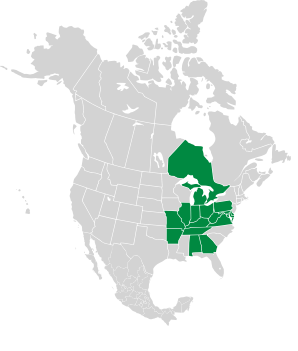
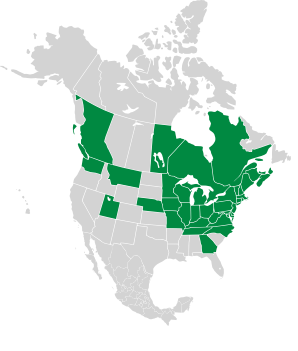
| Range/ Zones |
|
|
|
| Habitats | Dry deciduous woodlands, bases of bluffs, and rocky stream banks. | It prefers damp shady areas, and weedy places. It often carpets large areas. | Moist or dry woods, thickets, fields, hedgerows, roadsides, railroads |
Stylophorum diphyllum description by Thomas H. Kent, not updated.
© FloraFinder.org. All rights reserved.