Fertile stems, tipped by conelike structures, are pale brown, erect, and unbranched. They are 6–12″ (15–30 cm) tall. They appear early in the season and are gone by May. Sterile stems are green, 6–24″ (15–60 cm) tall, 1/16–3/16″ (3–5 mm) in diameter, with 4-14 ridges. They appear after the fertile stems have come and gone. They are highly variable, usually heavily branched in a series of upward-pointing whorls, usually erect, sometimes prostrate. Branches are thin, shaped like a plus sign in cross-section. Stem and branch surfaces feel rough.
In dense colonies, unbranched or multiply branched. Fertile and sterile stems look the same. 1–3½′ (35–116 cm) tall, with dark green stems 1/16–¼″ (2–8 mm) in diameter. If branches are present, they are less than 3″ (7.6 cm) long, with 8 or fewer nodes. Each segment boundary is ringed by a series of tiny, black-tipped scale leaves. The stems of water horsetails are entirely hollow, and smoother than marsh horsetails. The stems pull apart easily at the joints.
Typically a single, rough-textured unbranched, dark green stem, 7–86″ (17–218 cm) tall. Rarely has a few branches that tend to be nearly attached to the vertical stem.
Leaves
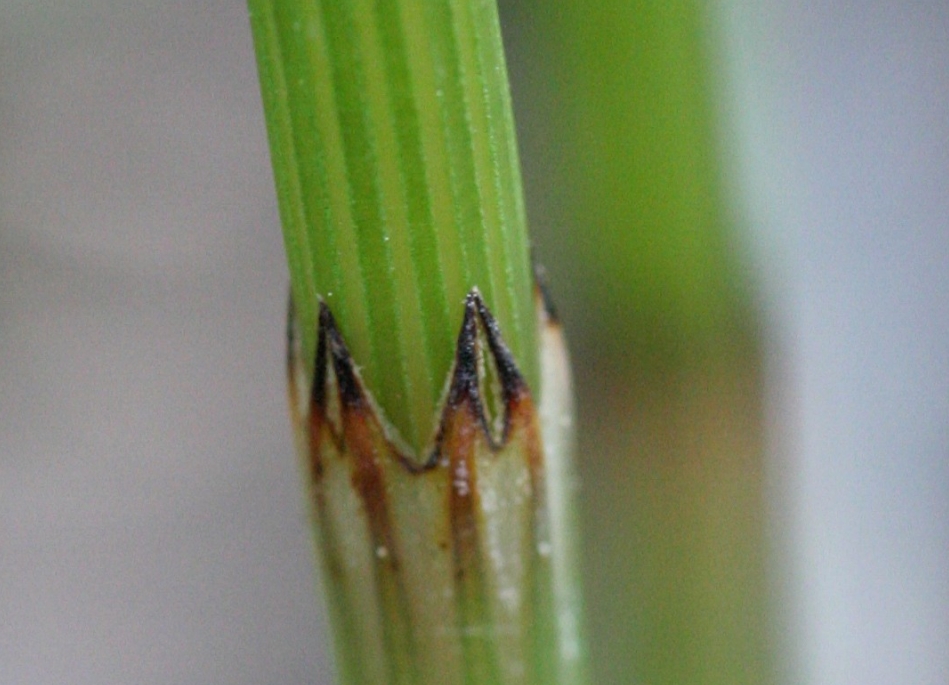
Tiny, dark brown sharp-tipped leaves surround the stem at nodes. Photo by Enrico Blasutto.
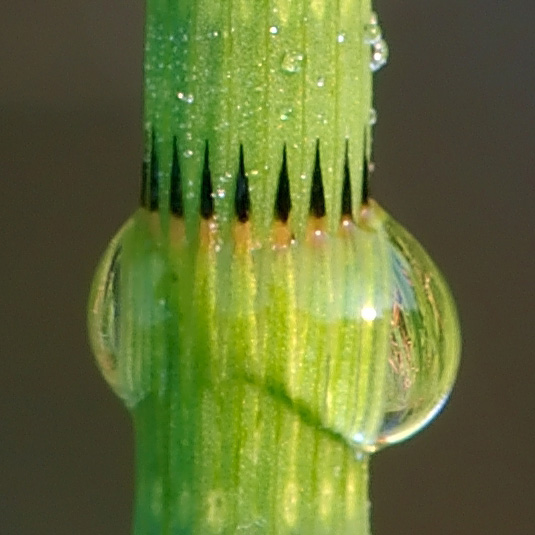
Each stem node is wrapped with tiny, black, sharp-tipped scale leaves. Branch nodes also have miniscule leaves that appear as black dots. The leaves do not perform photosynthesis; this is done by the stem and branches. Cropped from a photo by Luc Viatour.
Each stem is punctuated by nodes surrounded by sheaths. The sheaths are actually tiny leaves, fused to the stem.
Fruit
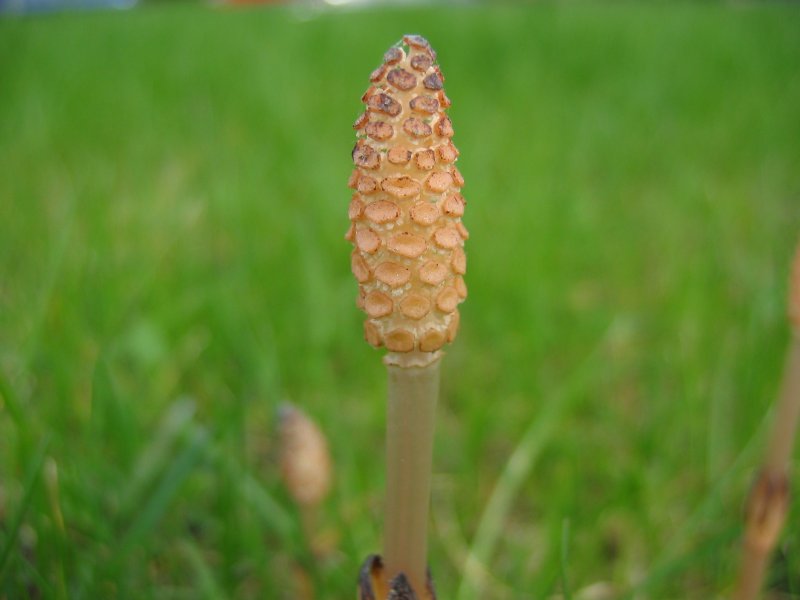
Fertile stems have cones (strobili) 1–1½″ (2.5–3.8 cm) long in the spring. Photo by Kristian Peters.
The spore-bearing, conelike strobili are yellow-green, ⅜–¾″ (1–2 cm) long. Photo by joelpk@flickr.
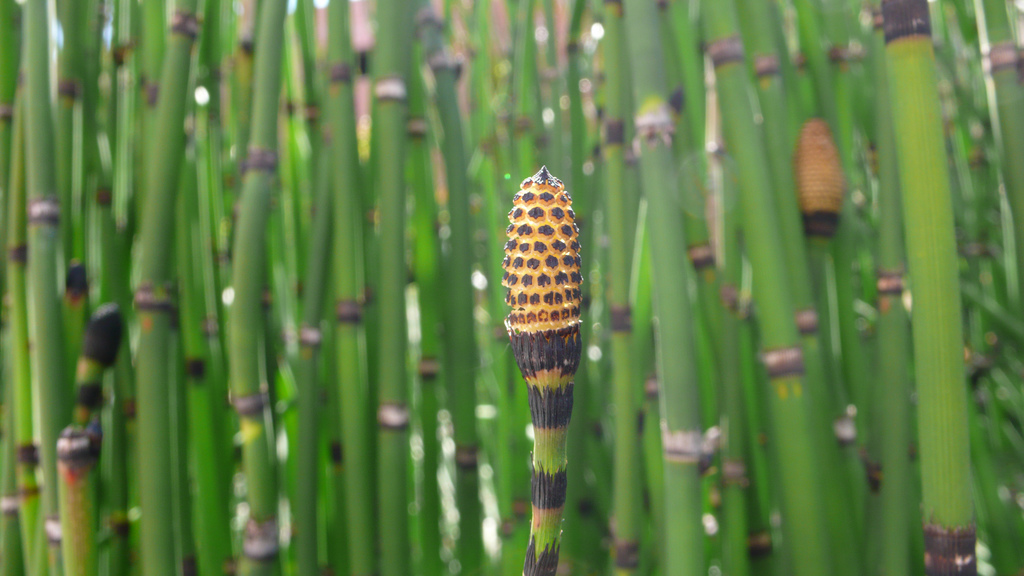
Conelike structures at stem tips, strobili, are ½–1″ (1.3–2.5 cm), with sharp tips. This one is immature.
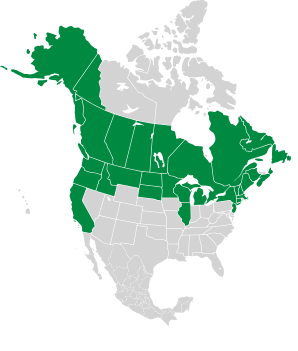
Range/ Zones
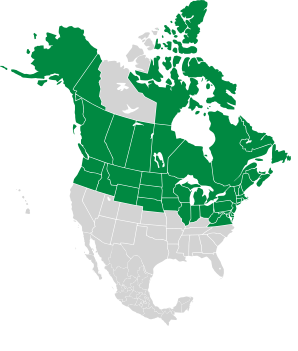
USDA Zones: 4-9
Habitats
Damp soil, but these also grow in fields, woods, waste places, and glades. They prefer light shade, but will grow in full sunlight as well.
Ponds, marshes, slow-moving water
Areas that are reliably wet at least most of the year—wetlands, stream and river edges, and seeps.
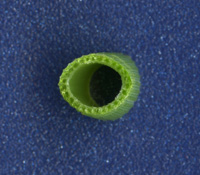
Plants are 8–60″ (20–152 cm) tall, with smooth stems, rarely evergreen. Stems are about ¼″ (6.3 mm) in diameter at the base, with 10-32 ridges parallel to the stem. Sterile stems are usually unbranched, but occasionally have stubby branches. In cross section, the stem has a central hollow area about ¾ the width of the stem. Fertile and sterile stems look very similar, except that fertile stems are tipped by a blunt-tipped “cone” that is ½–1″ (1.3–2.5 cm) long.
Plants are evergreen, rough-textured, 4–20″ (10–50 cm) tall. They have 4-12 (usually 8-10) ribs, and are 1/32–⅛″ (1–3 mm) around. In cross section, stems show vallecular canals about the same size as a central hollow region. The central hollow is much less than half the diameter of the stem. Fertile and sterile stems look similar, except for a cone at the tip of the fertile stems, vs. a stem that tapers to a point in sterile stems. The first sheath on the branch (aka first internode) has 5 or 6 narrow teeth, and the first branch internode is shorter than the stem sheath. Fertile and sterile stems also emerge at about the same time.
Thin light green fragile-looking branches, in symmetric whorls, <2′ (60 cm) in height. Branches tend to be straight, or to droop somewhat, while in other species the branches are ascending. Stems are 1/32–⅛″ (1–4 mm) in diameter, with 8-18 ridges. In cross-section, up to half the diameter of the stem is hollow, more than marsh horsetail. Fertile stems are 8–10″ (20–25 cm) tall, and pale pink or brownish at first, tipped by a cone-like structure. After fruiting, fertile stems become green and develop branches, looking like the sterile stems. Sterile stems are 8–24″ (20–60 cm) tall, and very rough.
Leaves
Leaves are tiny and non-photosynthetic, occuring in sheaths around the stems, with 10-32 sharp black teeth around the top of each sheath. Sheaths are about ¼″ (8.5 mm) long, usually green, sometimes turning brown. The teeth don’t persist for very long, leaving a thin dark ring around the top of the sheath.
Sheaths appearing at nodes along the stem contain 8-10 tiny, non-photosynthetic leaves, shaped like sharp dark spears.
Tiny, non-photosynthetic leaves called scales are fused to the stem at branch nodes, or sheaths. Sheaths are 1/16–⅛″ (2–6 mm) long, with 8-10 brown, white-edged teeth.
Fruit
“Cones” (strobili) are ⅜–⅞″ (1–2.5 cm) long, ellipsoid, and ¼–⅜″ (7–10 mm) in diameter. They are blunt-tipped, sometimes with a tiny point.
A conelike structure about ¾–1″ (2–3 cm) long, the strobilus, appears at the tip of each fertile stem.
Fertile stems are tipped by a single blunt-tipped cone-like strobilus, ½–1½″ (1.5–4 cm) long, atop a stalk. Spores are released in April.
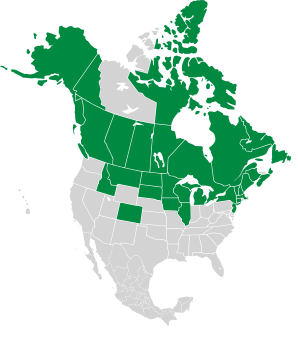
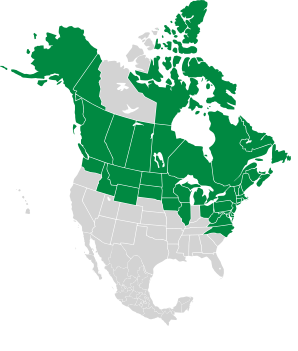
Range/ Zones
Habitats
Moist sandy or gravelly soils, such as sandy shores, roadsides, meadows, and prairies; with partial or full sunlight.
Shallow wet areas with sandy soils, such as marshes and swamps.
Moist habitats such as woods, thickets, river edges, and meadows, in sunlight or partial shade.
The smallest horsetails, often occurring in low, twisted, tangled-looking mats, intertwined with mosses and grasses. 1–8″ (2.5–20 cm) tall. Stems are unbranched, but thin enough to look like branches of other horsetails. Fertile and sterile stems are evergreen, with six broad ridges. They occur together and look almost identical, except that the fertile stems are a bit more erect, and tipped by a small black conelike structure; while the sterile stems are more curved and unstructured. Stems have a central hollow less than a third of the diameter, smaller than most horsetails.
These perennials are 6–24″ (15–60 cm) in height, with hollow stems 1/32–⅛″ (1–4 mm) around. Stems are circular, but with 10-18 vertical ridges high in silica—horsetails are unusual in their ability to absorb silicic acid from the soil and deposit it as glassy bits that provide rigidity. The ridges have minute silica spines that feel rough to the touch. Drooping whorls of thin compound branches surround sterile stems. Each whorl resembles the ribs of a parasol, and they occur at nodes spaced regularly along the stem, conveying a sense of delicate beauty.
Usually stems are erect, though they may bend under their weight. Sterile stems are evergreen, rough, 3–19″ (7.6–48 cm) tall, 1/32–⅛″ (1.5–4 mm) in diameter, dark green and unbranched. They have 3-12 vertical ridges. In cross section, the stems have a central cavity that is ¼ to ⅓ of the diameter of the stem. Vallecular canals, which ring the central cavity, are a bit less than half the diameter of the central cavity. Fertile stems resemble the sterile stems, but there is a “cone” atop each stem.
Leaves
Non-photosynthetic leaves are in thin sheaths of three (rarely four), black or dark brown in color, wrapped around the narrow stems. The sheaths have a white edge.
Each stem node has a reddish brown sheath with upward-pointing “teeth.” Technically, the lacy “leaves” are really branches, and the sheaths are really leaves.
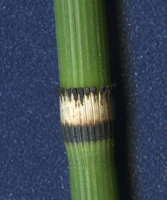
Tiny, non-photosynthetic leaves form small sheaths that encircle nodes along the stem. There are 3-14 tiny, sharp-pointed black leaves, often called teeth, per sheath. Each sharp black tooth is surrounded by white. The teeth tend to persist all season, and they are sometimes tipped with hairlike bristles.
Fruit
Fruits are a narrow conelike structure called a strobilus, appearing at the tip of each fertile stem. Each “cone” is 1/16–⅛″ (2–5 mm) long.
Fertile stems are shorter and unbranched at first. They develop conelike strobili containing spores. Each cone is 1–1½″ (2.5–3.8 cm) long, and pale pink to tan. After the cone dries and releases spores, fertile stems also develop branches.
A “cone”—strobilus—appears at the tip of each fertile stem. It is green, with a black, sharp-pointed tip, and ⅛–¼″ (5–8 mm) long. The spores are green, and spherical.
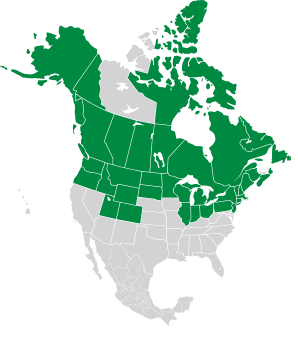
Range/ Zones
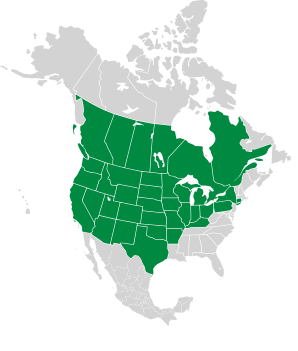
USDA Zones: 1-9
Habitats
Moist soil, and partial or full sunlight.
Lowland wet conifer forests, and mixed upland, dry conifer, and deciduous forest habitats. It is also found in meadows, bogs, swamps, and along streambanks.
Cool, shady spots.
Equisetum description by Thomas H. Kent, not updated.